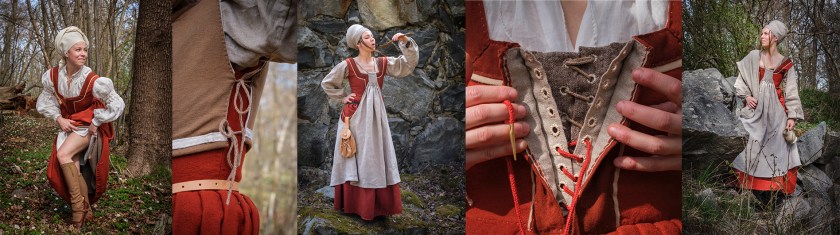
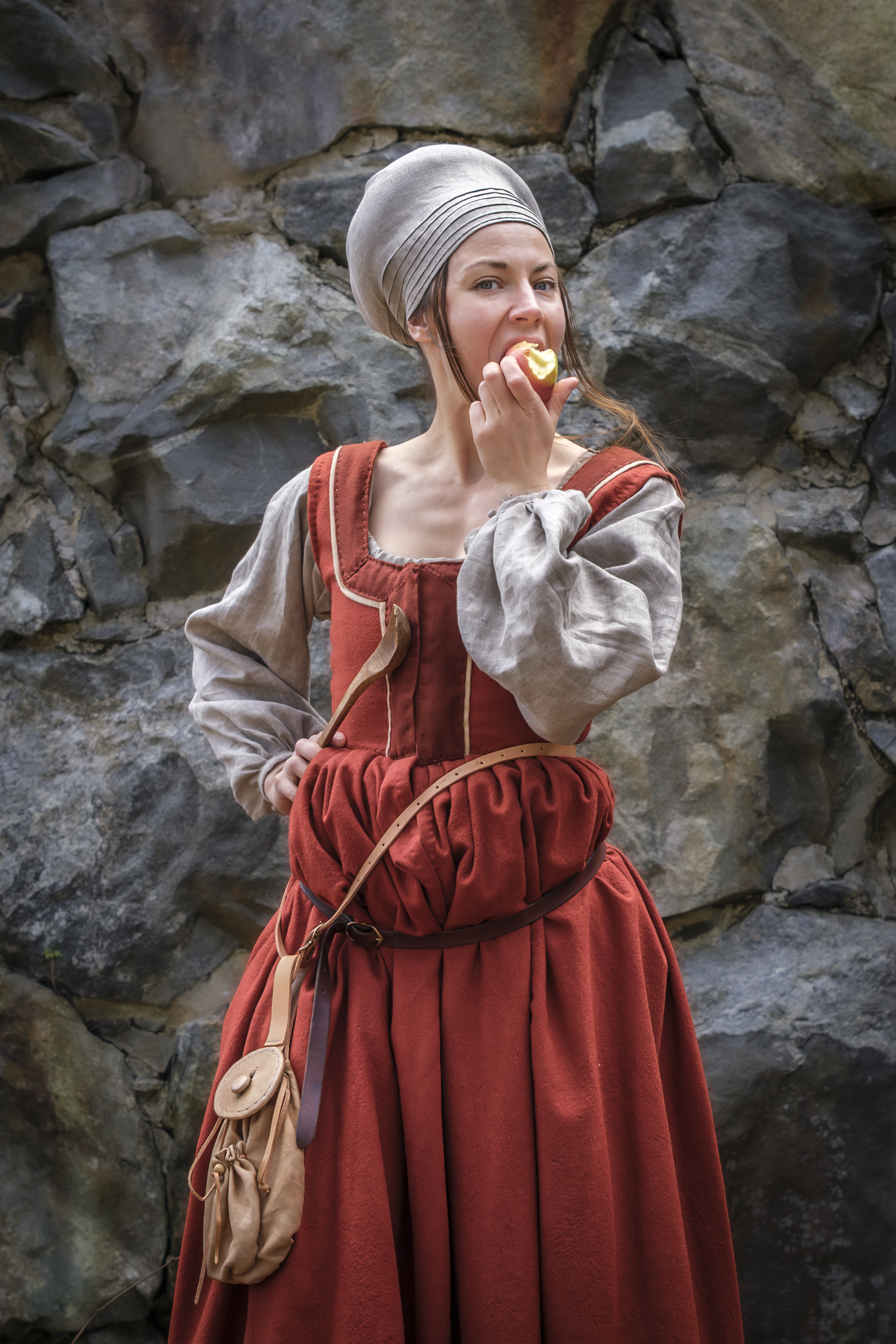
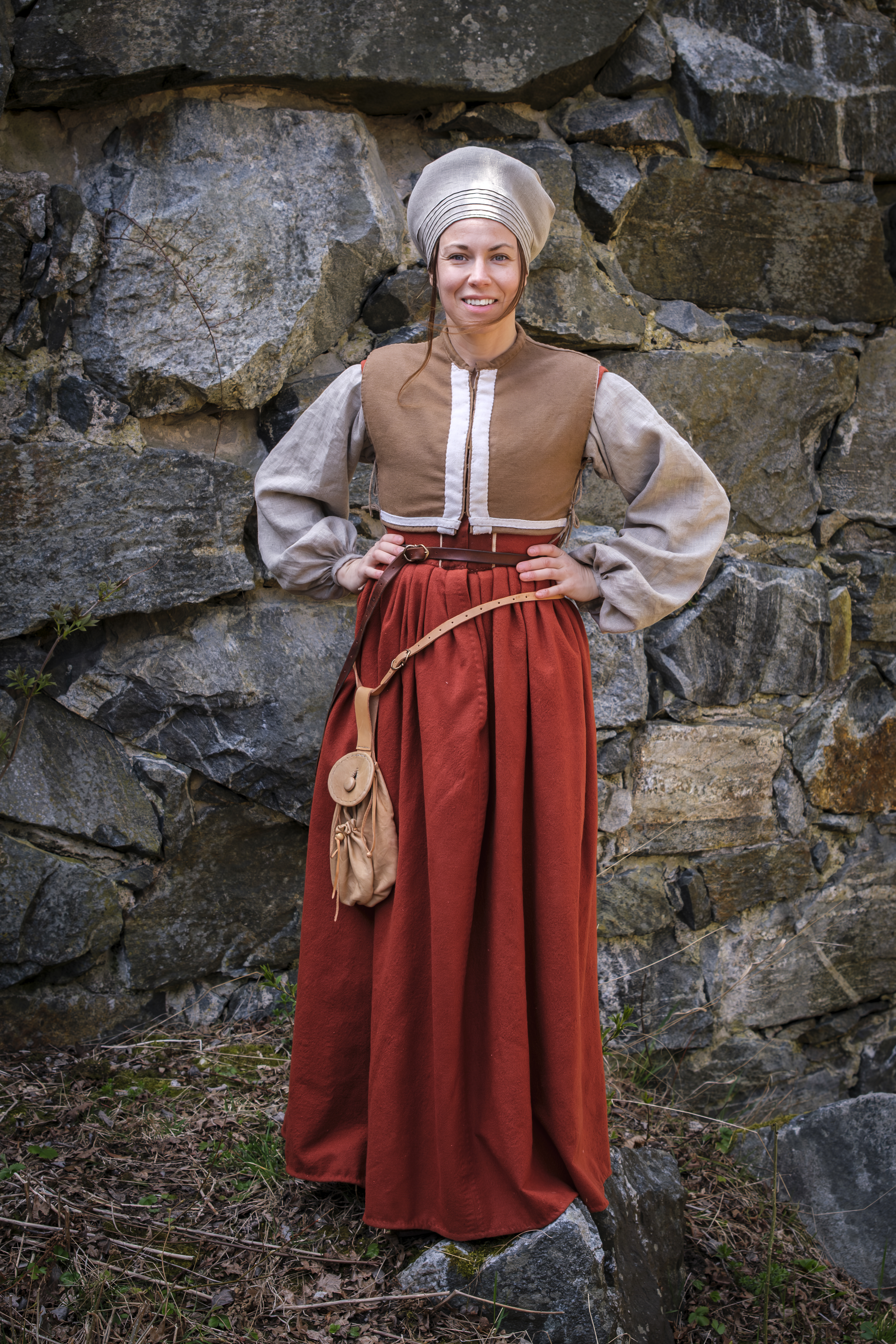
As a member of Proknekt my new project is an attempt to sew a new kit of garments fit for a trossfrau in the 16th century, north Europe. (mainly Germany). This is a time period that I am not very familiar with so this is a humble reenactment journey and I will probably make some misstakes and bad interpretations on the way. But the best way to learn is to try, fail and try again. And I have decided to only sew with woolfabric that I have plantdyed myself.
When you want to recreate historical clothing, it is important to decide who you want to portray. I want to recreate a german woman (about 30-40 years old) in the lower social class. She is not really a prostituted but lives in fornication (or fake marriage) with a landsknecht soldier (with a talent for the lute) who has promised to marry her sooner or later. She follows his army and works in the tross, cooking food, carrying water and mending clothes. When she gets the chance, she steals on the battlefields or in villages they pass. That is why she has recently come across a pair of really nice shoes. But she was born the daughter of an ordinary farmer and her clothes should reflect an “ordinary trossfrau”.
I try not to take details from male garments and put them on female garments. It’s sad because the men have so much more fun details with more slits and patterns. But in this time period and place, it’s the men who get to be the most extreme peacocks.
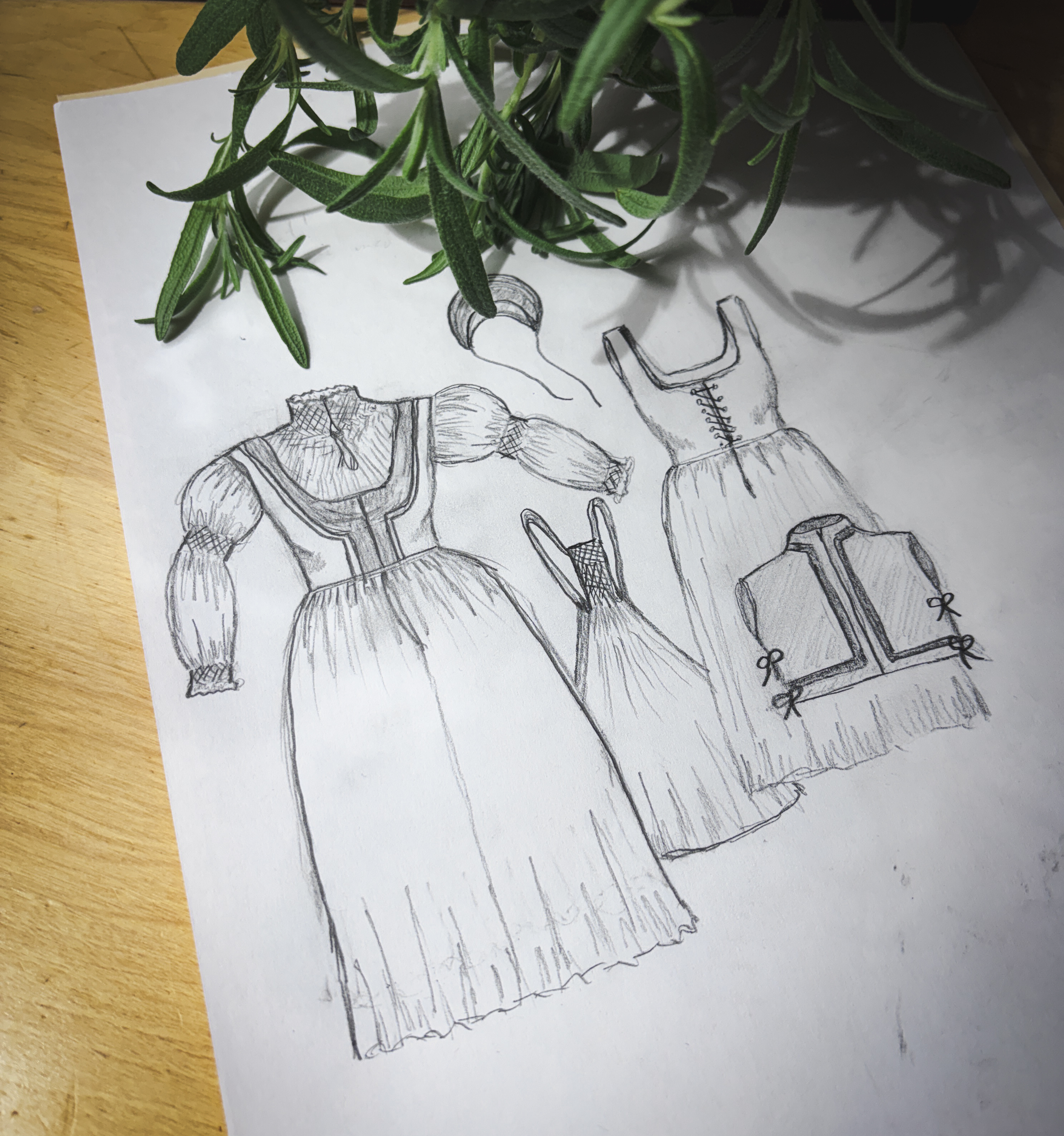
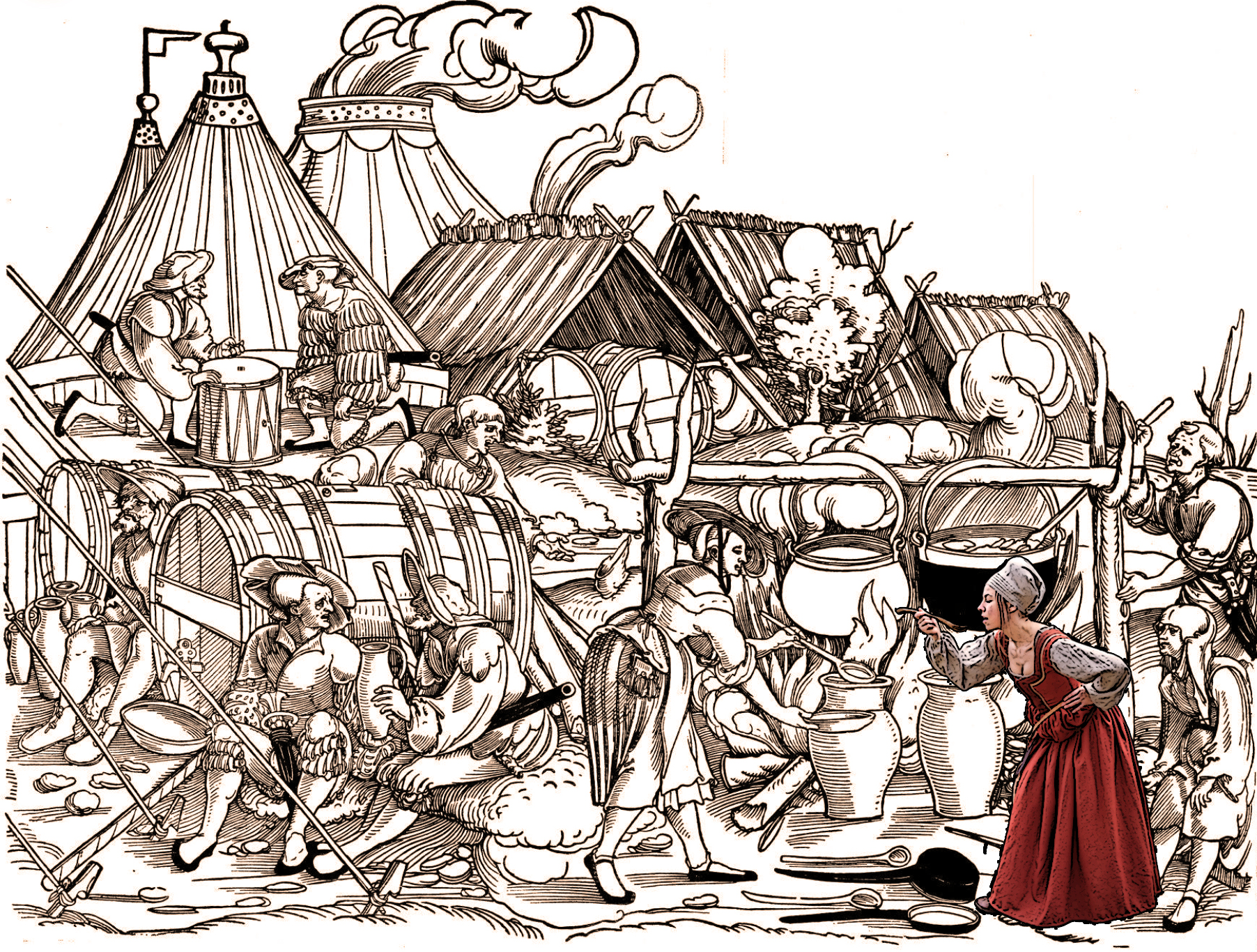
A little about sources
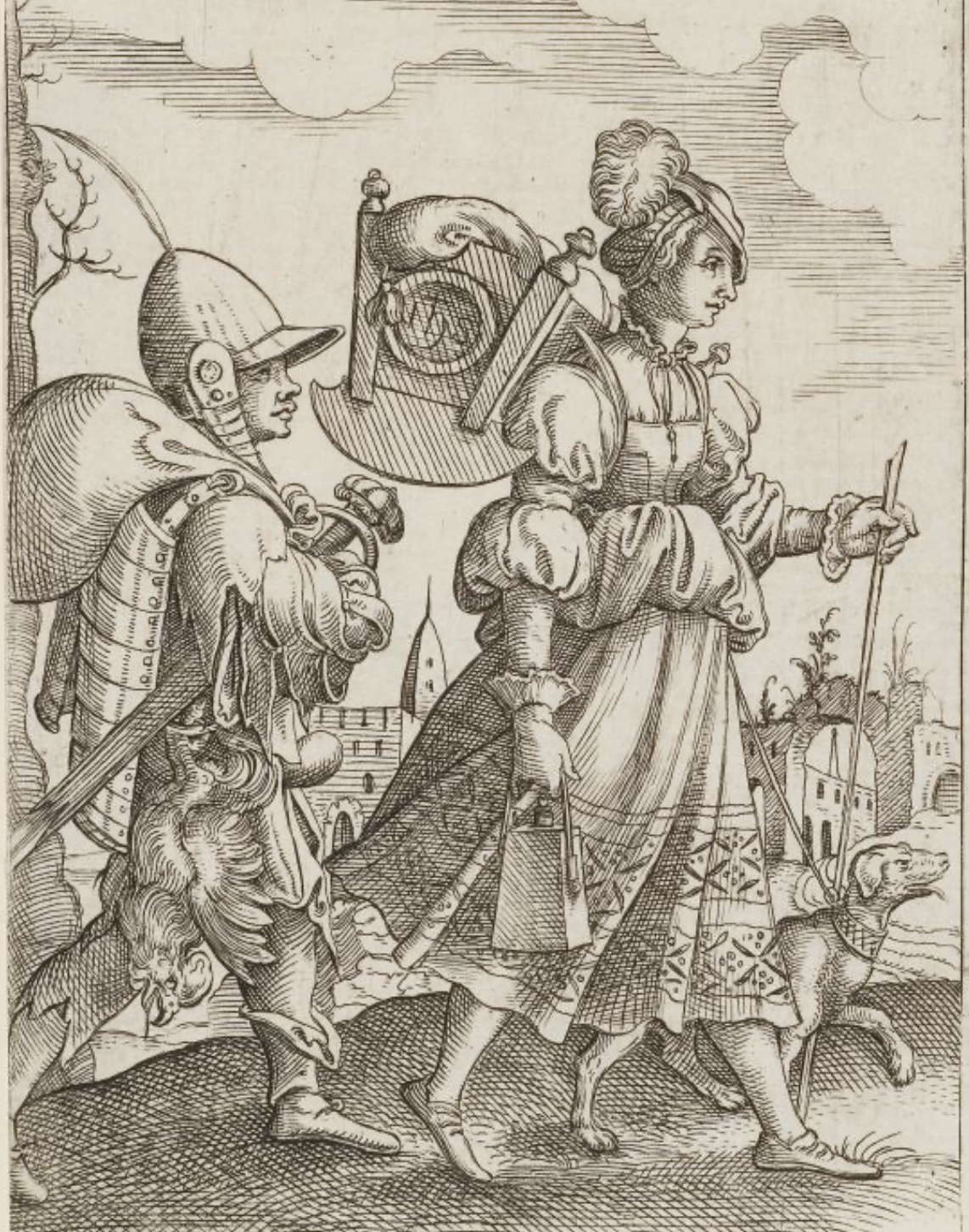
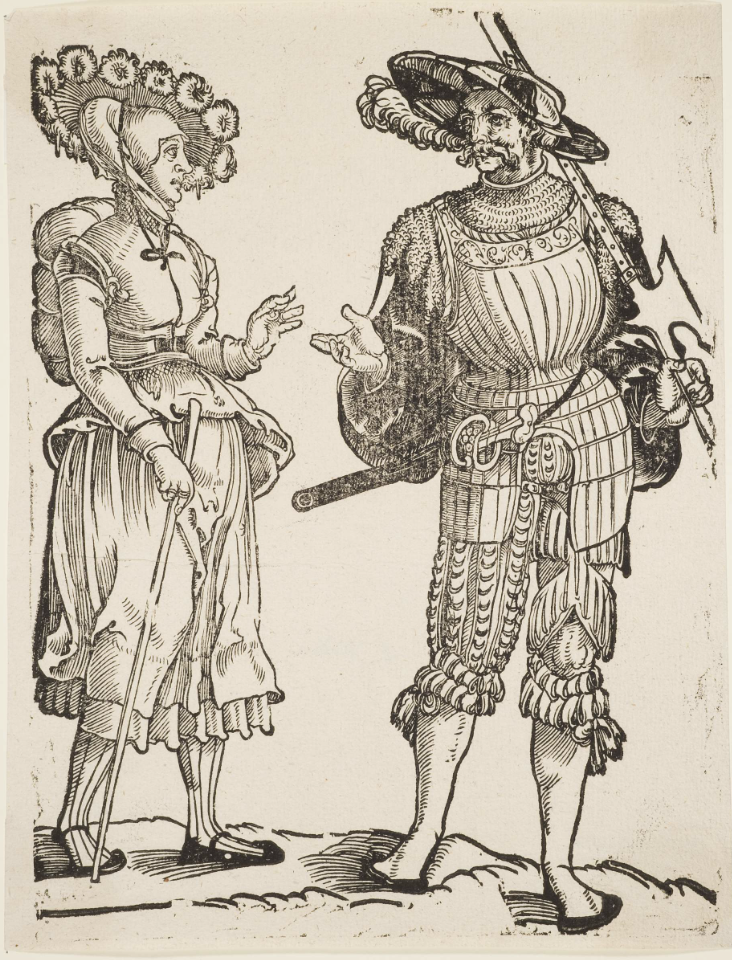
Wood- and copper cuts are a relief printing technique where an image is carved into a wooden or copper block. Ink is applied to the raised surface and transferred to paper via a press or hand-burnishing. The technique was used in Europe from around 1400, peaking in popularity in the 16th century. In addition to the wood- and coppercuts, I look at other art and paintings from 16th century Northern Europe. Most woodcuts of landsknecht soldiers were probably created as propaganda so they are not great sources but it is what we have and there are at least a lot of them still available.
And unfortunately, there are very few archaeological finds of textiles from the lower social classes that accompanied the landsknecht armies. But searching through various museums’ databases of textiles from the 16th century still provides some information about fabric qualities, colors and techniques. And based on what we have to go on, there will of course be a lot of interpretations and guesses.
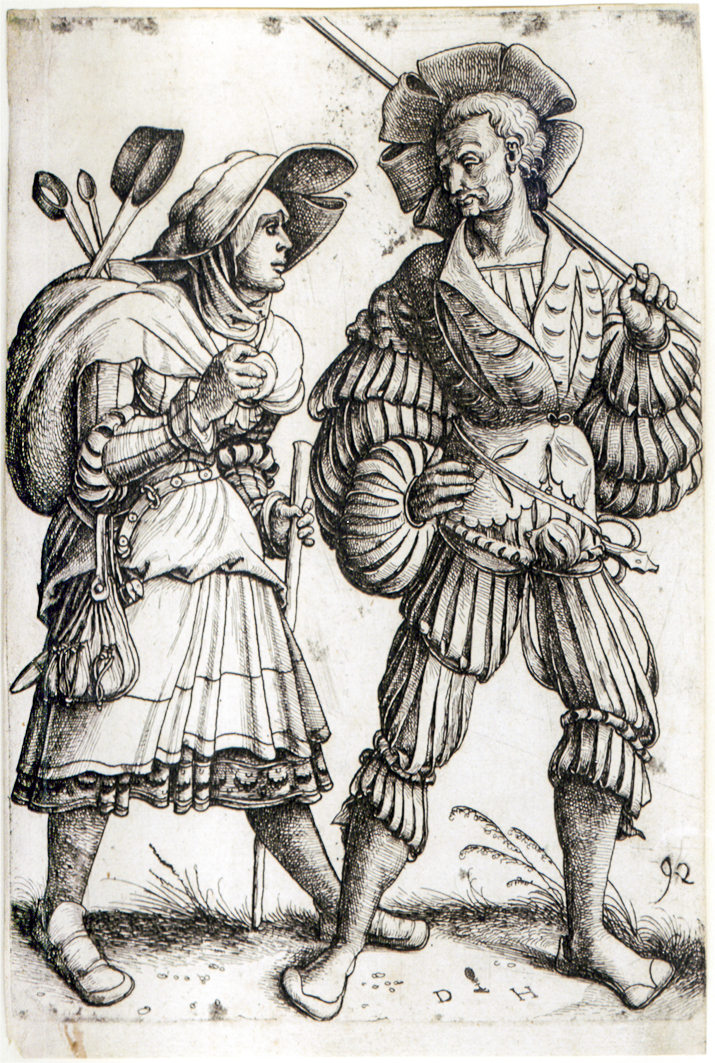
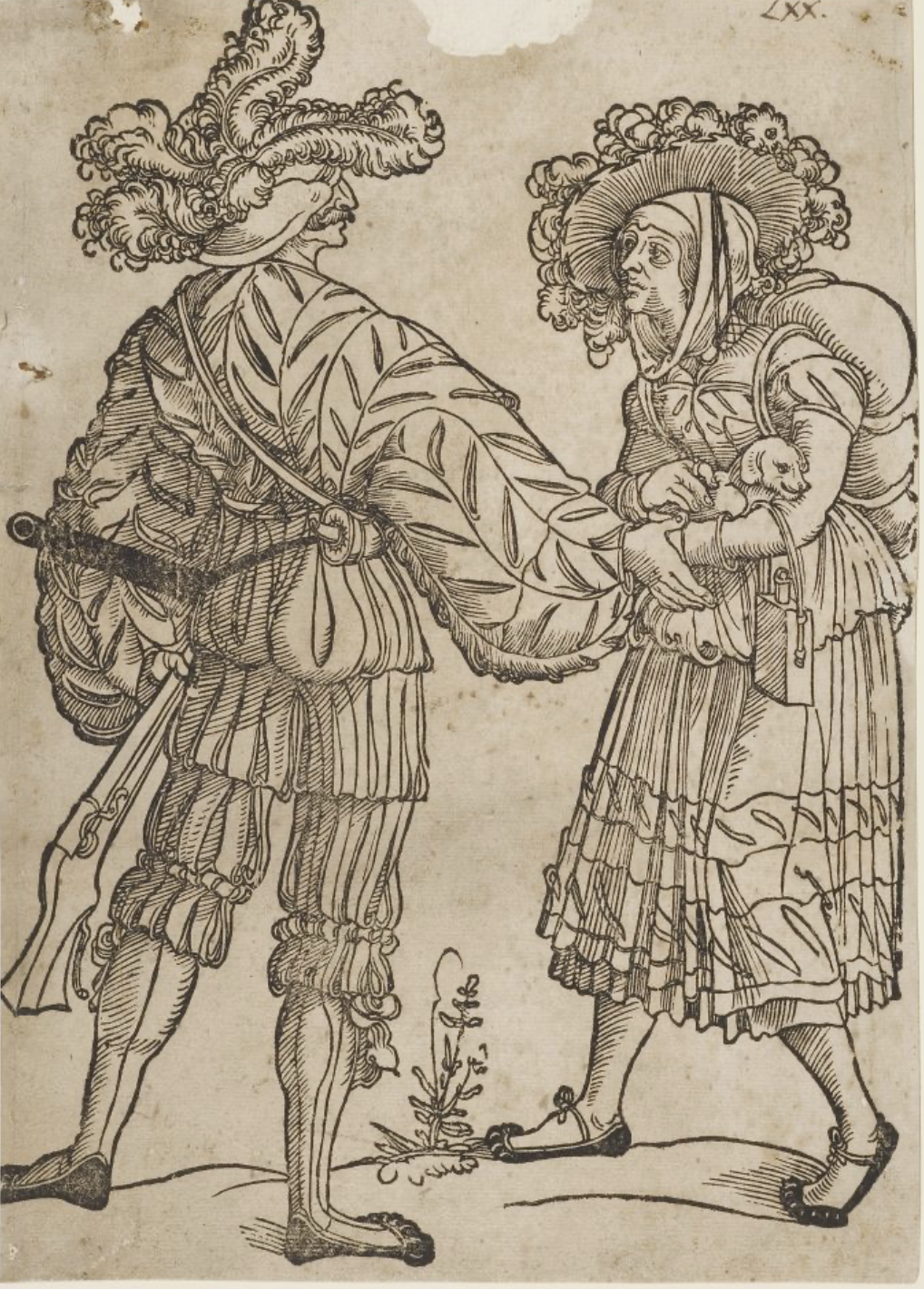
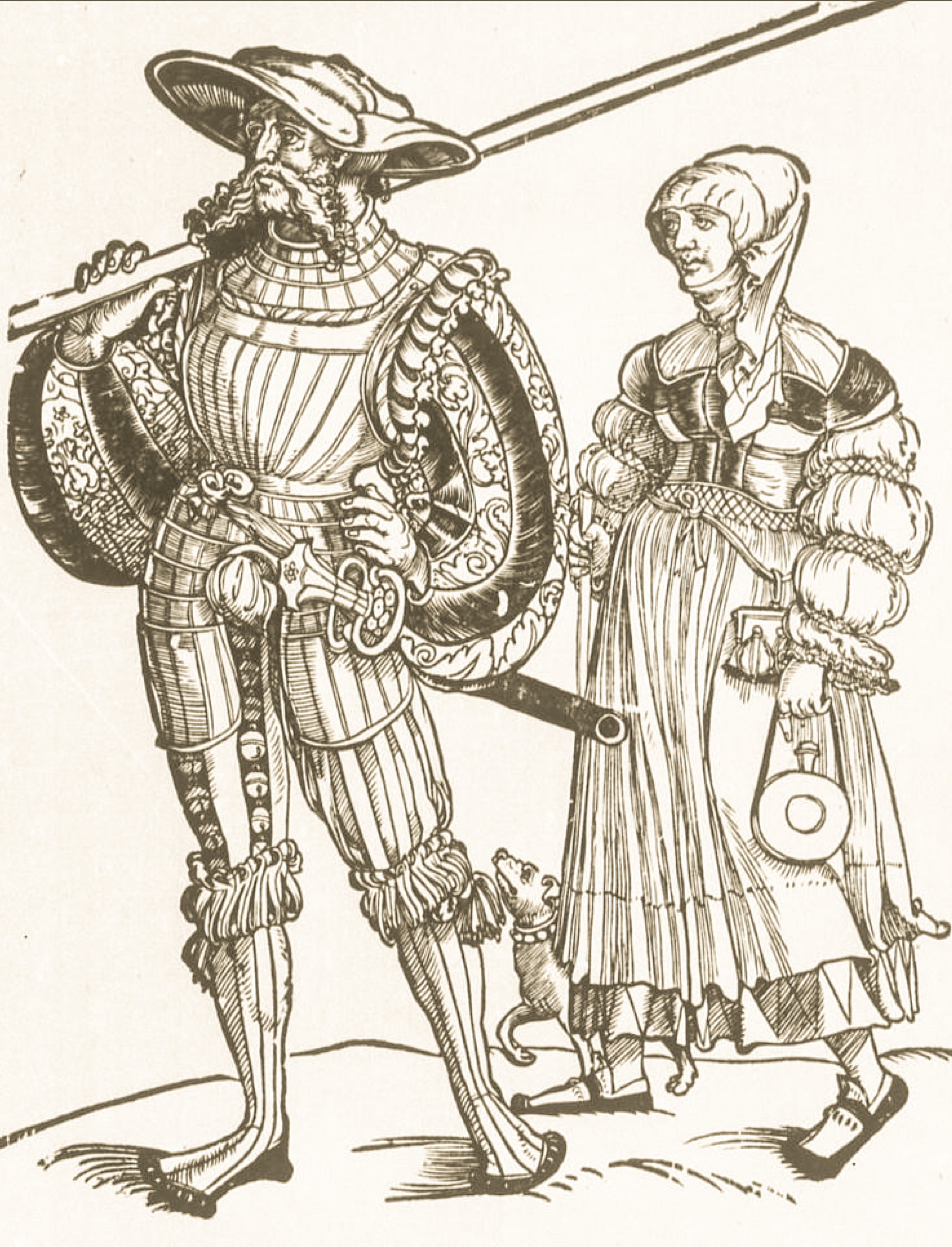
Erhard Schön. Date: 1535
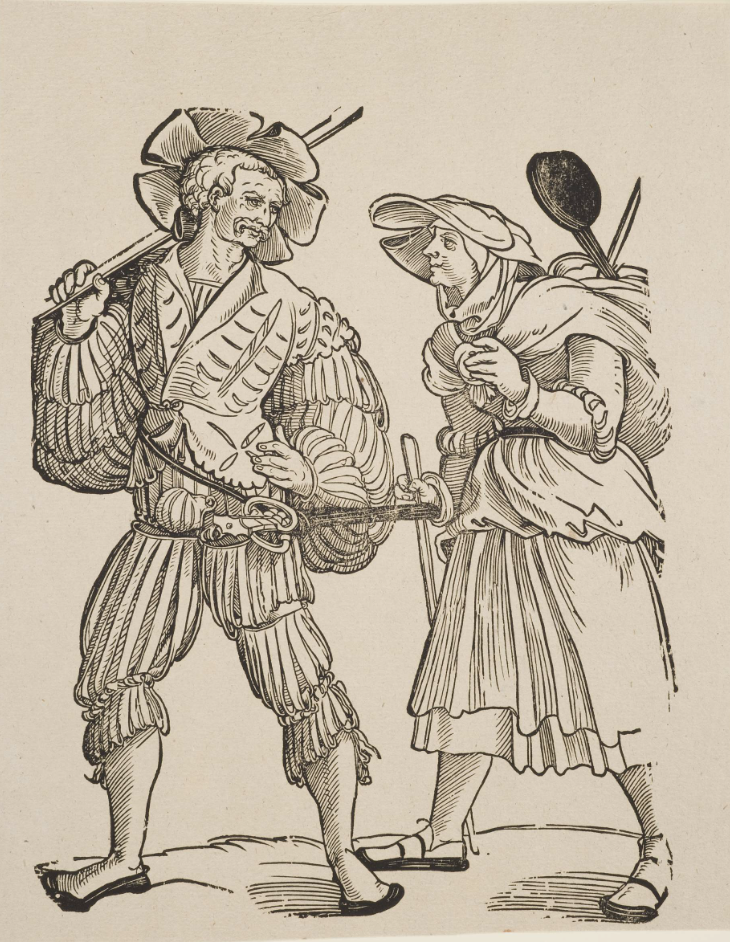
Chemise
The chemise is your bottom layer of clothing in the 16th century. It is underwear and a nightgown in one. It is therefore a garment that you sweat a lot in and needs to be easy to wash. So chemises were probably made of linen, natural gray or bleached.
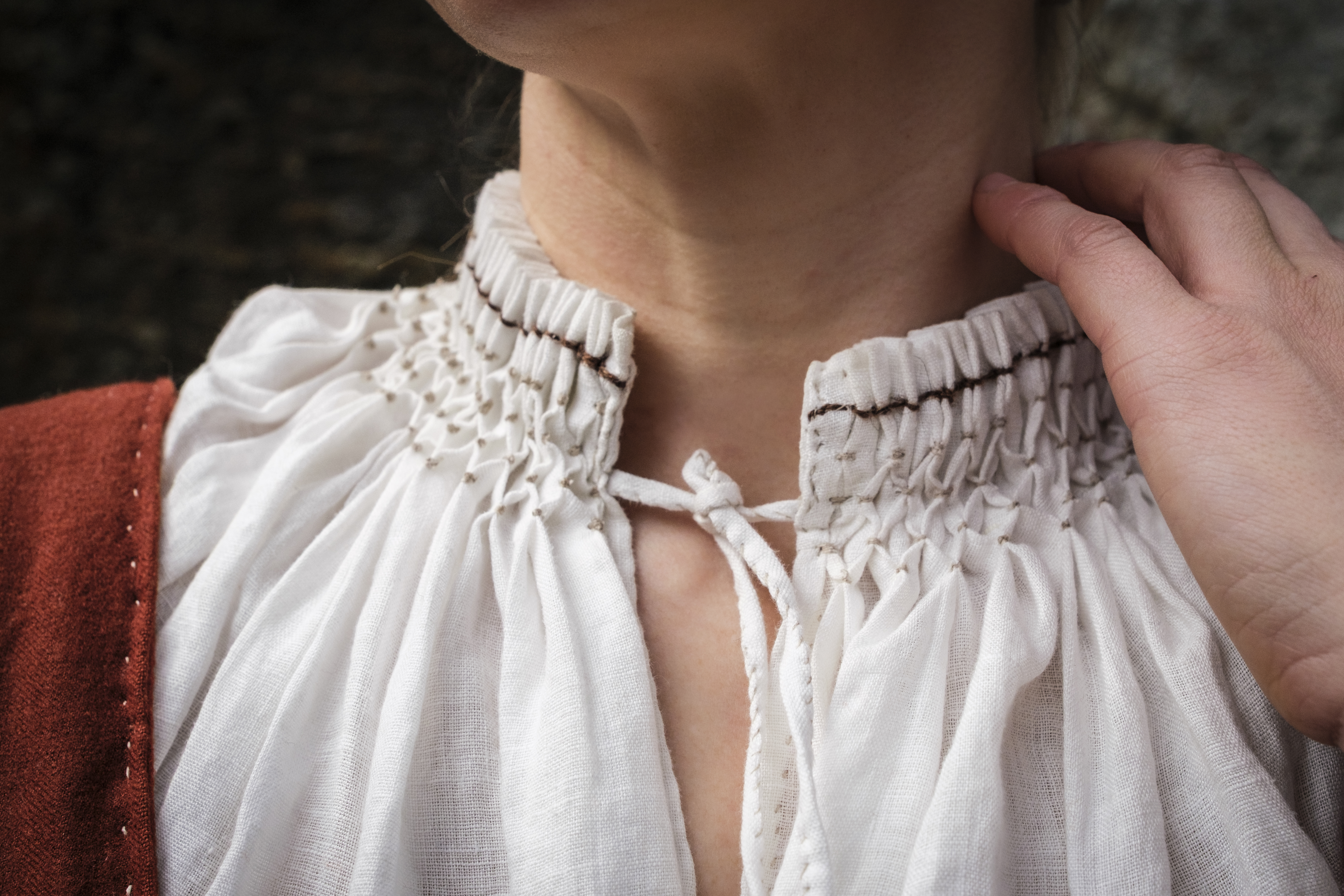
The chemises in the woodcuts and art occur with both high collars and so low that we can’t see it under the main dress. It seems that both the higher and lower social classes could have either but a low class women would probably not have a lot of embroidery in fancy silk tread. The collars in the art vary from beautifully embroidered with tiny pleats and smocking patterns to more simple plain pleating.
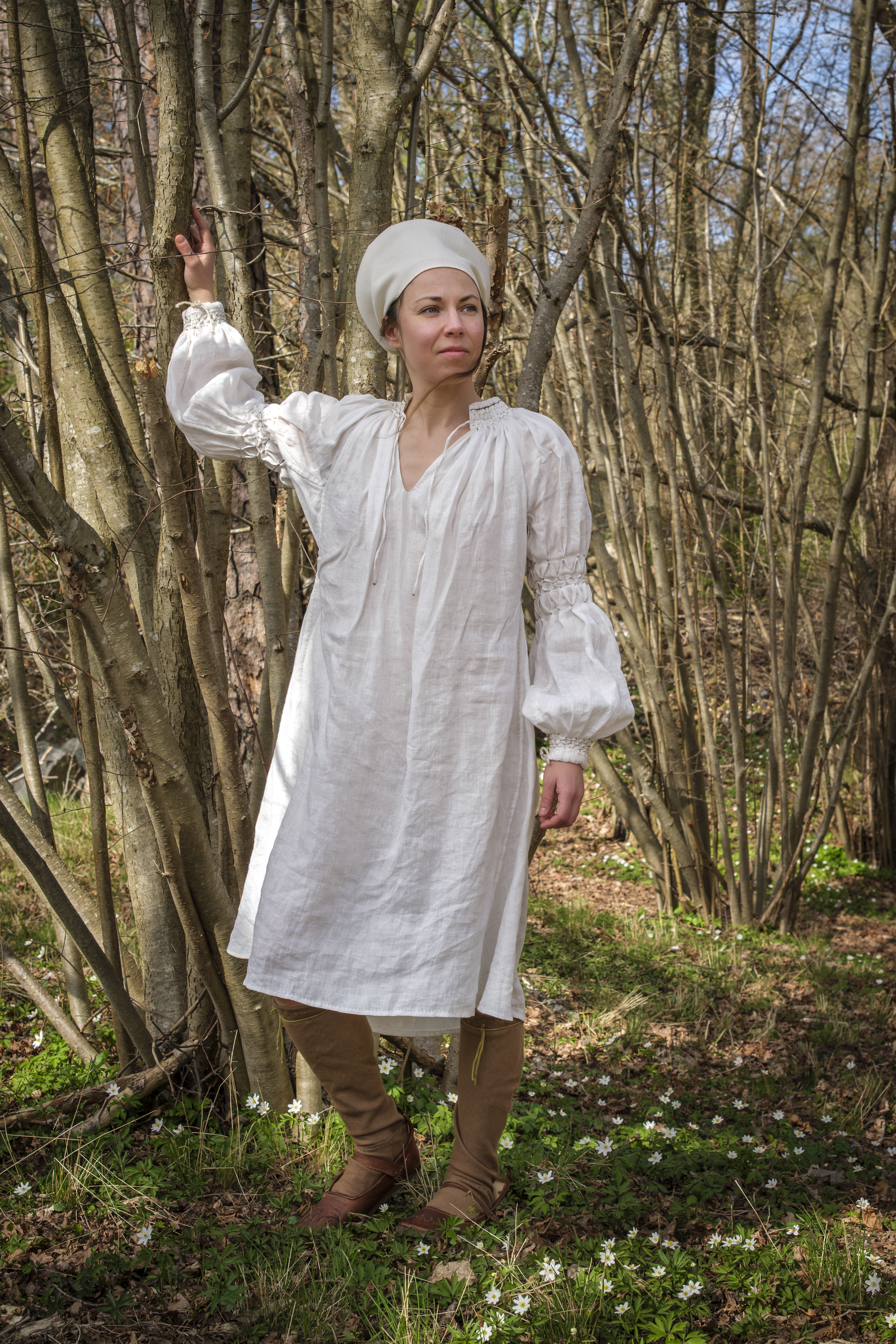
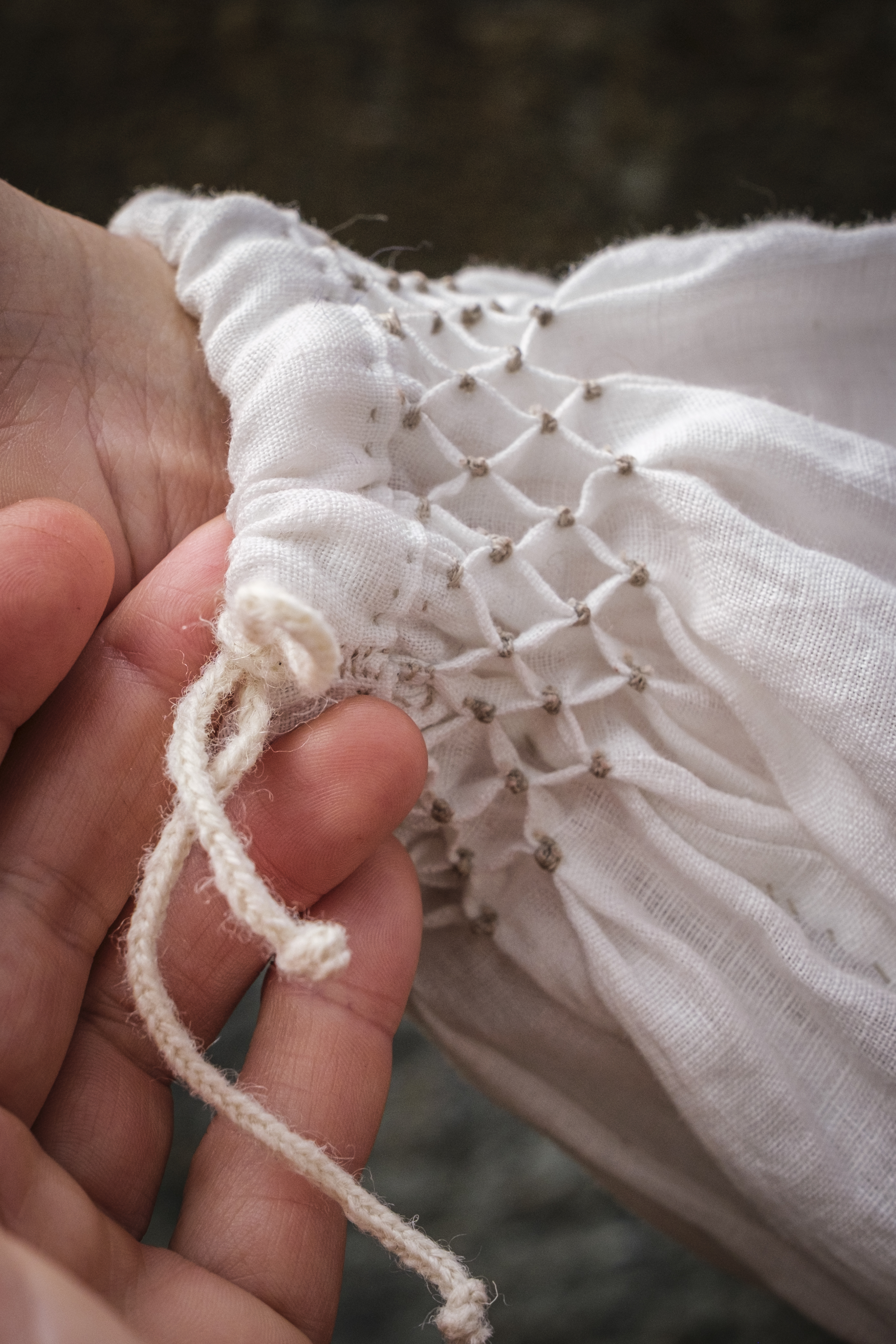
Something that fascinates me is that there are several examples in the art of women who have very puffy sleeves that look like they belong to the chemise. That is, the sleeves of the chemise are smocked together in several places on the arms so that they look a bit like a Michelin man. I wanted to try sewing a chemise in bleached linen that could be my troosfraus “finest chemise” and try this technique. I mainly took inspiration from the first picture below even though I didn’t sew as many “sleeve buns”. I have to say that the most enjoyable thing about German 16th century garment for women is sewing honeycomb smocking. It takes time but is such a nice and practical way to shape a garment.
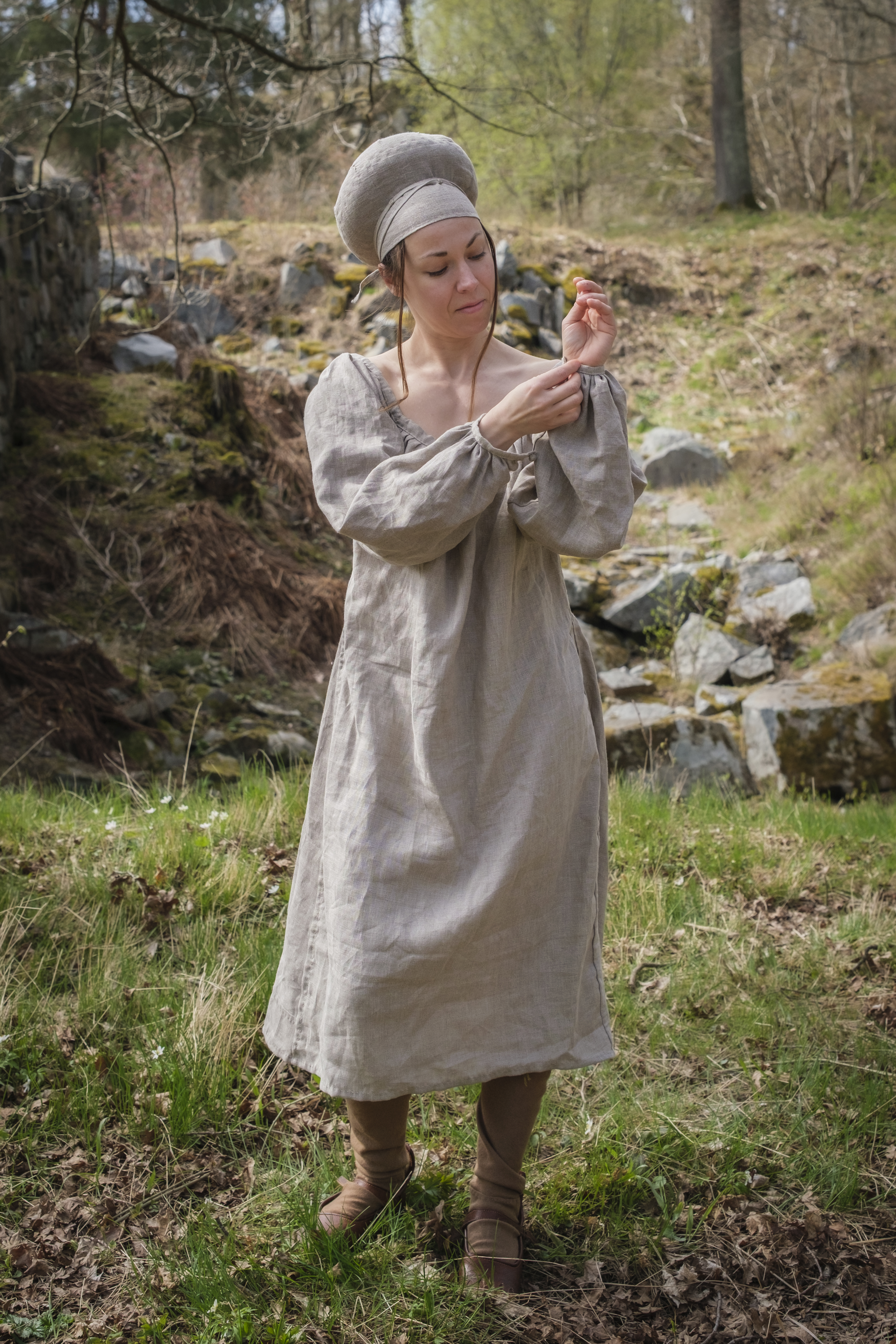
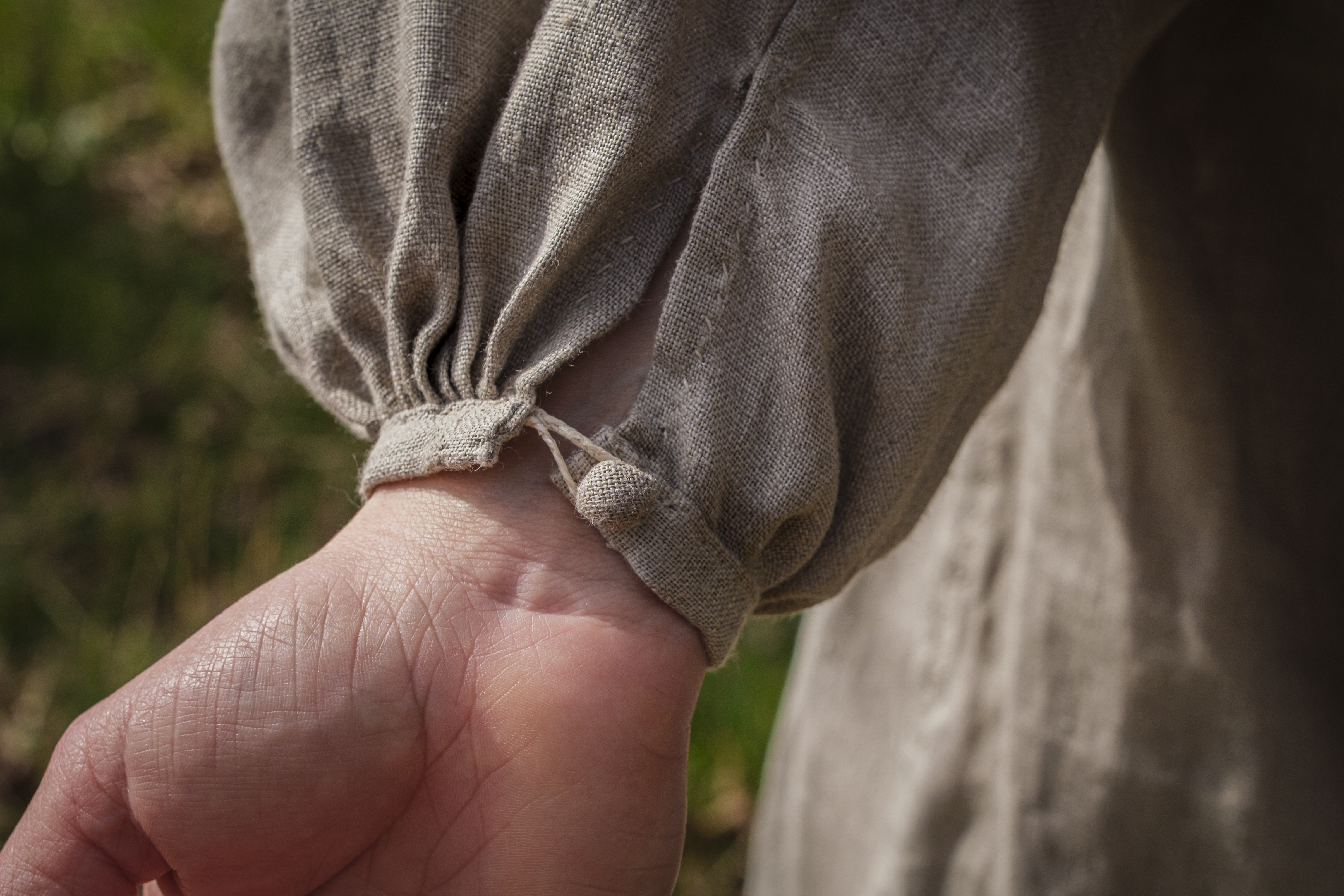
I also made a simpler chemise in unbleached linen with just a simple pleating around a rectangular, low cut collar. To easily roll up the sleeves, I sewed a small, simple fabric button and loop at each cuff. I don’t have a good source for this except that I’ve seen it somewhere in the art on high-status shirts from the period and it’s practical. I could have made narrower, straight sleeves but I wanted some airy volume. I sewed both chemises just below the knee length so that they don’t absorb mud and moisture from the ground.
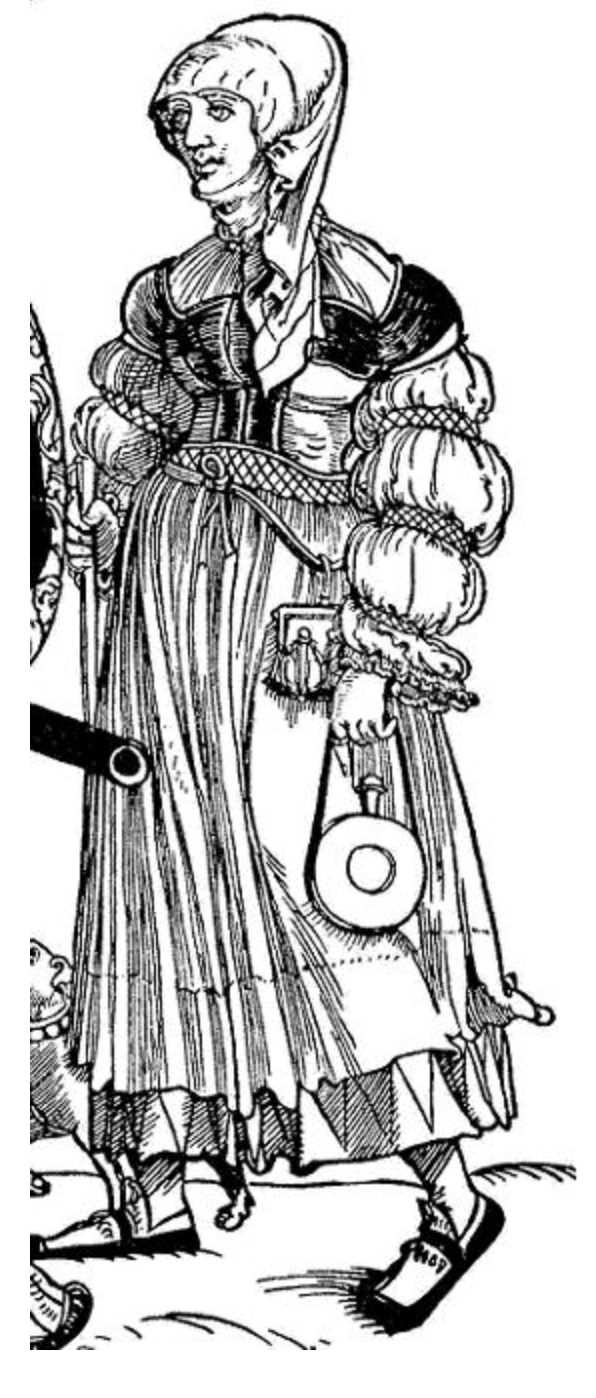
Erhard Schön. Date: 1535

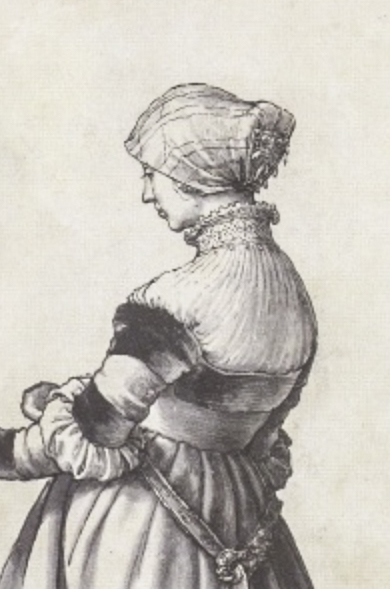
Hans Holbein The Younger. Date: 1523
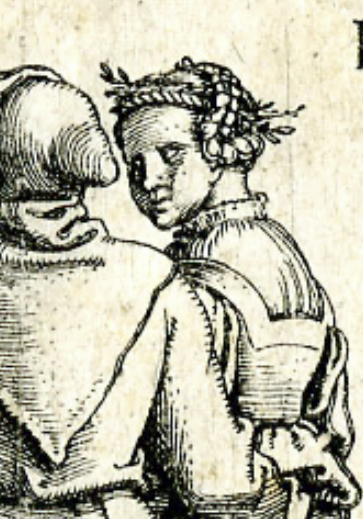
Sebald Beham. Date: 1500–1550
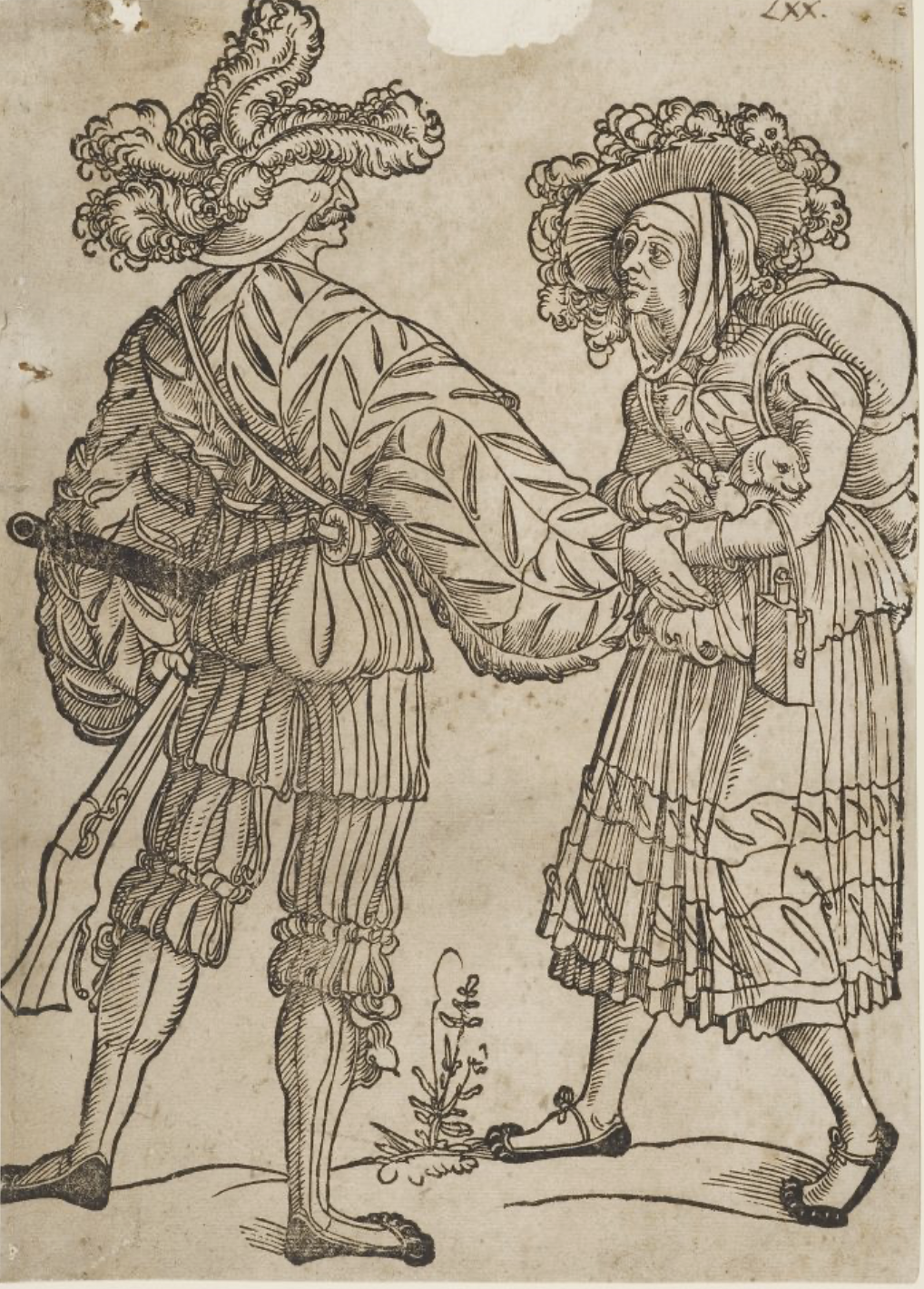
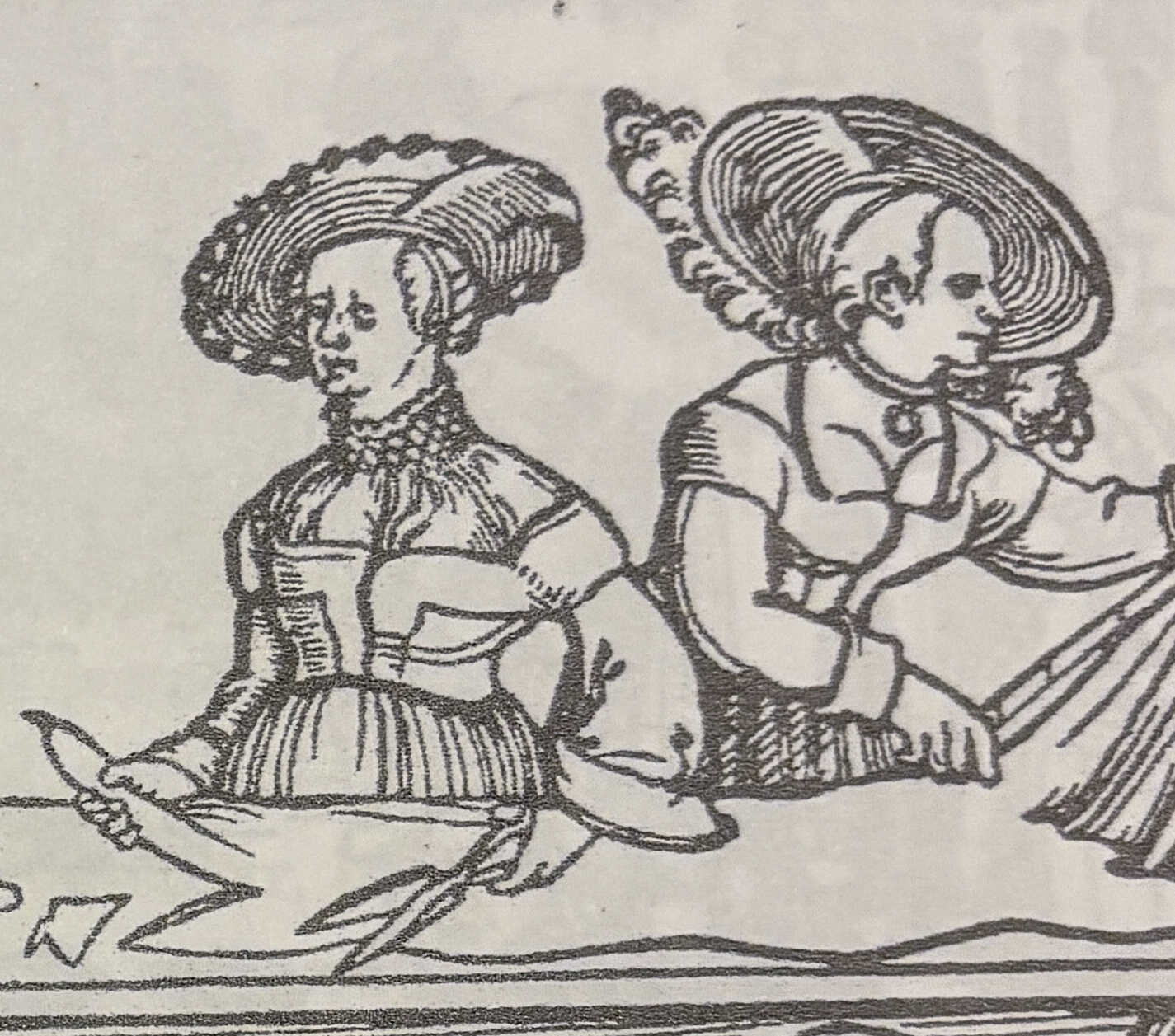
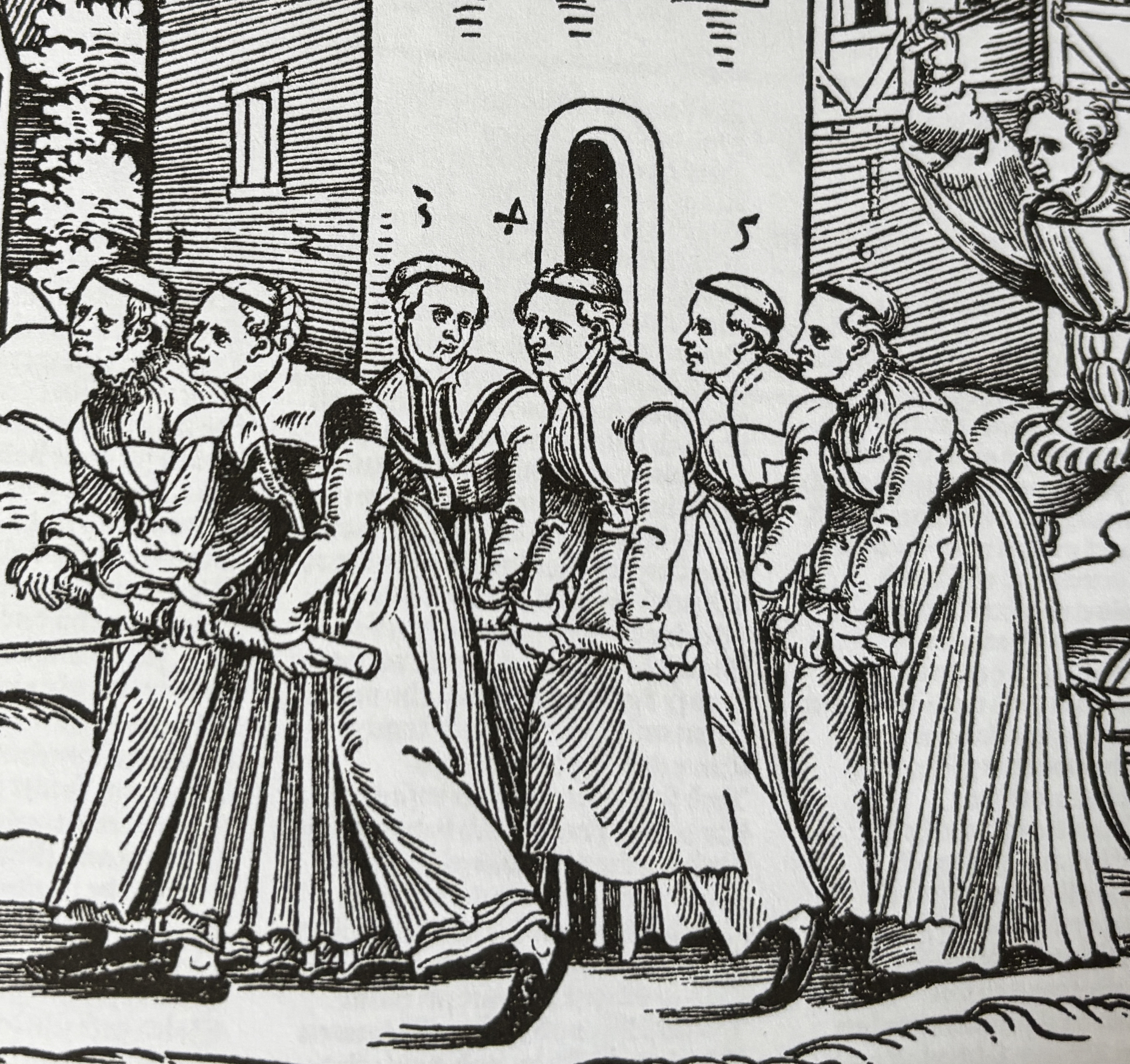
Erhard Schön Date: 1532
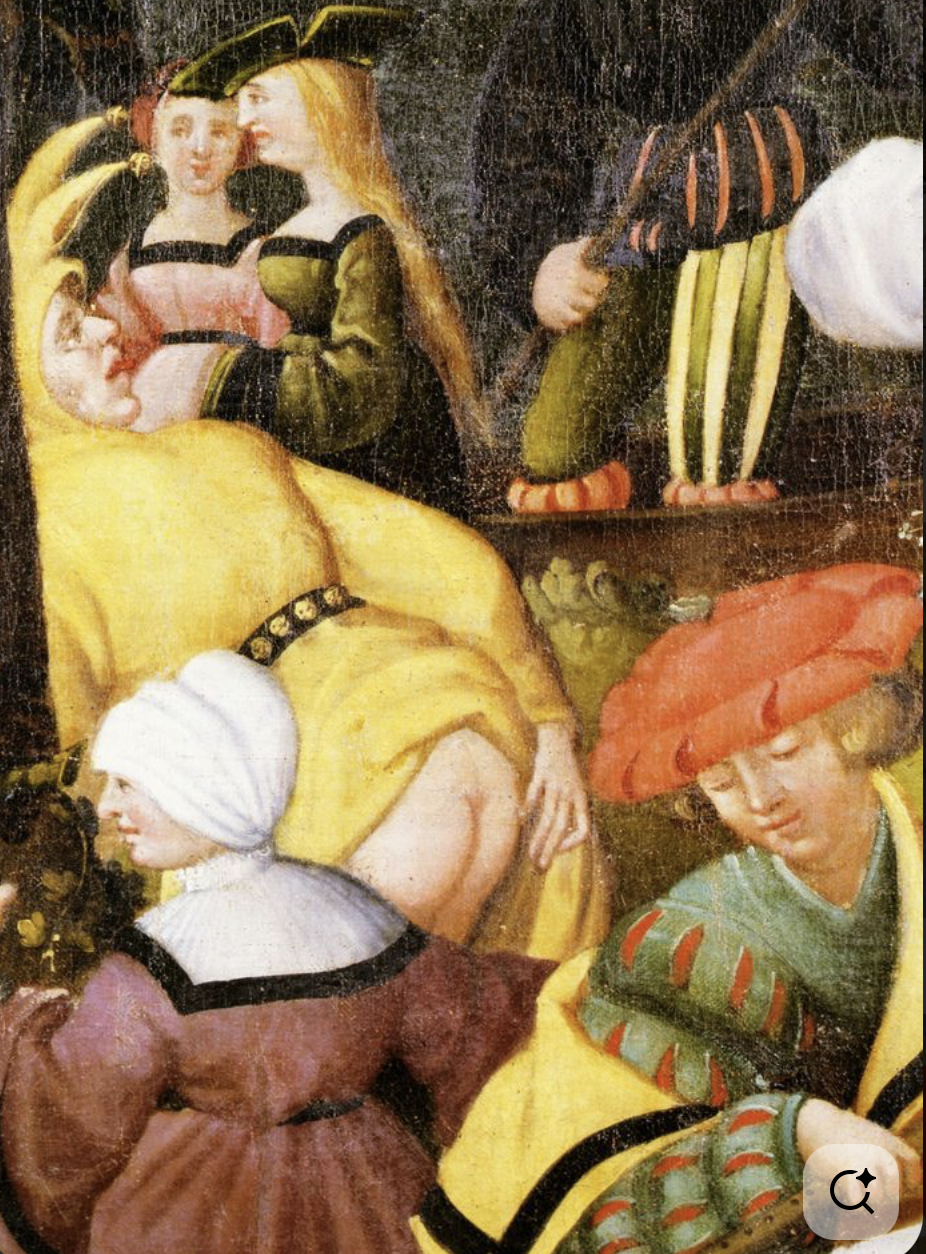
Date: late 16th century
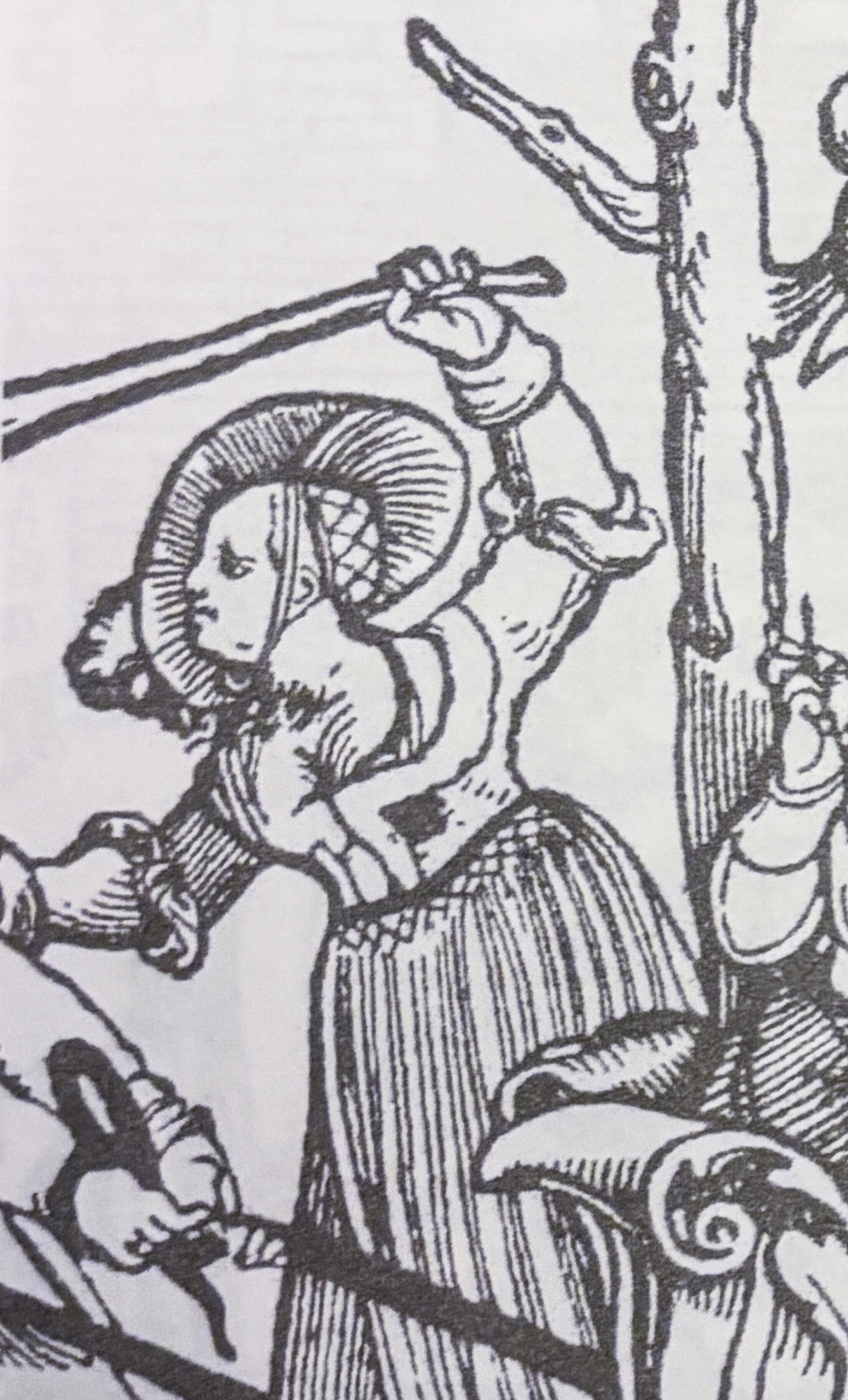
Erhard Schön. Date: 1538
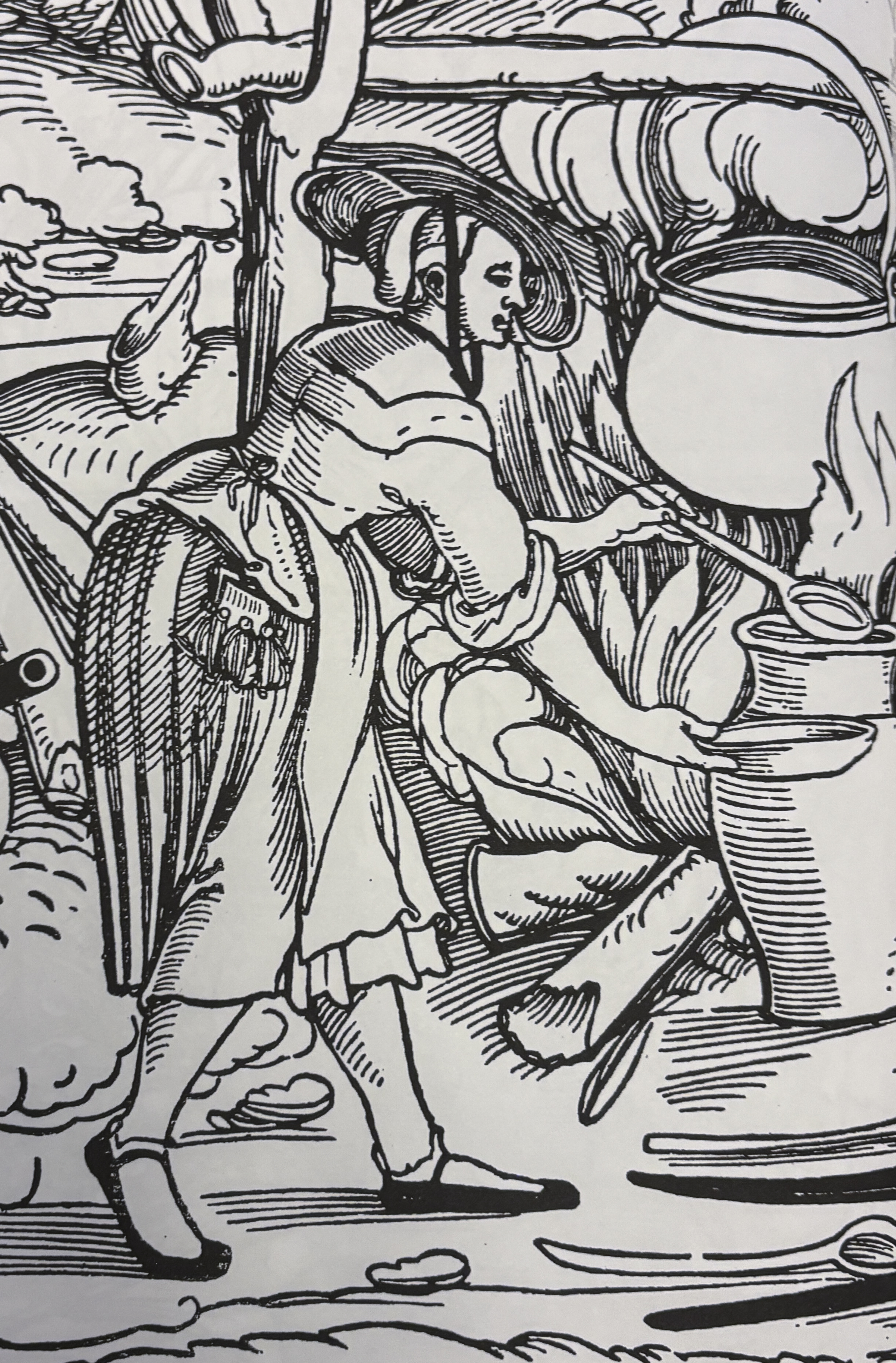
Sebald Beham, Date: ca 1530
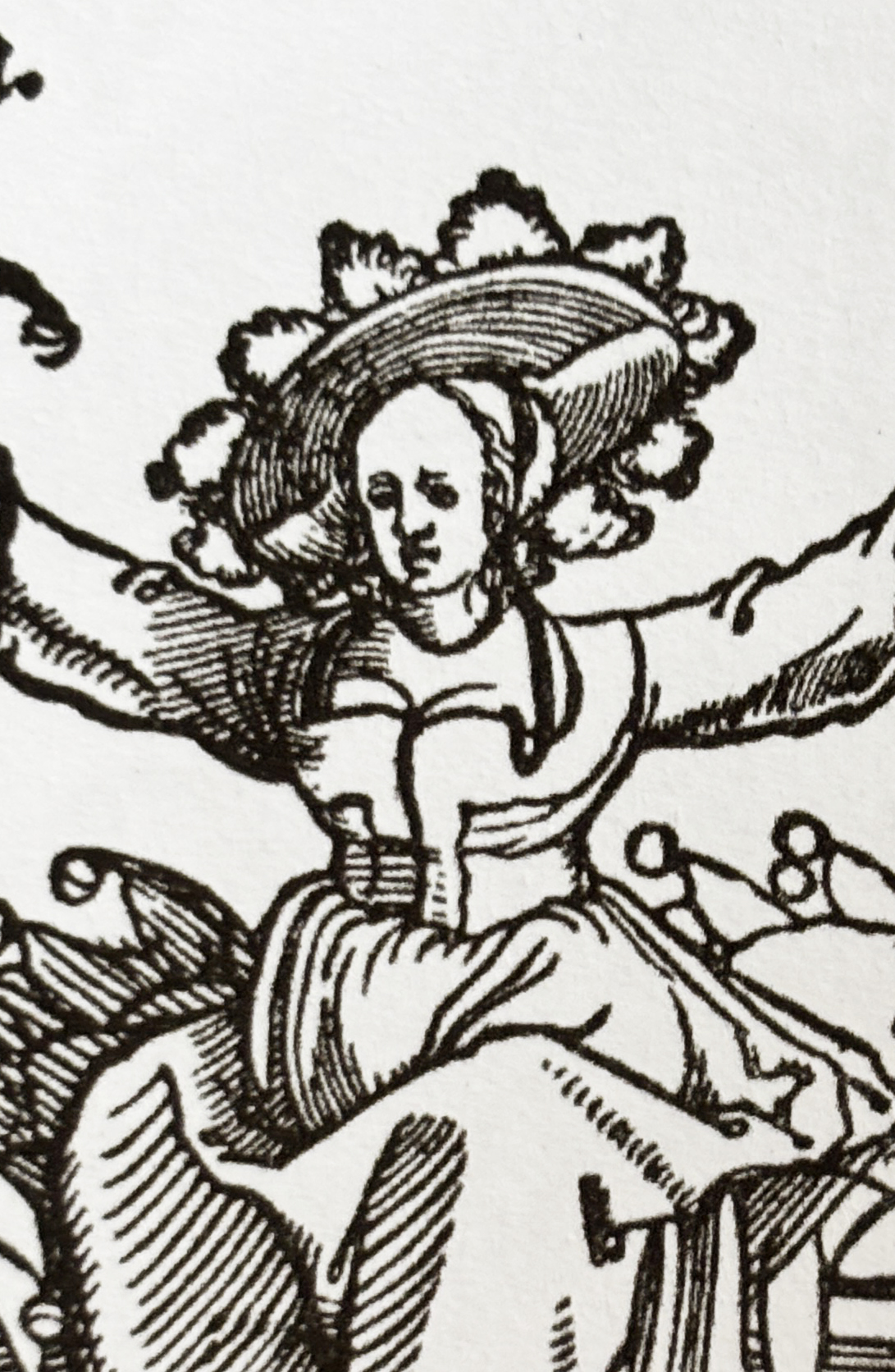
Erhard Schön. Date: 1538
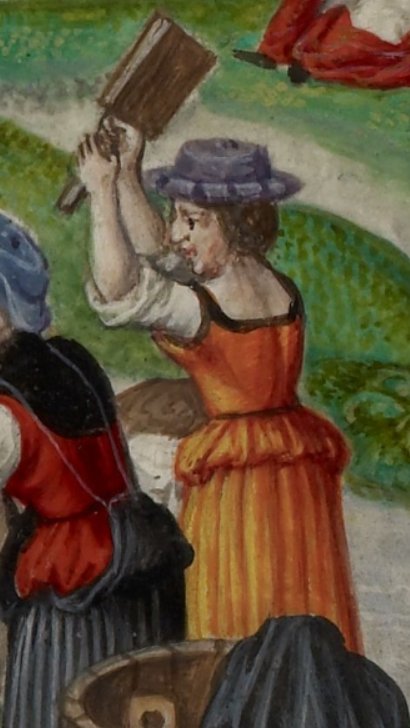
Date: 1582
Underdress
In the 16th century art you sometimes see low and middle class women doing physical labour or being private in their homes in a sleeveless, a bit shorter simple wool dress that closes in the front with lacing. This garment is interpreted as a mid-layer and is usually not visible because the women wore the maindress over it. In a time with no corsets and bras, it provides good support while also providing warmth as an underlayer and is suitable for work when it’s hot and you don’t have to be respectable.
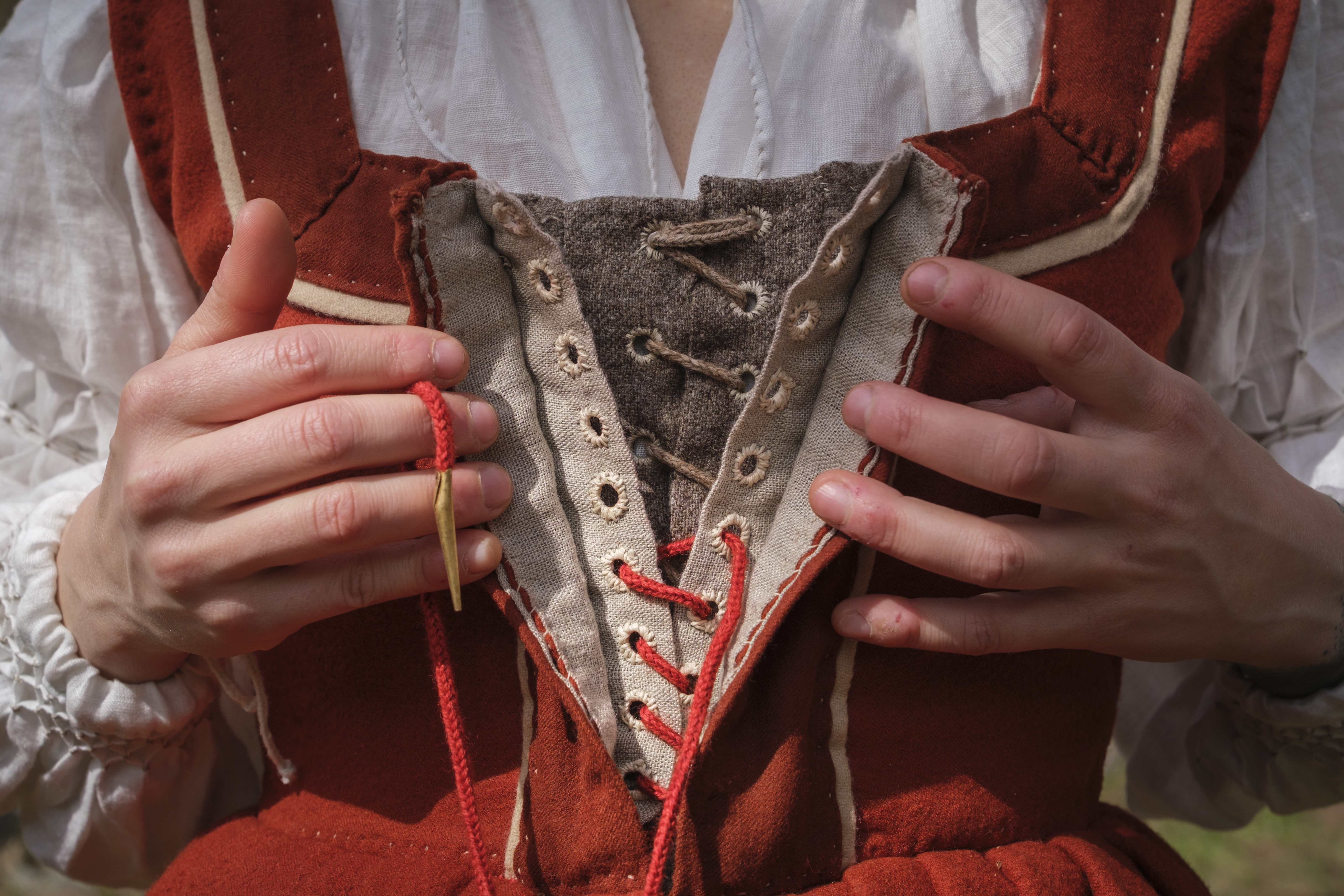
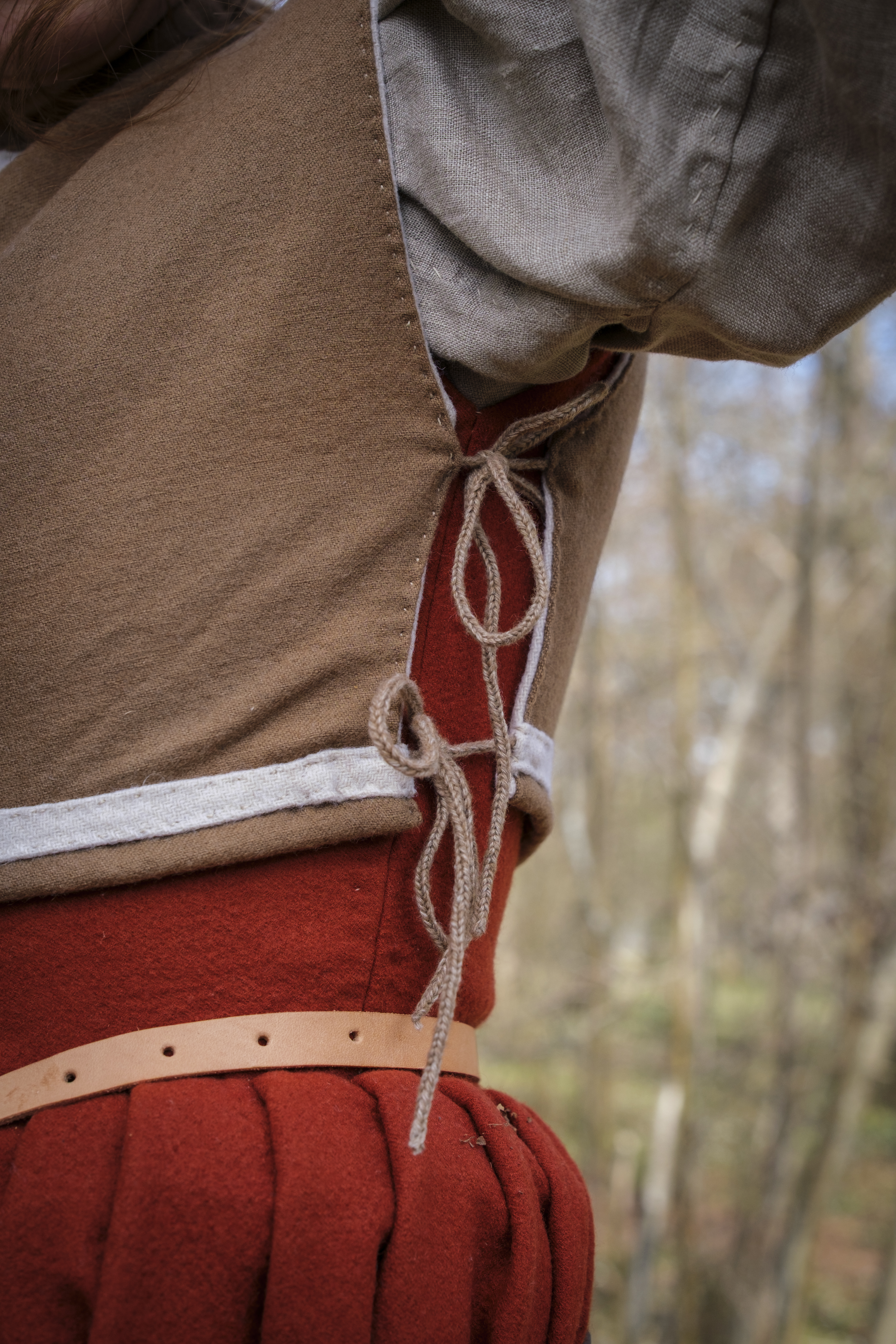
I have sewn my underdress in a natural brown wooltwill with lacing so that it can be laced loose during pregnancy but can also be laced tightly as a support for the bust. It is a little shorter than the overdress so that it does not drag in mud even without being pulled up with a belt.
It is hand-sewn with waxed linen thread and lined with linen in the bodice for stability. The neckline is very low and square both front and back. That is my interpretation as you rarely see the underdress peeking out from under the overdress in woodcuts and art. I made the cord for the lacing in a wool yarn that I dyed with walnut leaves with a lucet. Slinged wool cords are both durable and slightly stretchy, which I think works very well as lacing.
Main dress
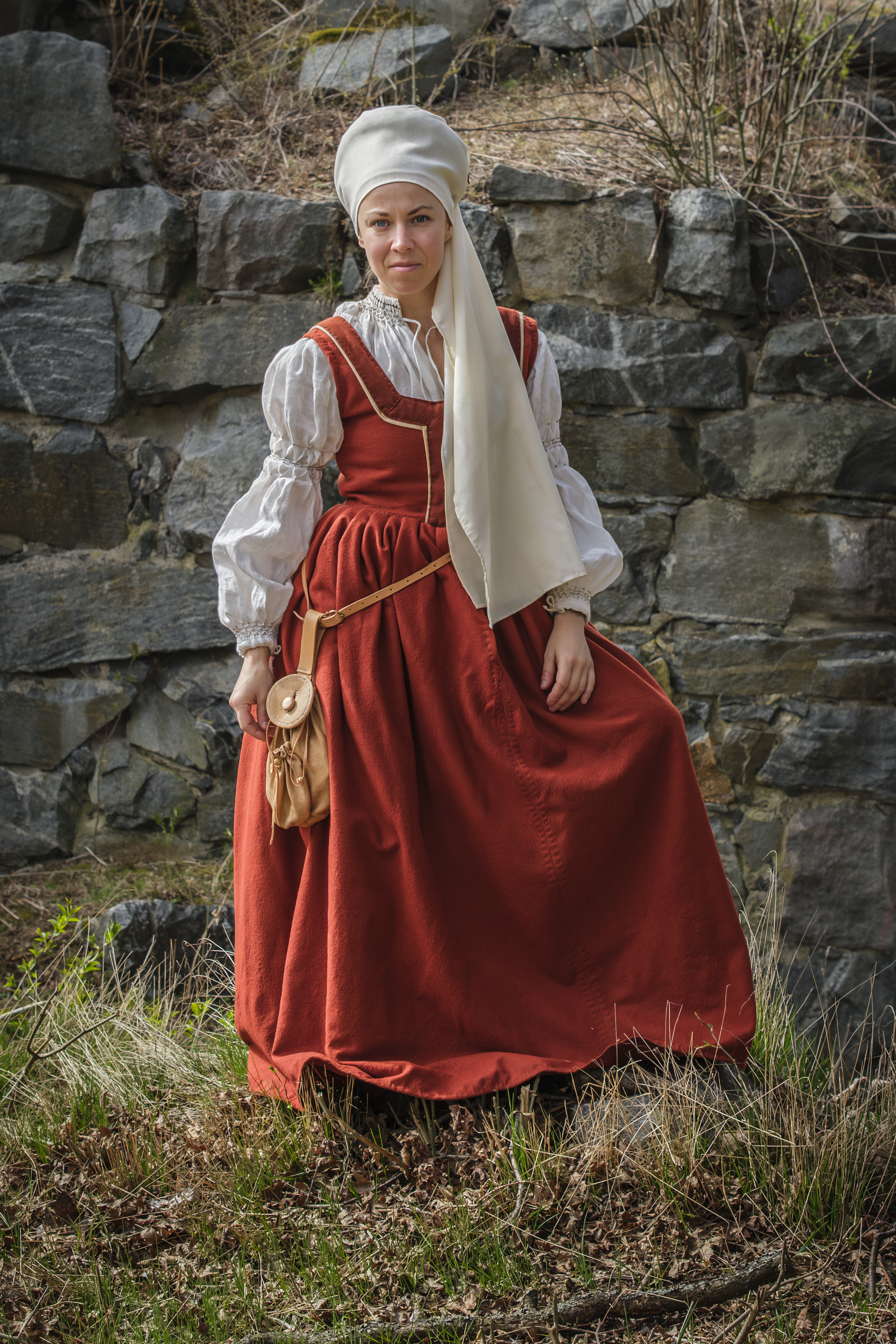
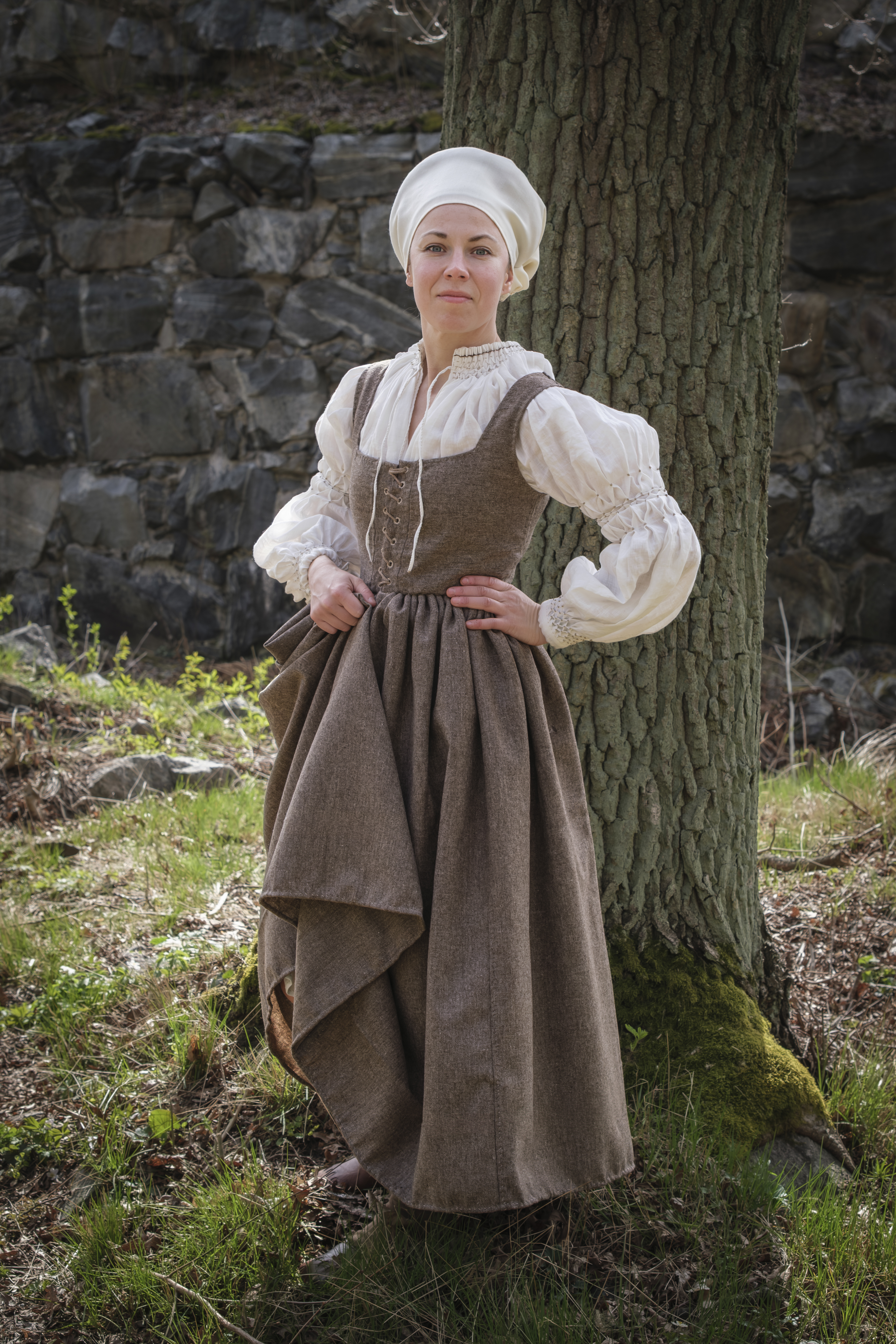
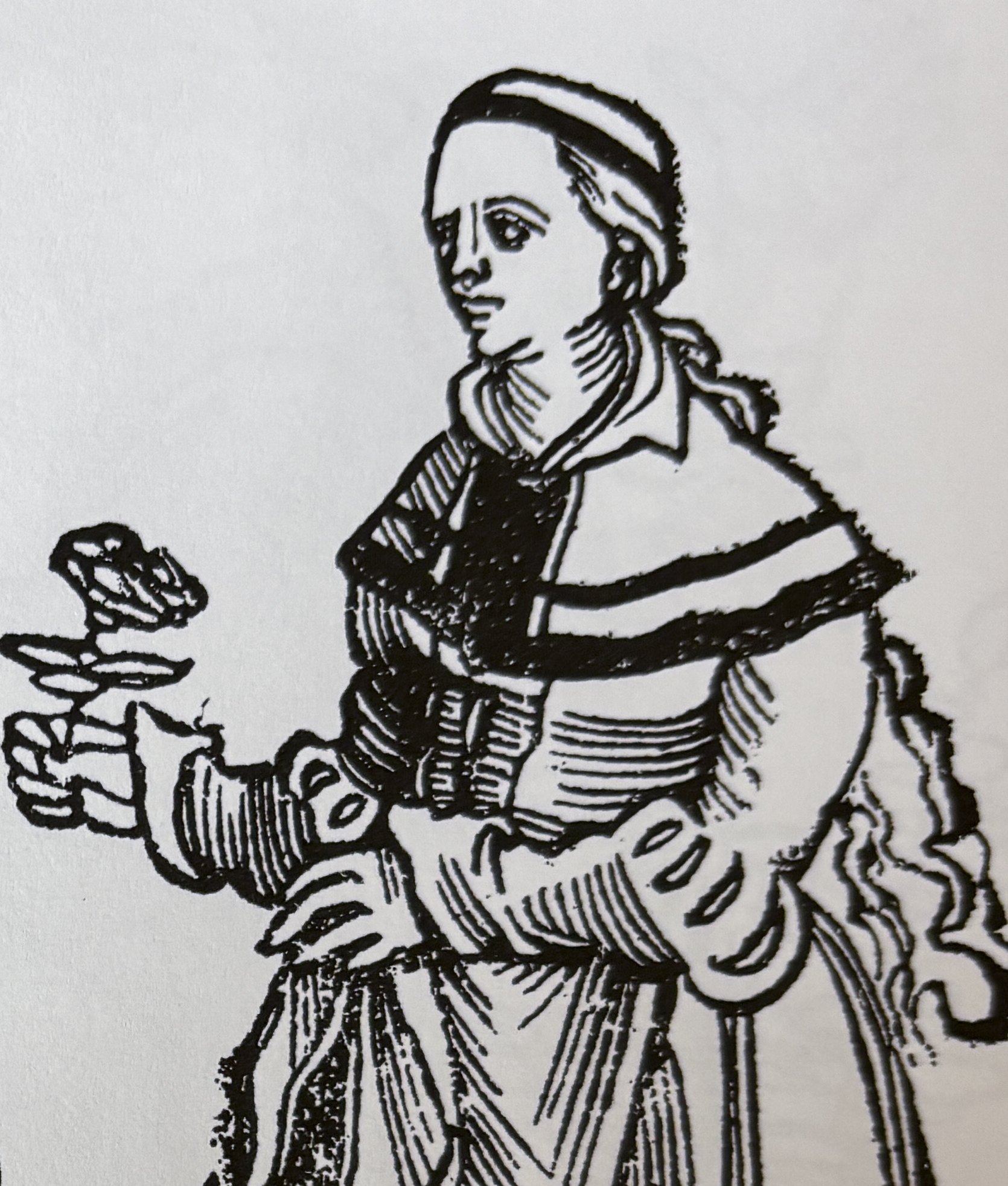
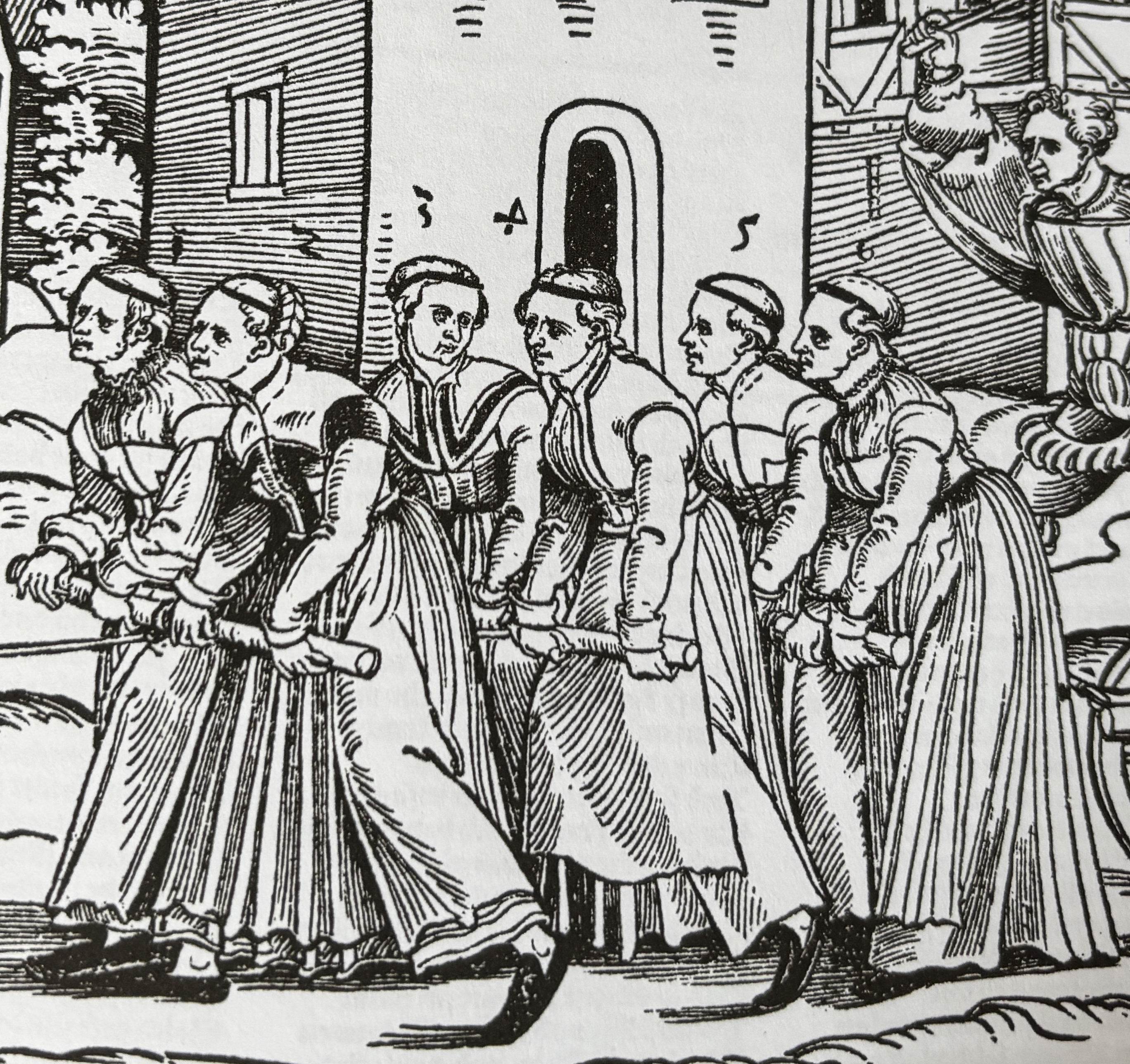
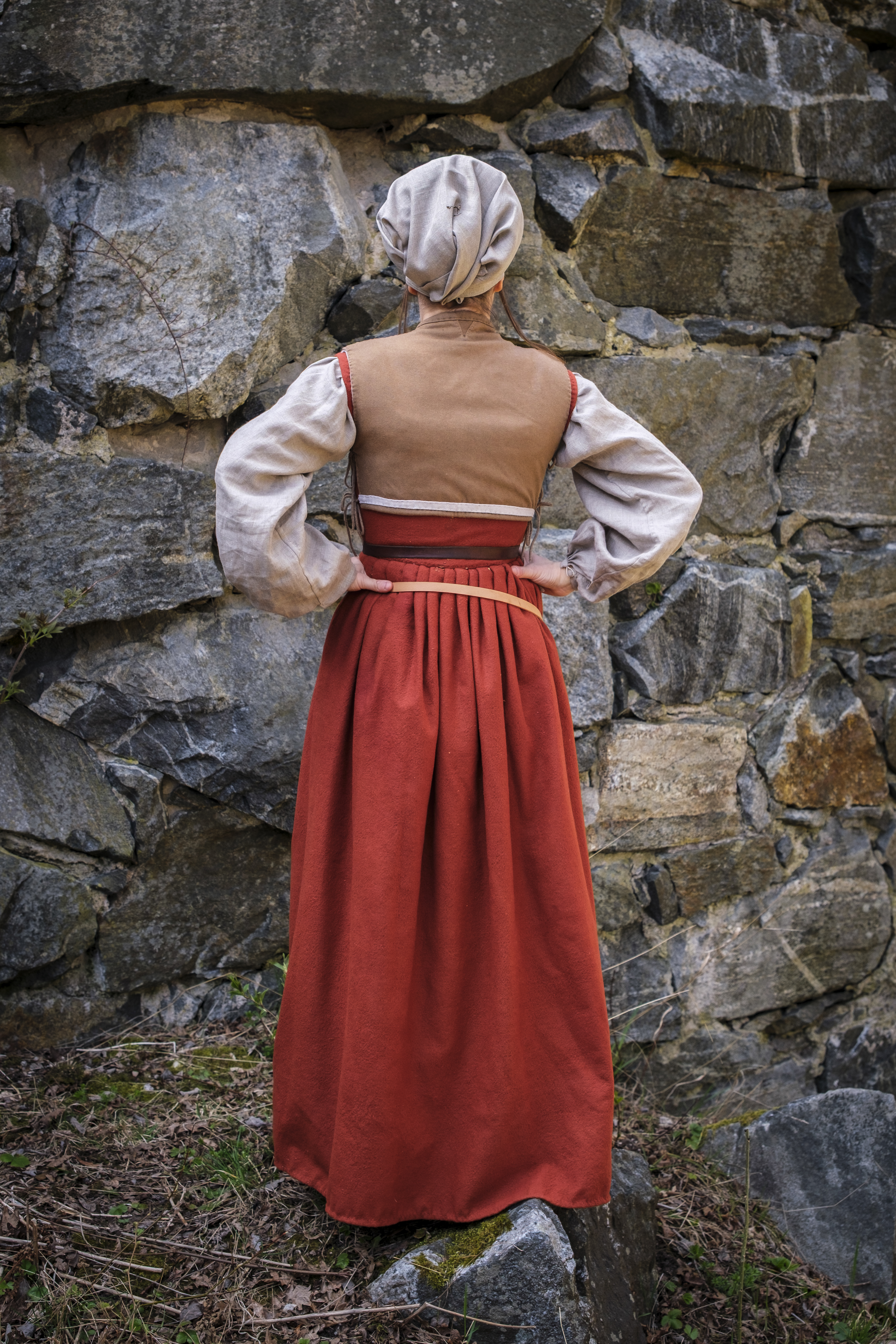
I try to base my main dress on what is common in the woodcuts and art of women in this period and social class. There are always a lot of pleats, low necklines and often decorations of lines and stripes on the bodice. Sometimes stripes and slit patterns also appear on the lower part of the skirts, but I see skirts without decoration more often. However, the rule is always high waist and wide hips.
It is common to have long sleeves on the main dress, but since I have very limited fabric for this project and want a summerdress, I have chosen to make it sleeveless and possibly sew a pair of detachable sleeves later. There are examples of this in art.
I have chosen to sew the maindress in a wool (woven in 2/2 twill) that I have plantdyed with madder. It’s a strong color but not one of the more expensive colors used for dyeing during the 16th century. The decorations are also sewn in a wool twill plantdyed with madder root on natural gray fabric.
Then I have a theory that what we see as narrow double lines around the borders on many bodice in the woodcuts could be piping seams. That is, a thin, folded strip of contrasting fabric sewn in between the fabric in the bodice and the decorations on the outside. Since I have not been able to find any archaeological material to support it, it is just a theory. But it is a simple and effective way to use leftover pieces of fabric and I see no other reason for the woodcut artist to carve double lines in that way. That is why I chose to sew piping seams with folded strips of a beige wool that I plant-dyed with walnut leaves. I think it turned out effective but still simple.
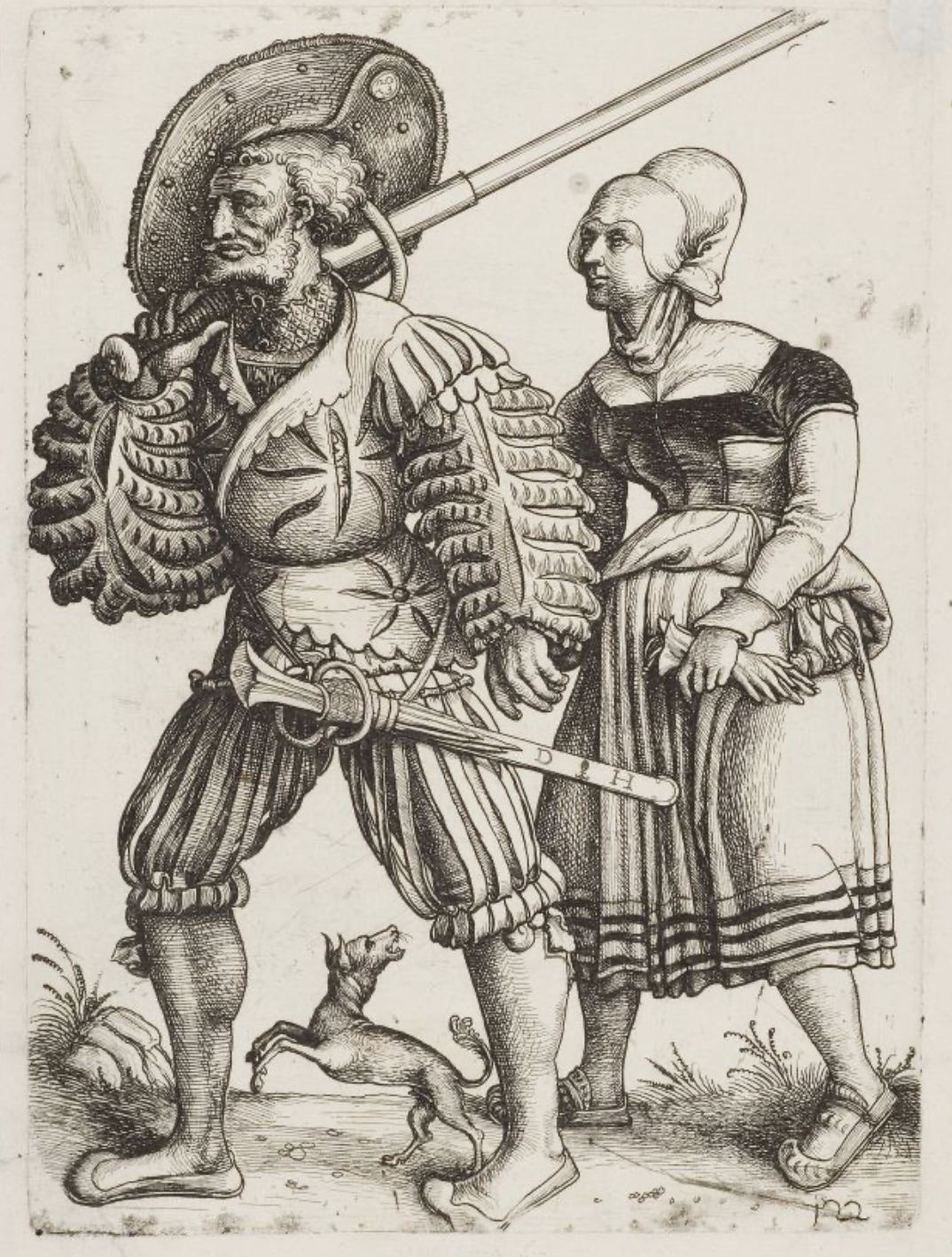
Detail of woodcut. David Funck.
Date 1504-1536
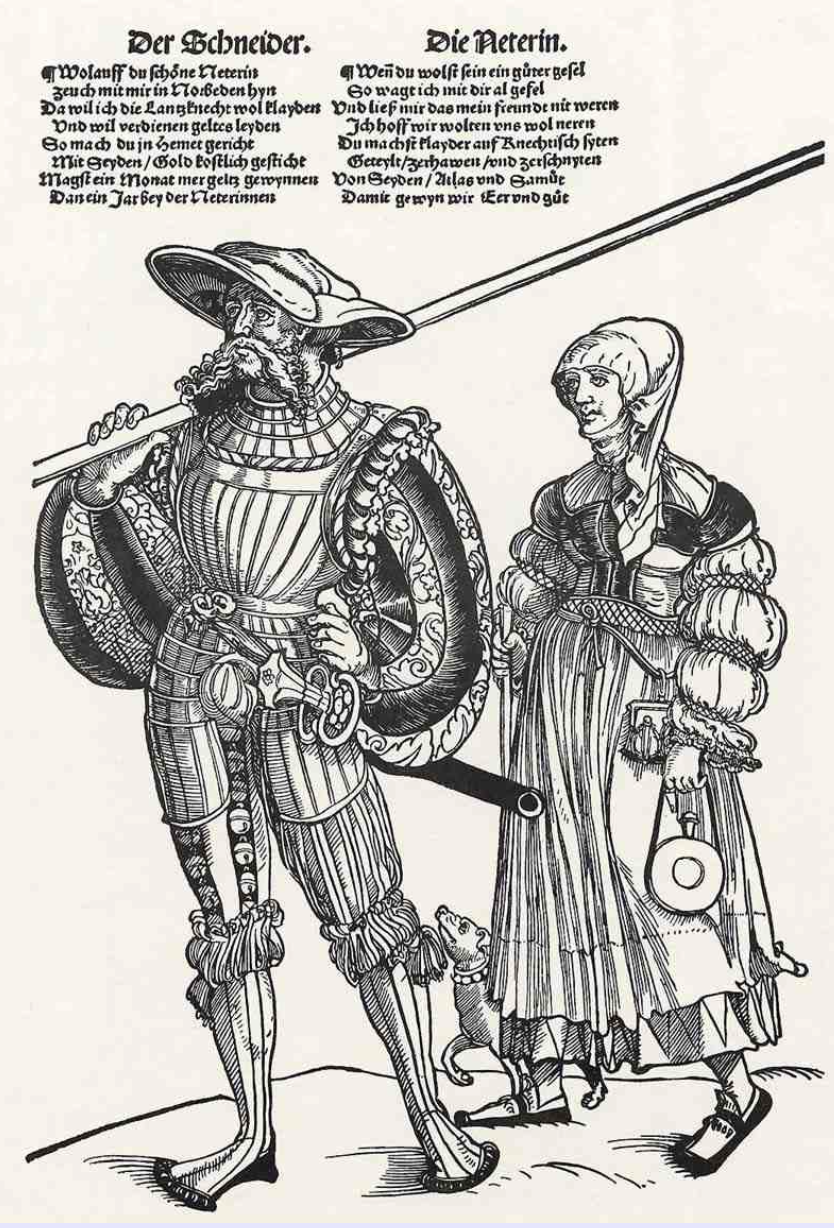
Detail of The Tailor and the Seamstress,
Erhard Schön. Date: 1535
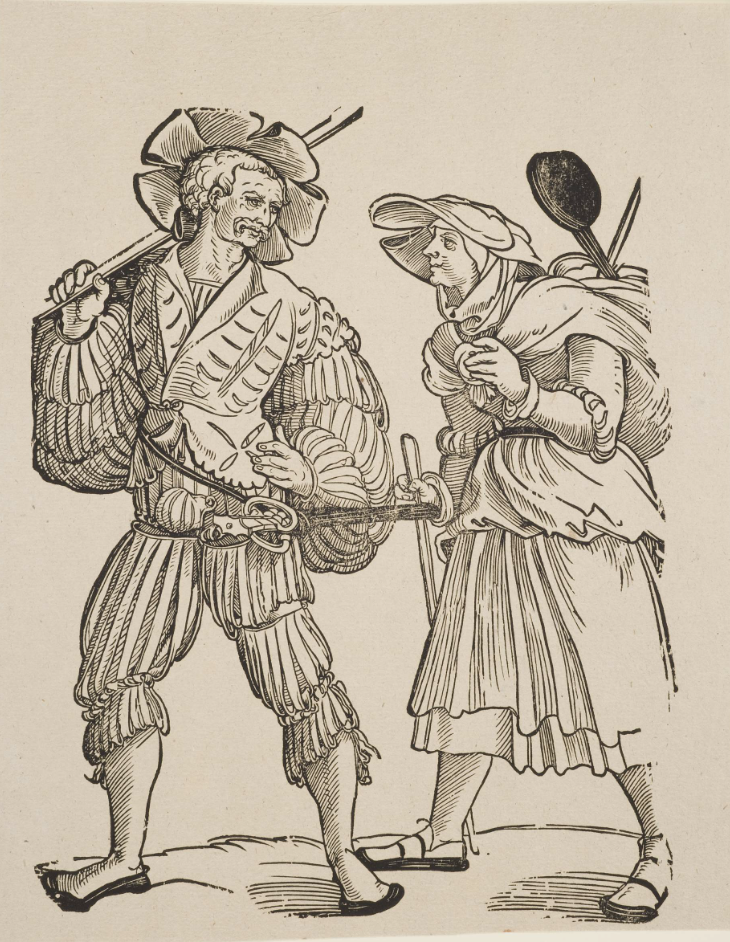
Erhard Schön Date: 1535
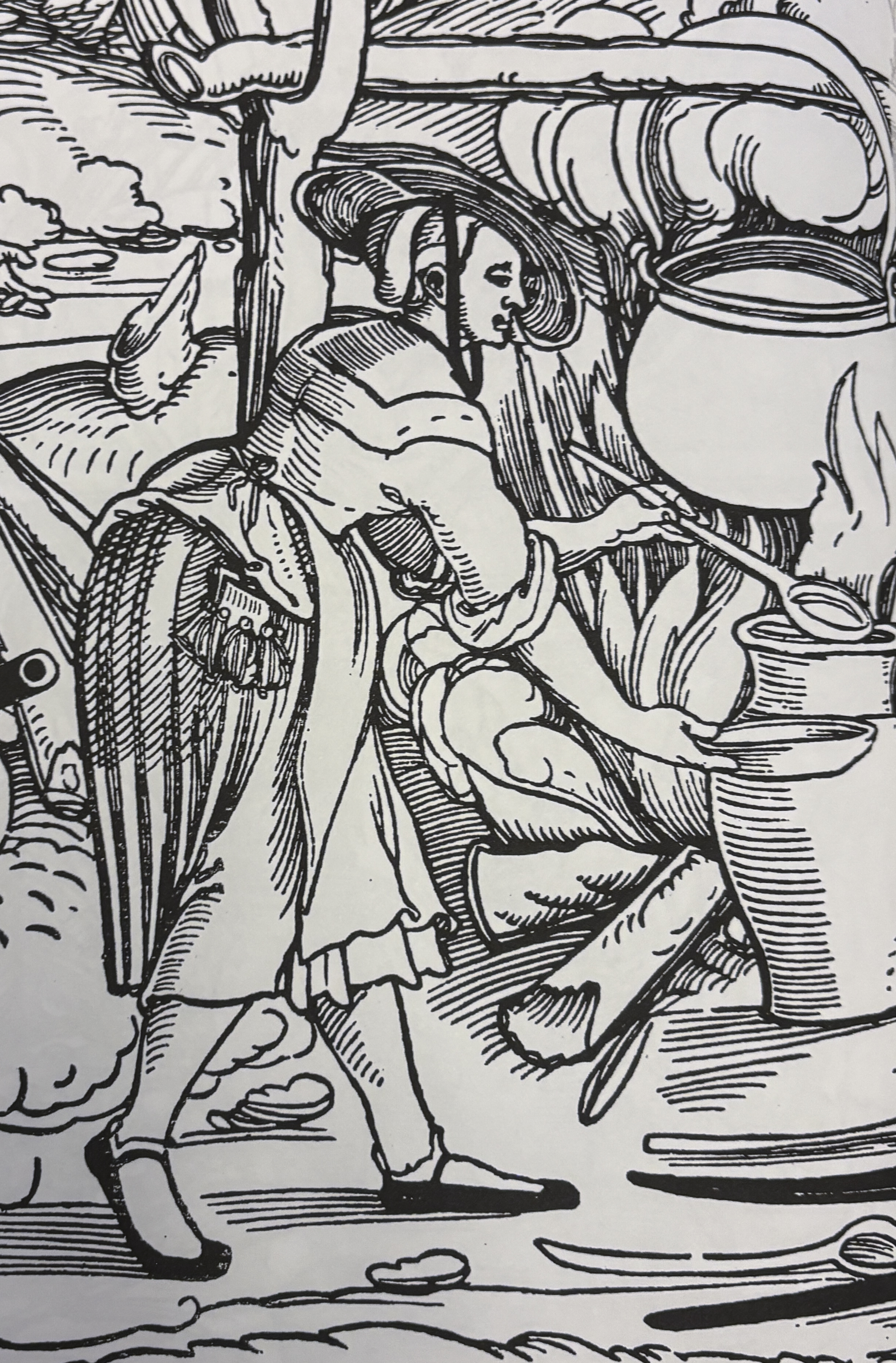
Detail of “Landsknecht camp”.
Sebald Beham, Date: ca 1530
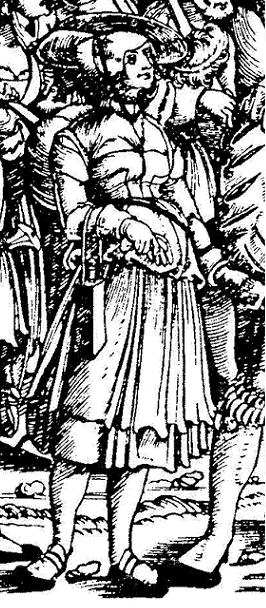
Edhard Schoen. Date: 1532
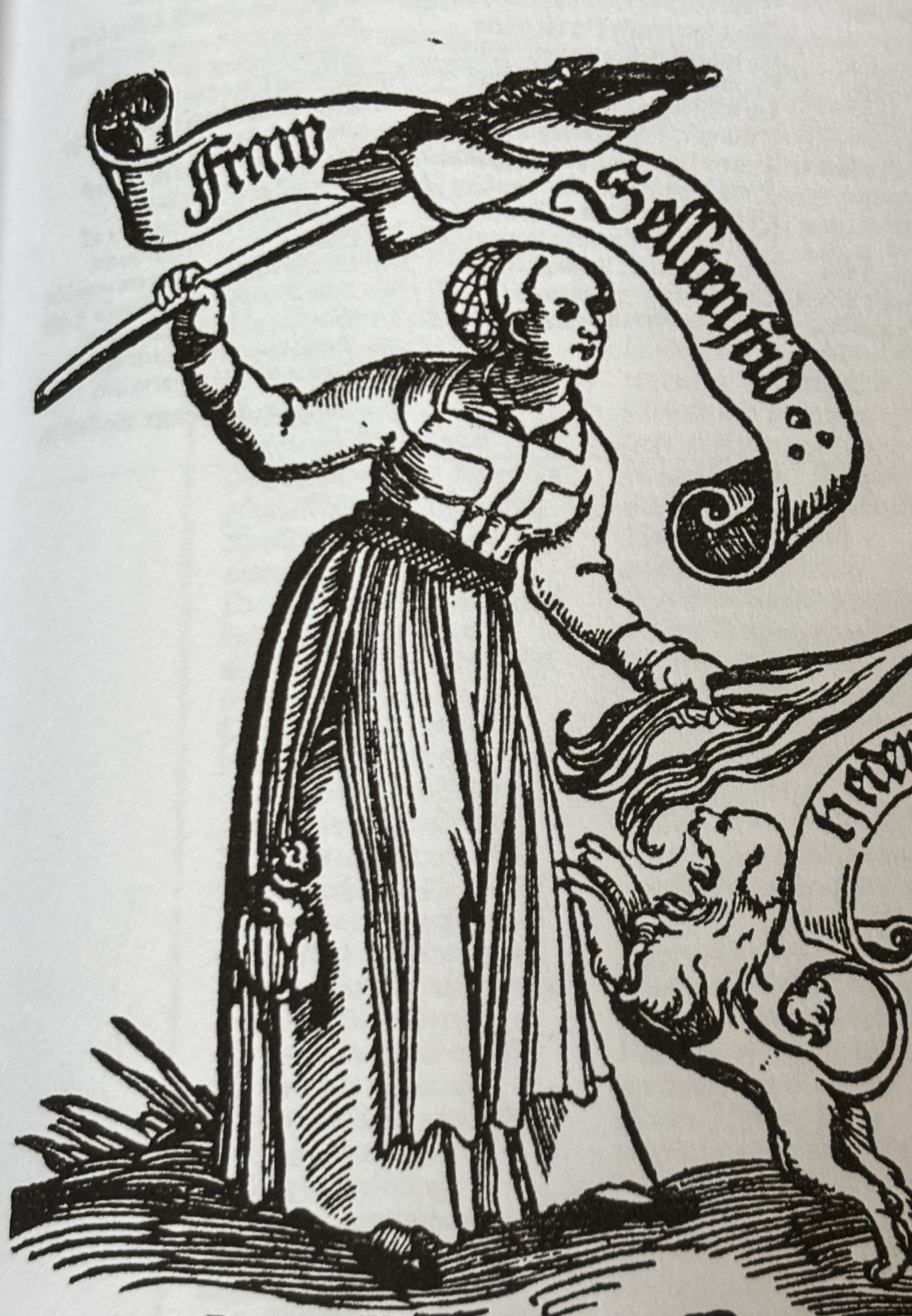
Erhard Schön: Date:1535
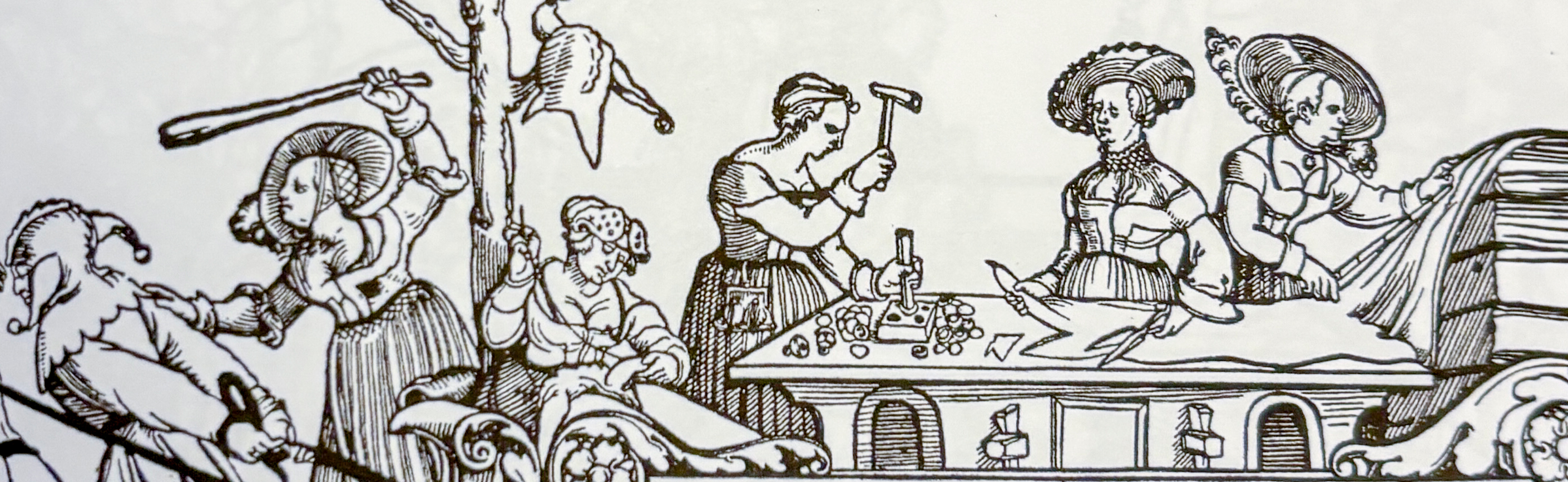
Detail of The Distribution of the Fool’s Caps,
Erhard Schön. Date: 1538
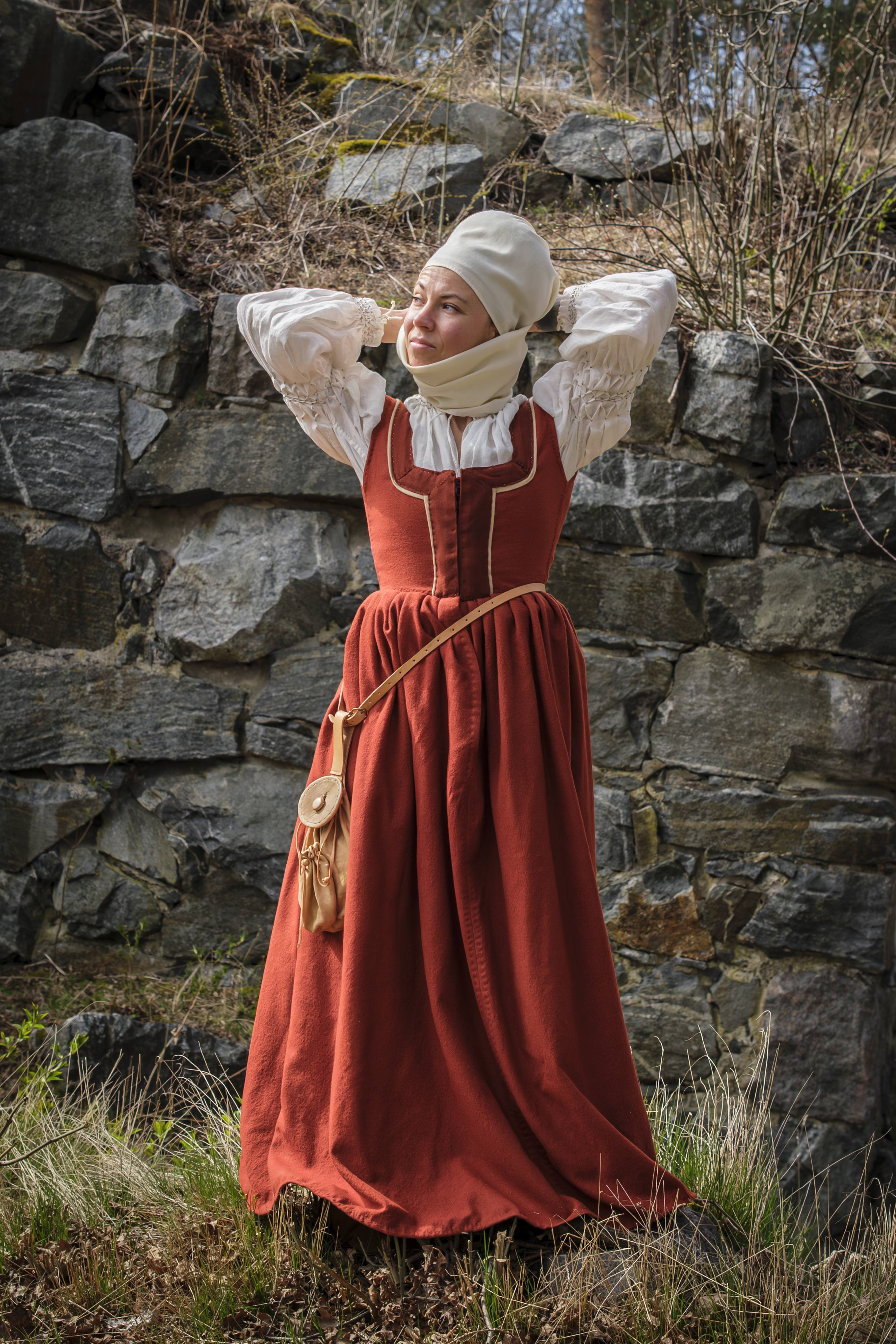
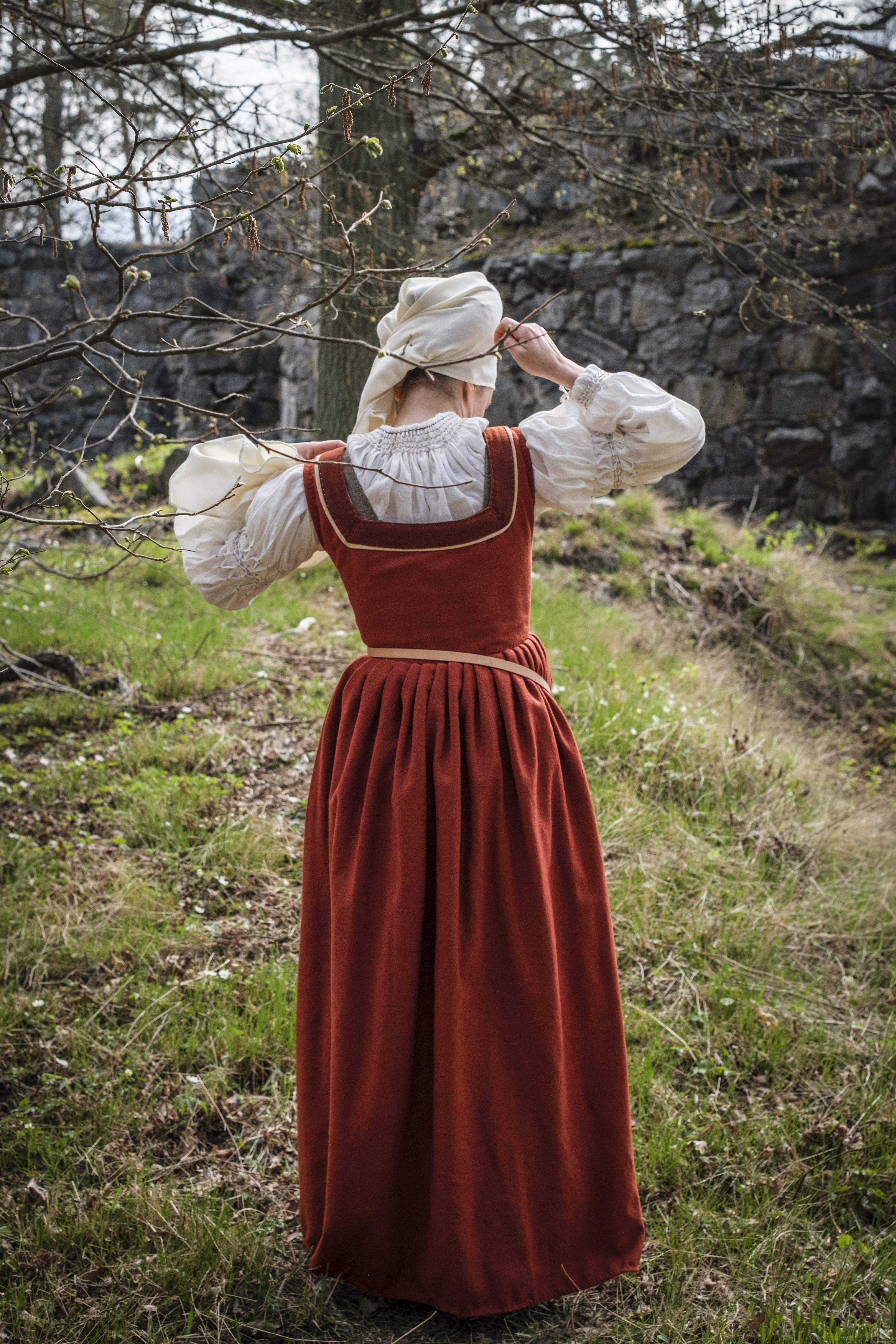
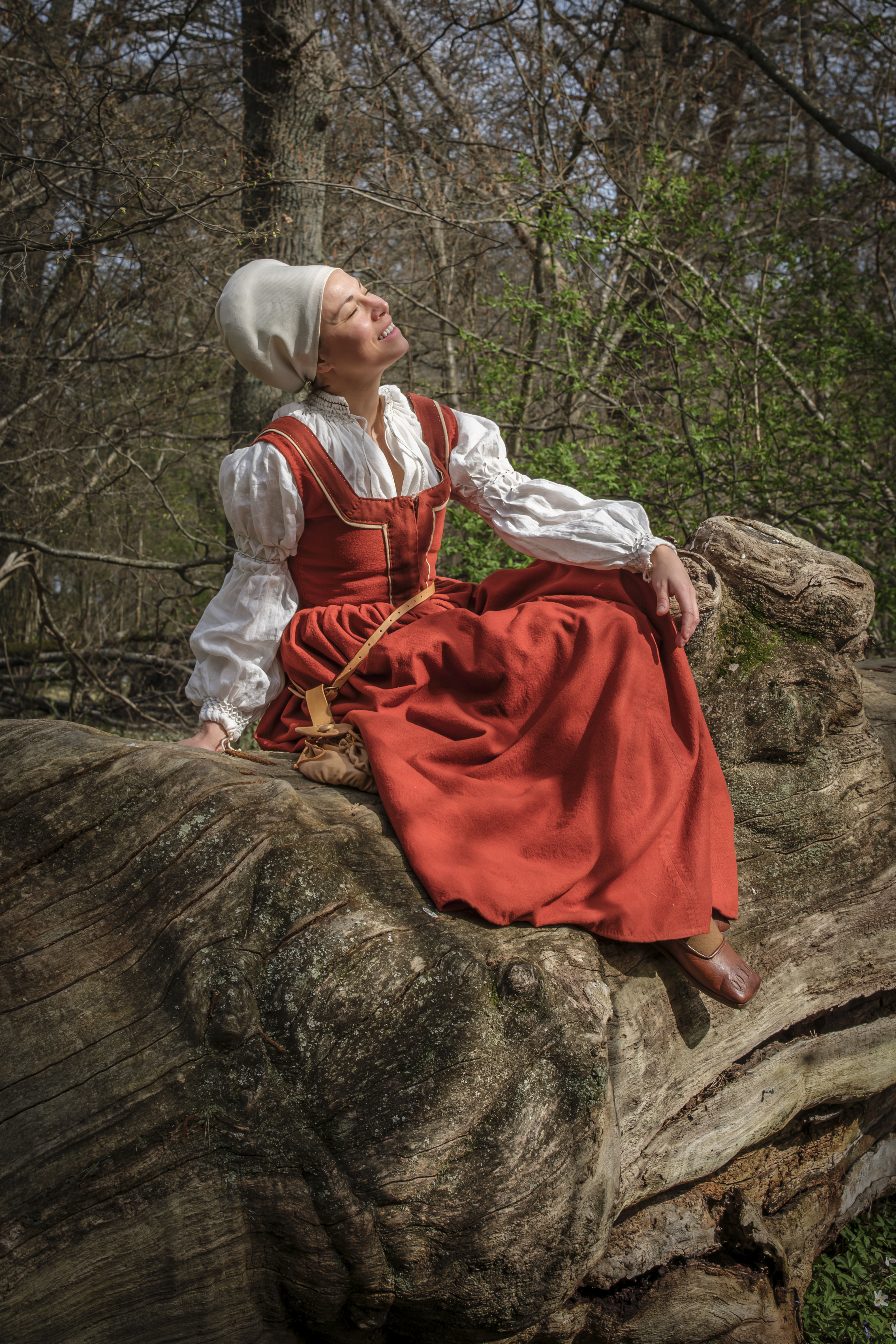
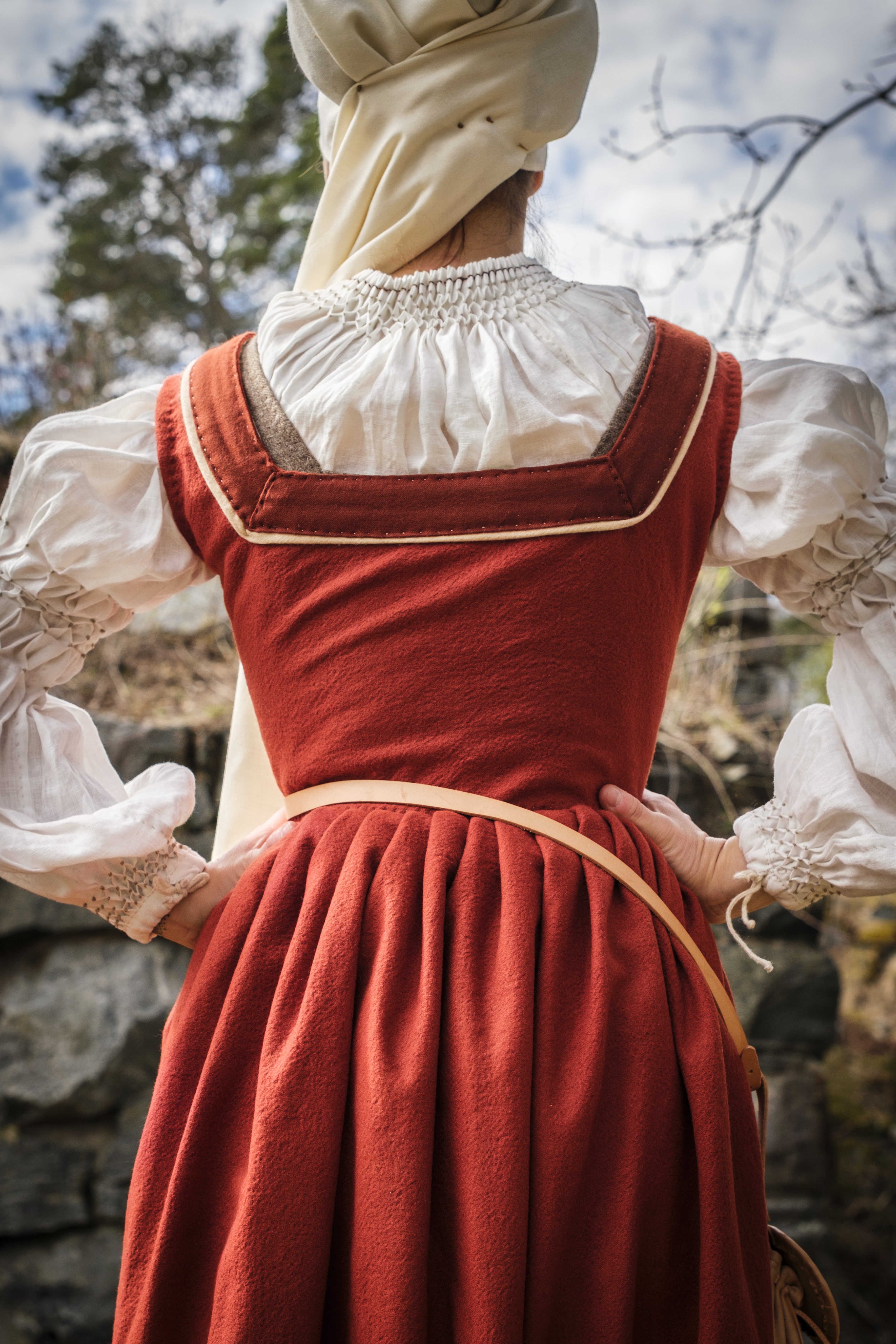
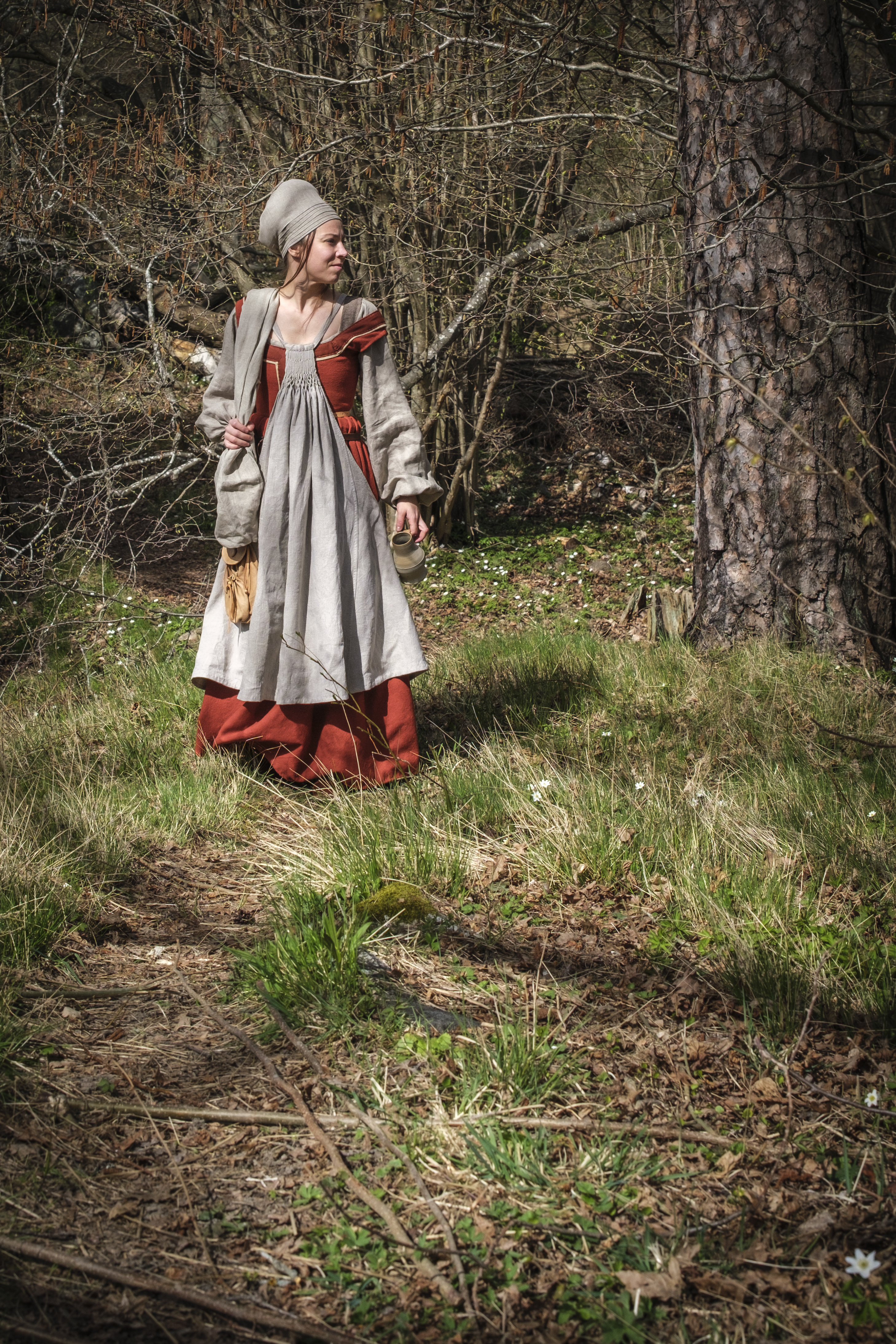
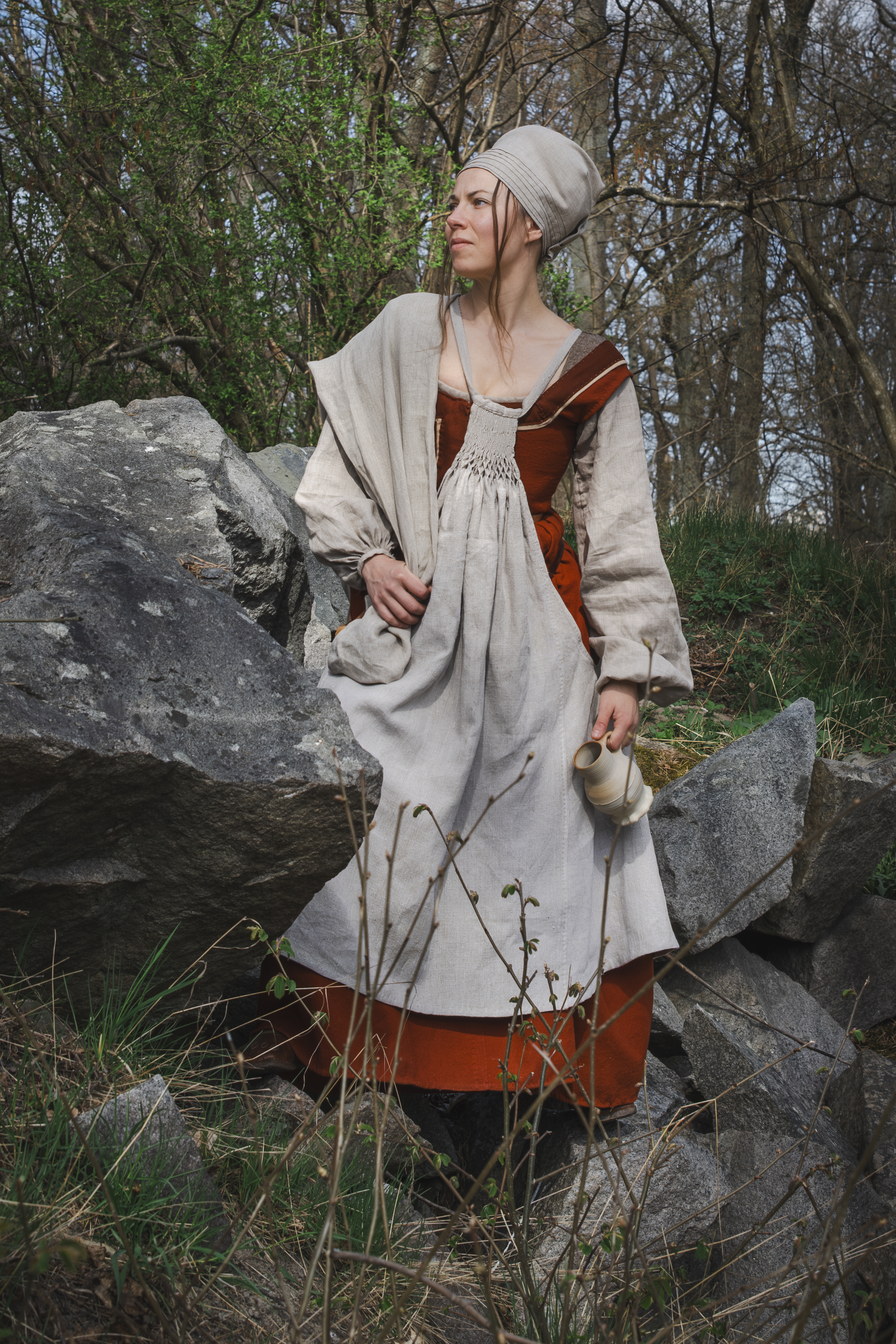
Wulsthaube
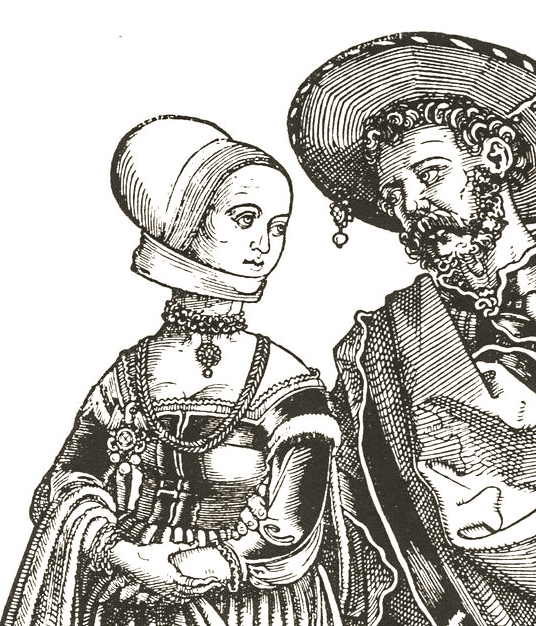
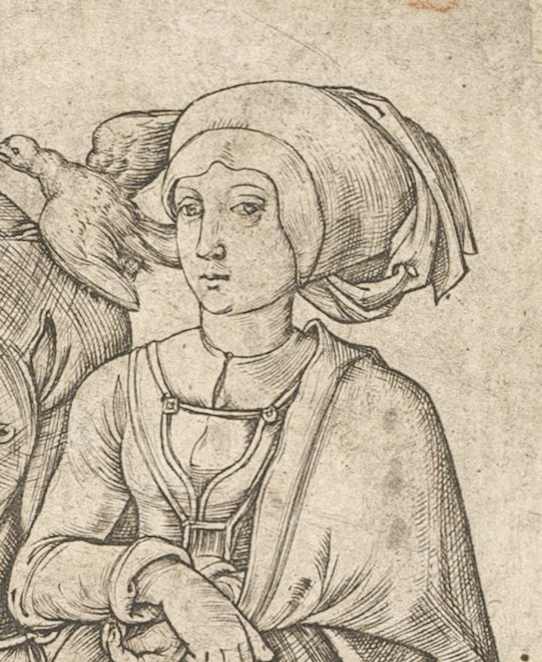
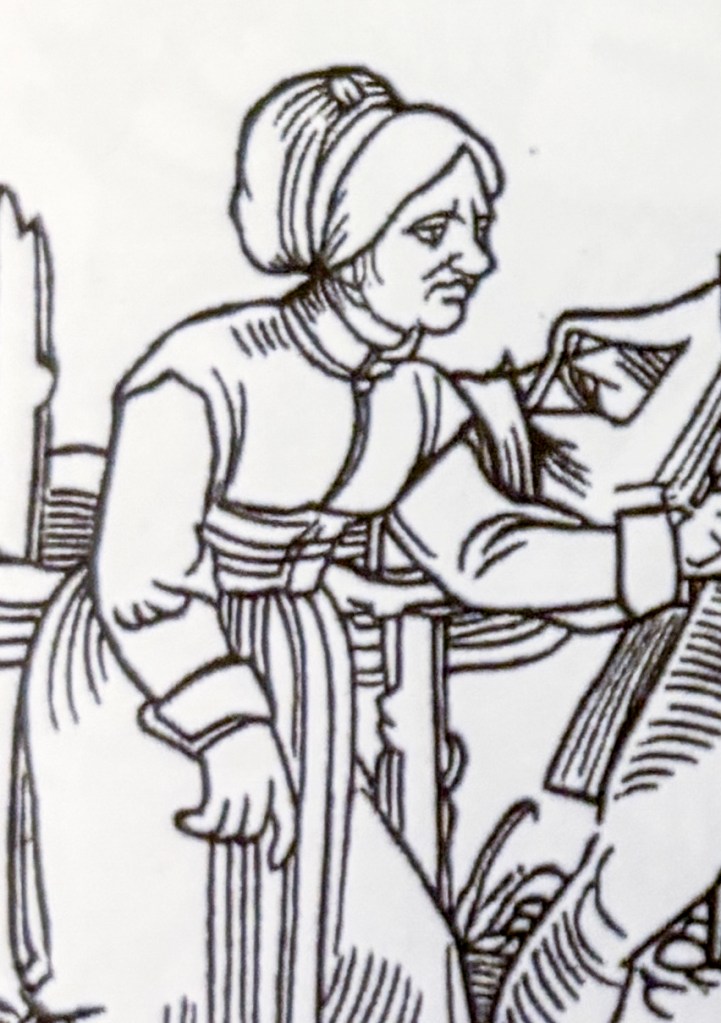
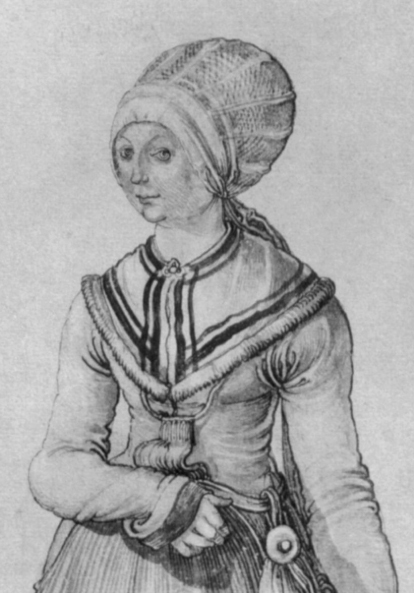
An adult women in the 16th centery wore her hair up and almost always covered with some kind of veil. In this period, the highest fashion in Germany and Europe was to have a profile with a very big bulb in the back of the head. It probebly started with women braiding their hair in the back under the veil. But fashion likes to go extreme and soon women started to use a lot of padding under the veils. A “Wulsthaube” is like a padded sausage that are used under the veils to create the right head- silhouette.
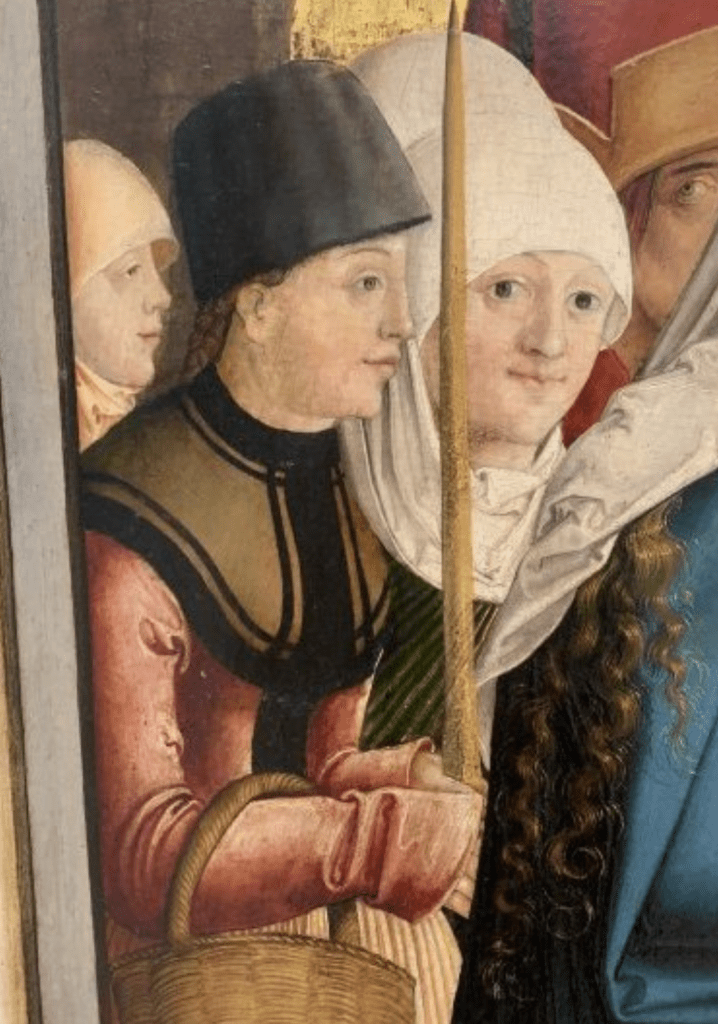
In woodcuts and art, there are many different ways of wearing the veil. There are also veils made in different fabrics, everything from simple unbleached linen to expensive embroidered silk or thin wool depending on the woman’s social class. Some of the viels are striped from the front and back. The veil is attached with pins and there are many different variations how to attache it. Some pictures show that part of the veil is wrapped below or above the chin. Some images also show hairnets instead of veils. The different veils were fastened with pins, mainly in bronze. There are many archaeological finds, such as those in the pictures below.
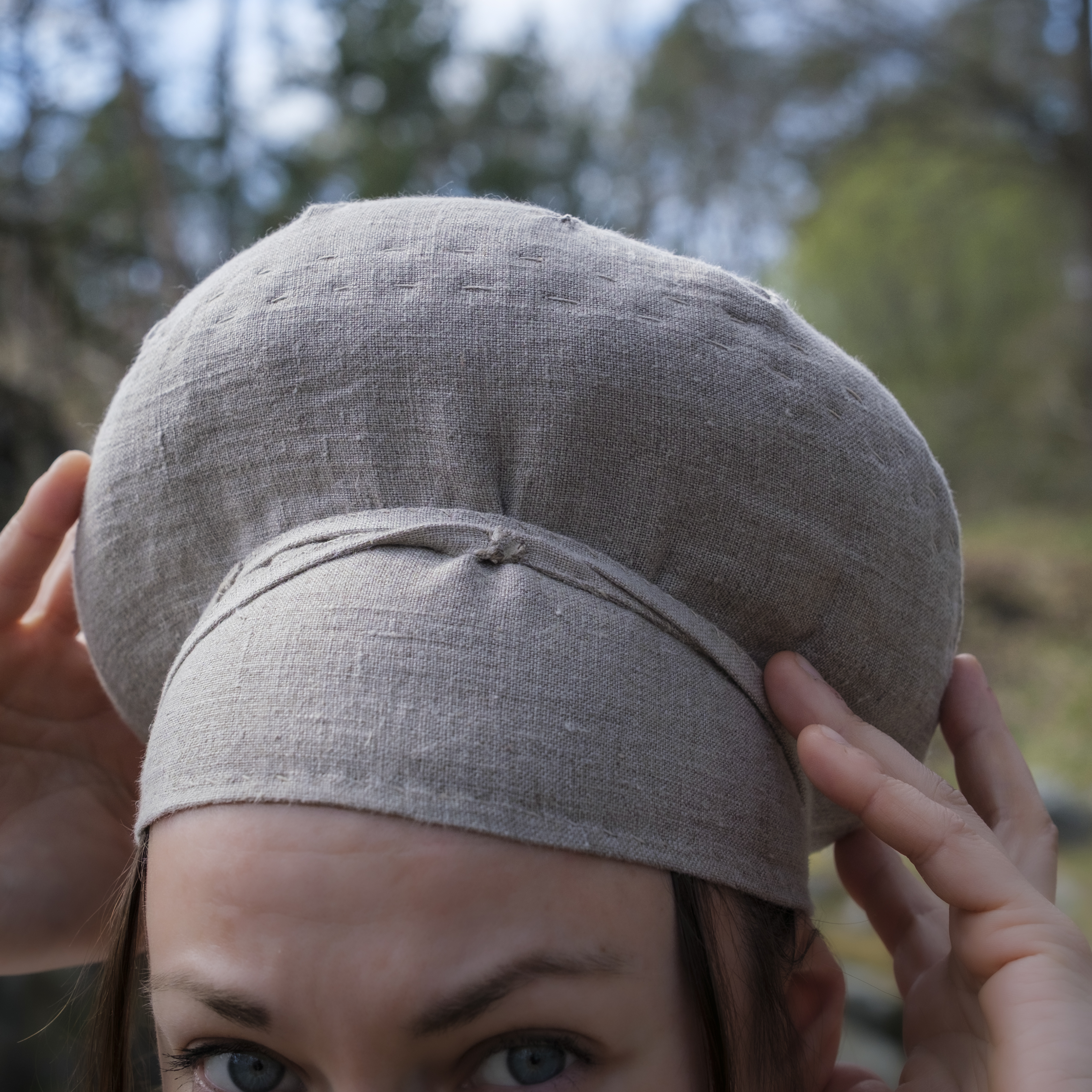
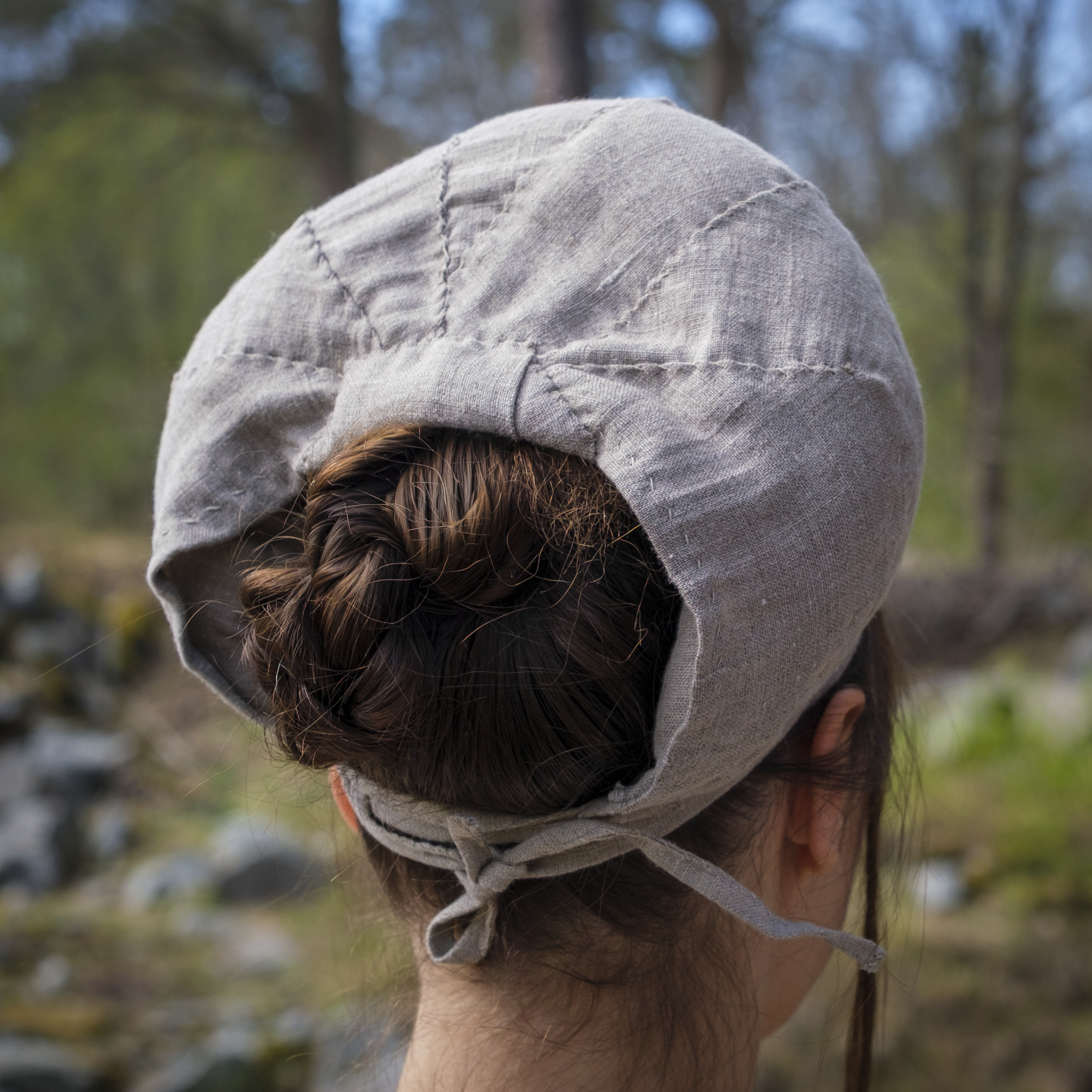
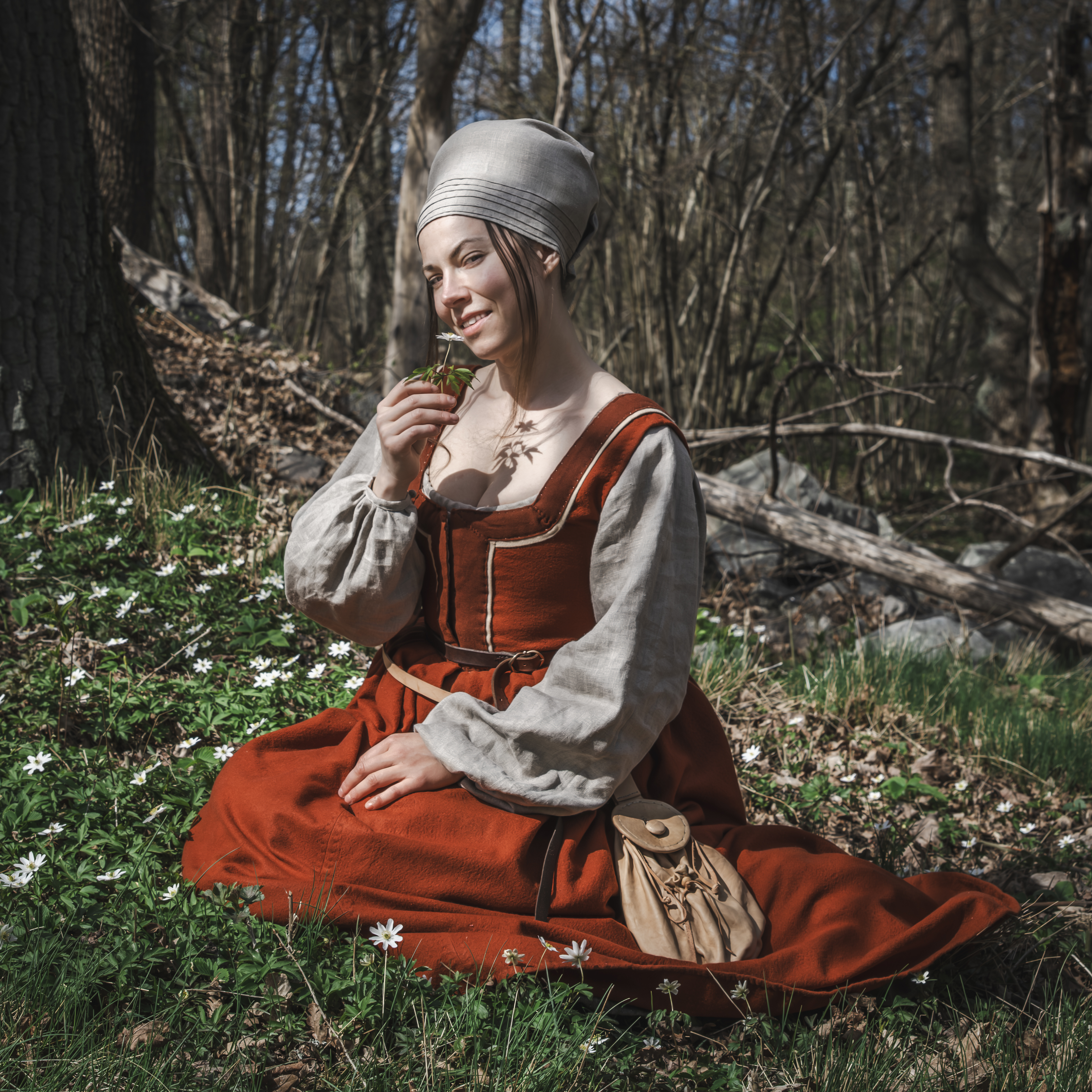
I have sewn my wulsthaube in unbleached linen, stuffed with raw wool and over it I have either a plain veil in thin white wool or a veil in undyed linen with sewn pleats inspired by several 16th century woodcuts and art. I attach the veil with handmade brass pins.
In many woodcuts you see both landsknecht soliders and trossfraus/prostitutes who wear wonderfully voluminous hats, but it is more common for women to wear only veils, so I choose not to make a creative hat for my low-status woman.
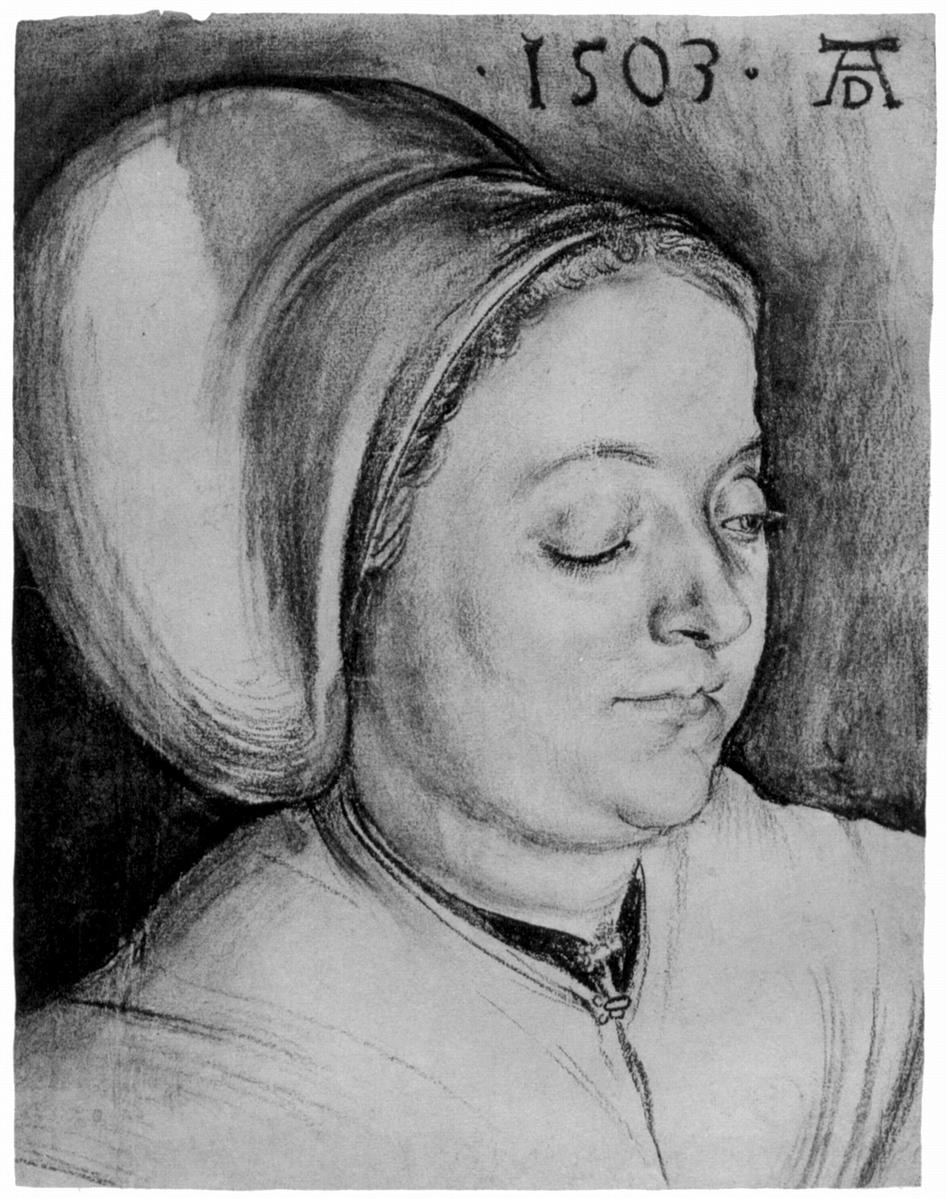
Albert Durer. Date: 1503
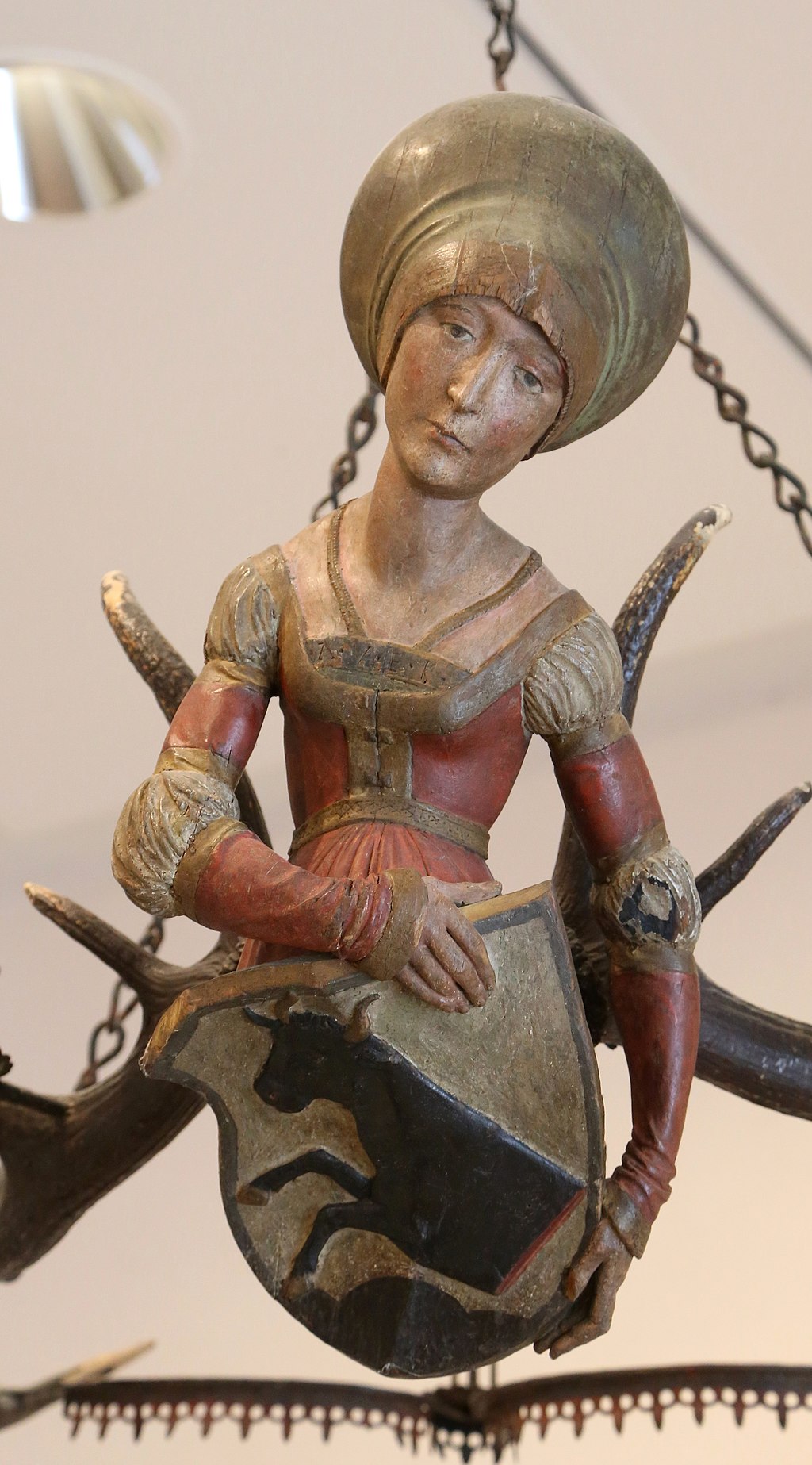
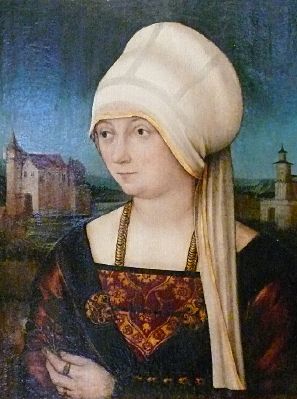
Bernhard Strigel. Date: 1520
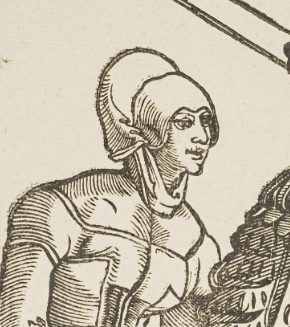
Date 1491-1542
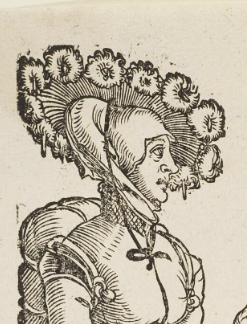
Erhard Schön. Date: 1526-1550
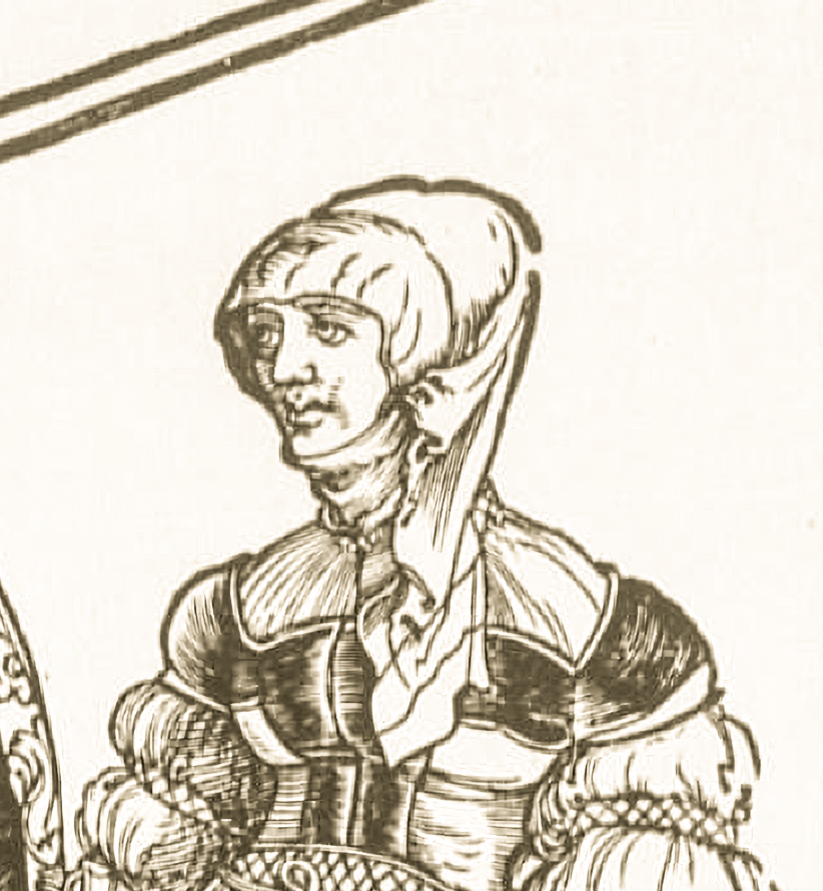
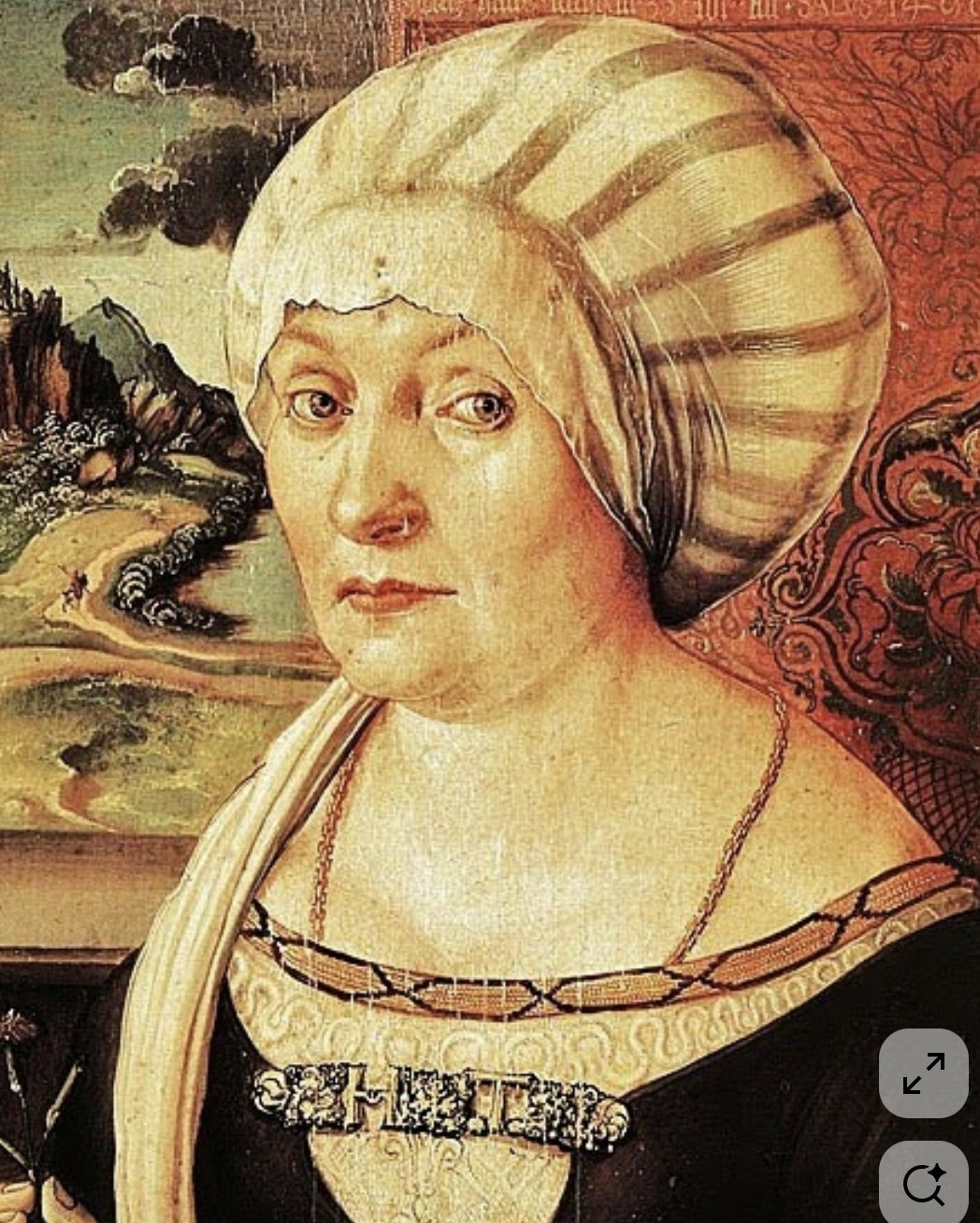
Albrecht Dürer. Date: 1499
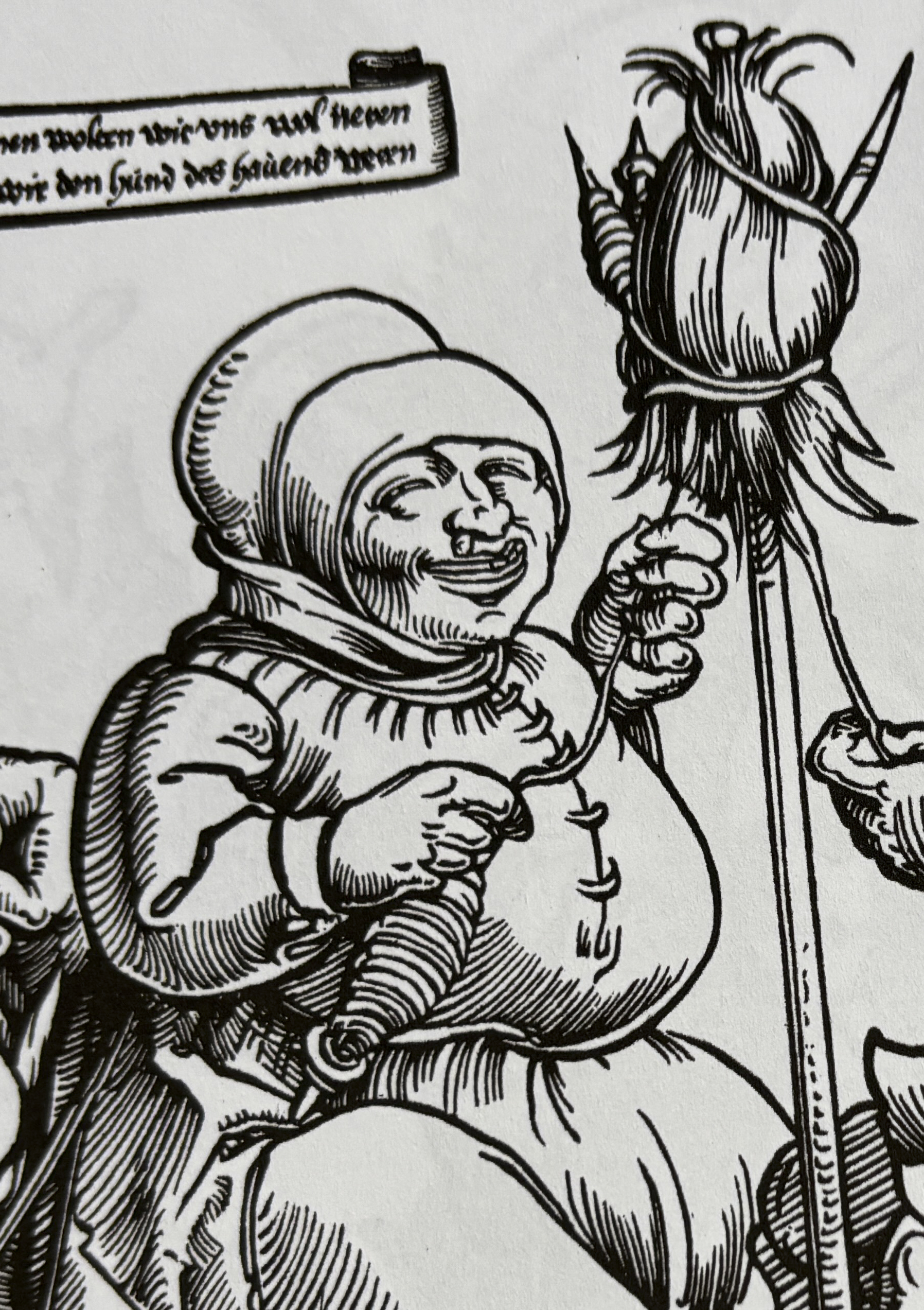
Leonhard Beck. Date: ca 1525
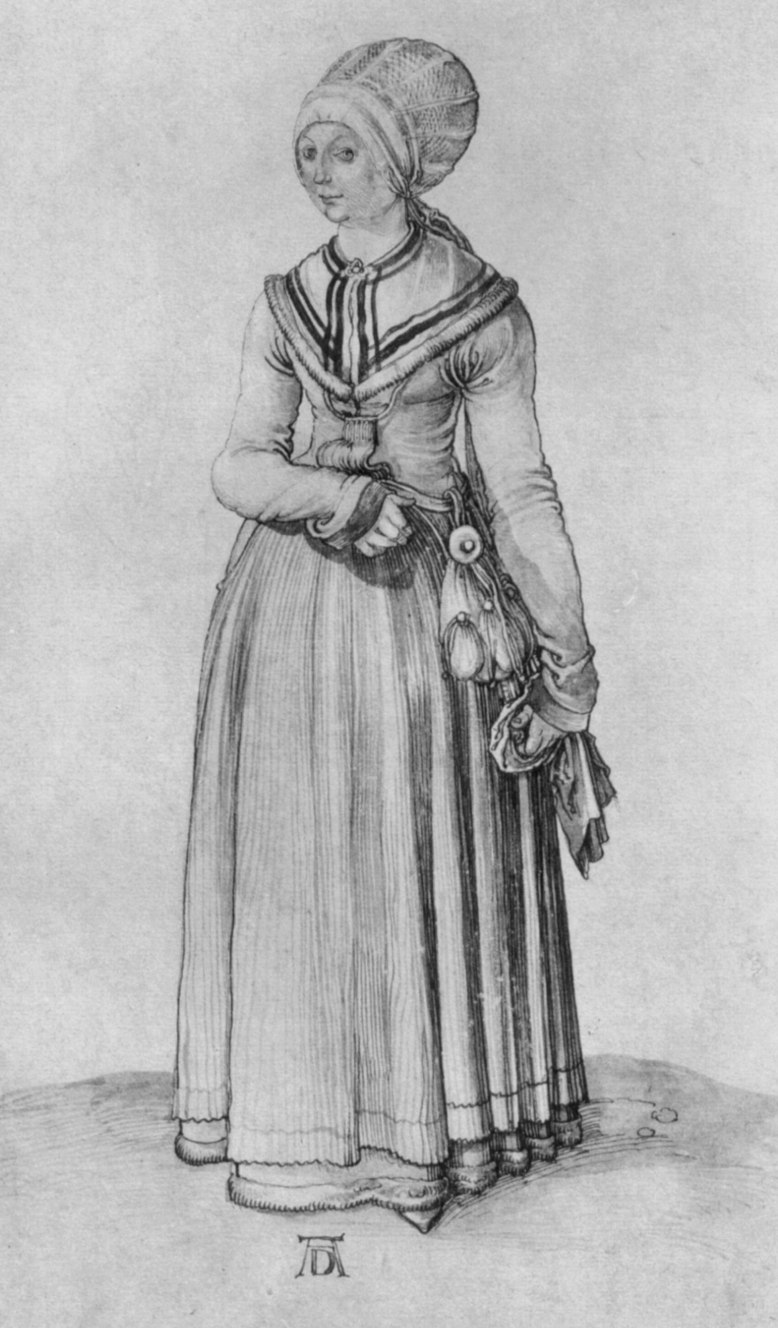
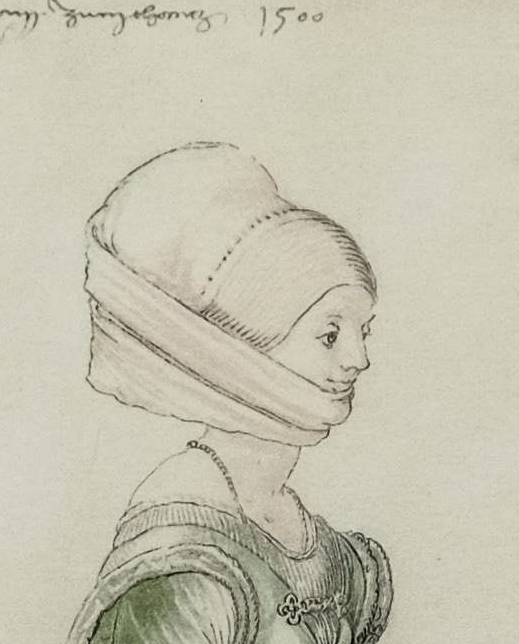
Albrecht Durer. Date: Early 16th century
Date ca 1530
Albrecht Durer. Dated 1497
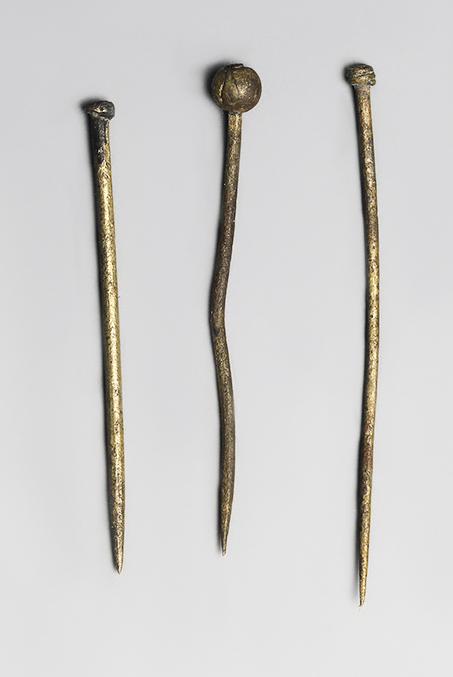
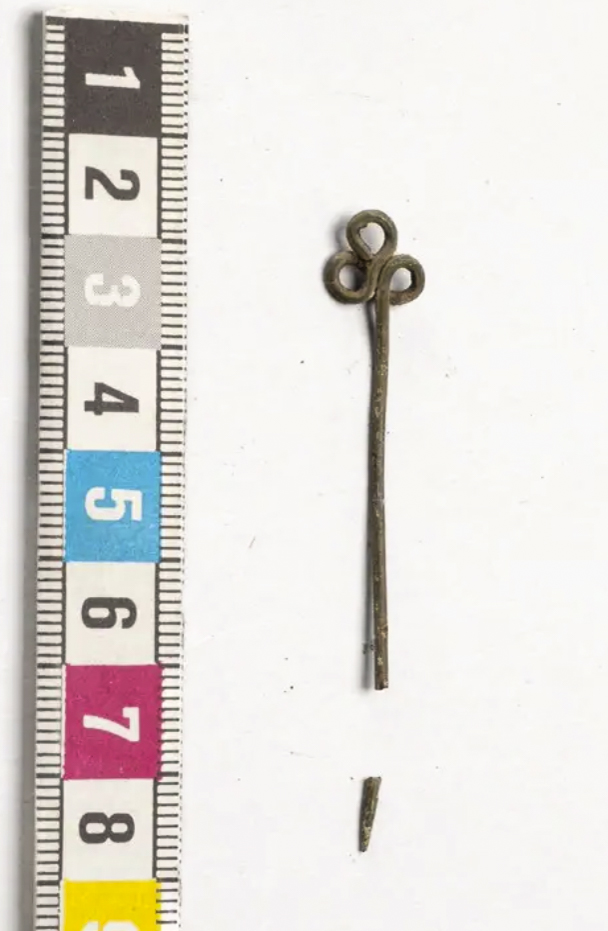
Photo: Stahre, Sanna, Date: 1200-1600th
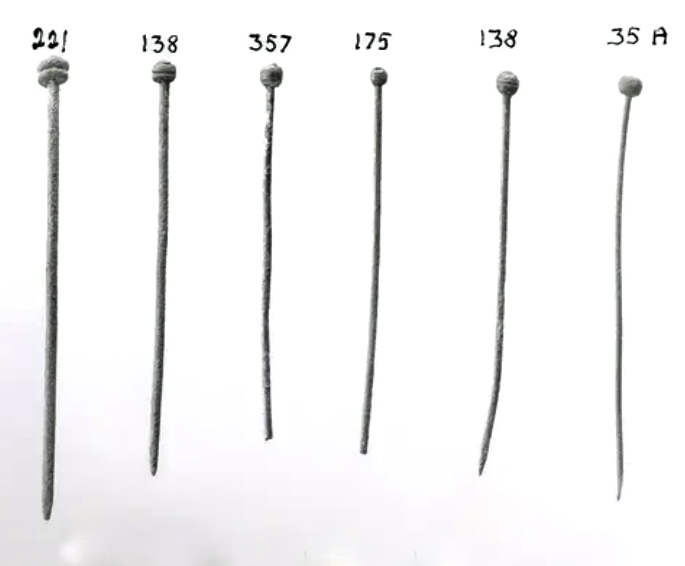
Date: 1200-1600th
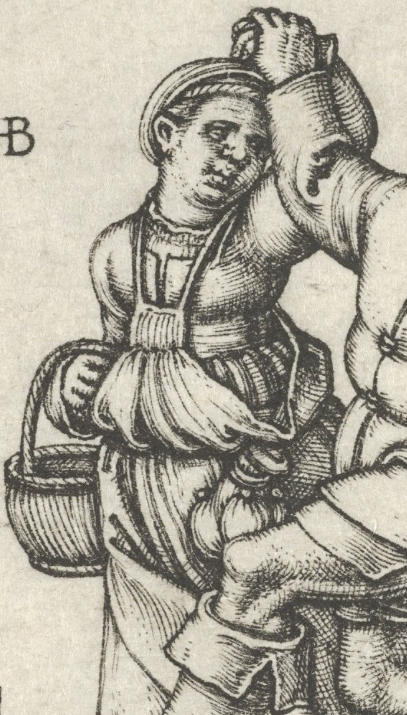
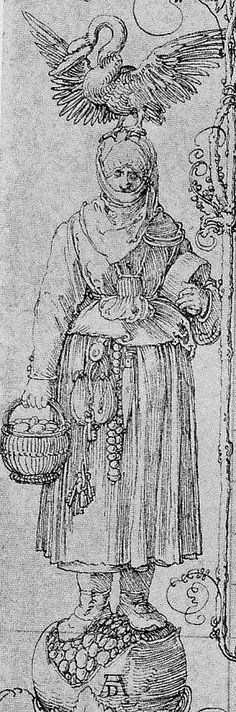
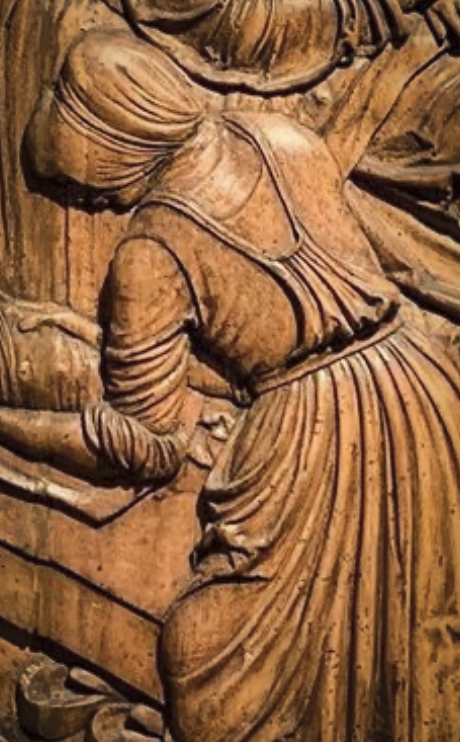
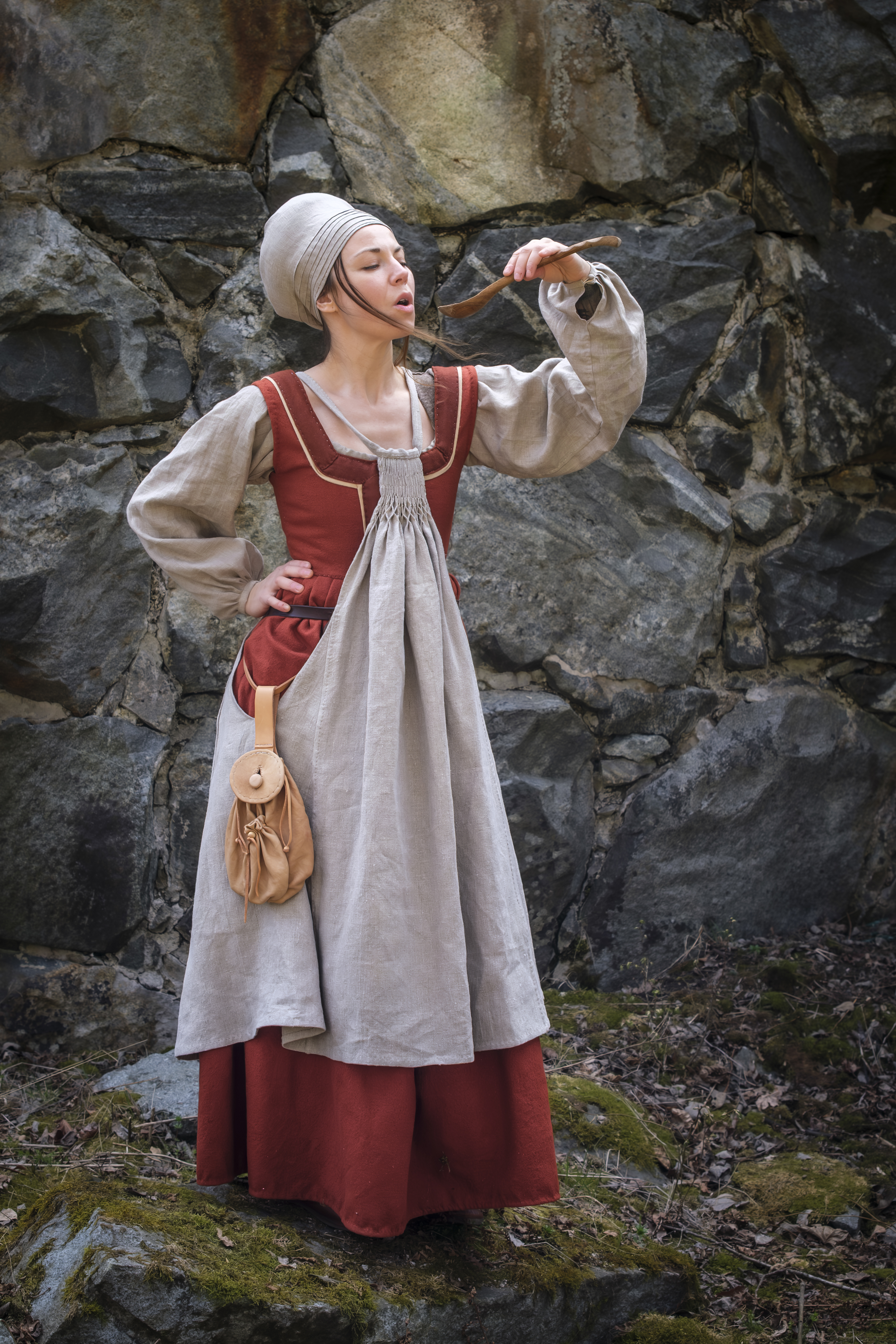
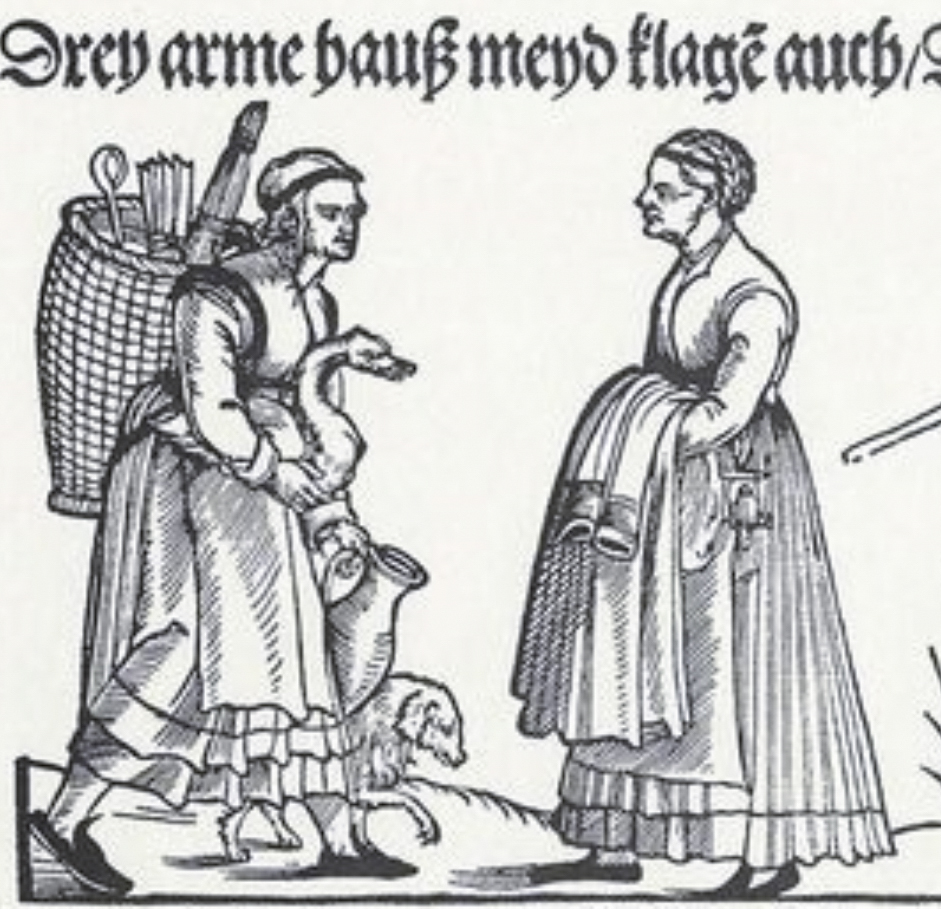
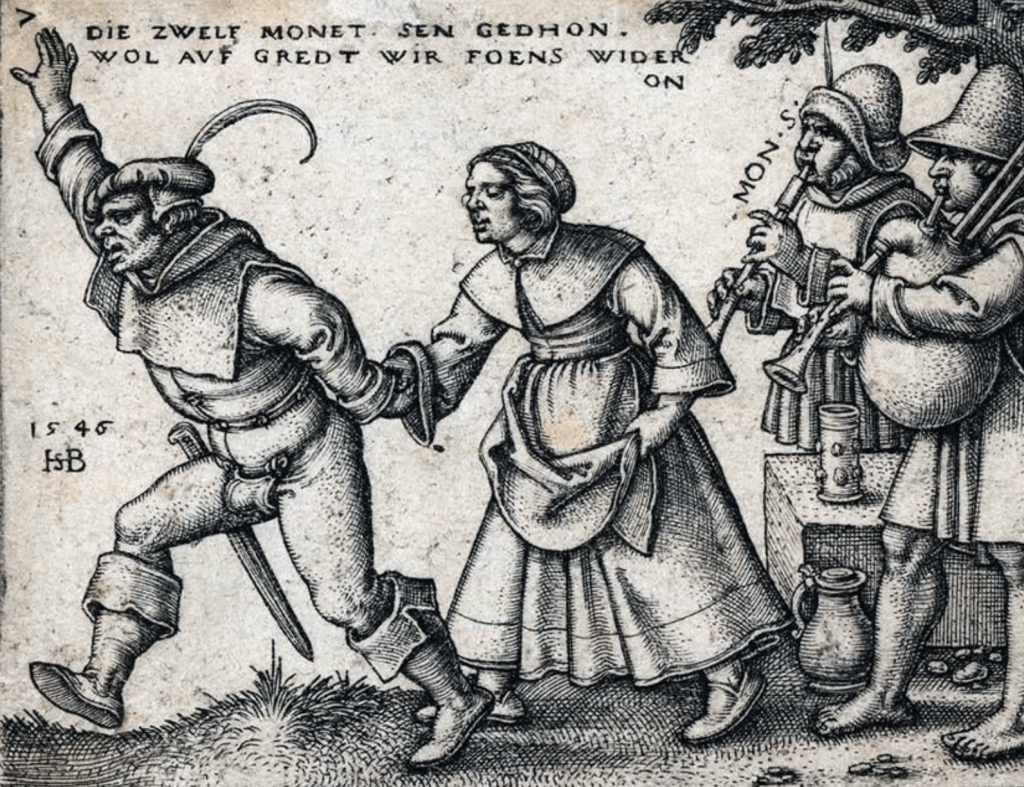
A working women’s apron
When I was looking through various databases with paintings, pictures and woodcuts from mainly Germany and Scandinavian 16th century, I saw many examples of a special kind of double apron. They begin to appear in the art late 15th century, but become more frequent in the beginning of the 16th century.
It seems like a practical garment worn by the lower classes, both farmer wives and trossfraus are seen with similar aprons in the art. This style of apron also seems to be used by higher class servants and housewives when working with midwifery.
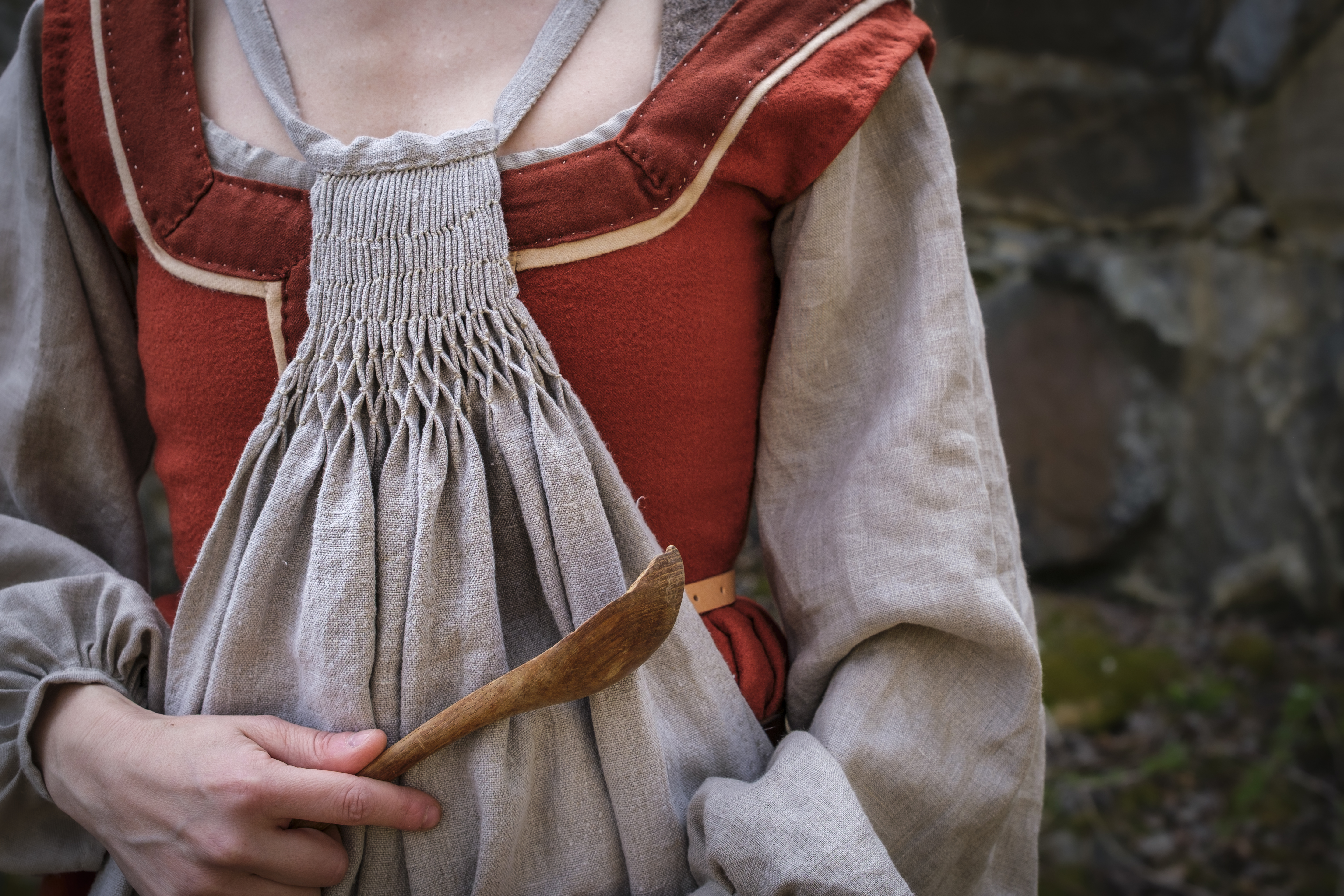
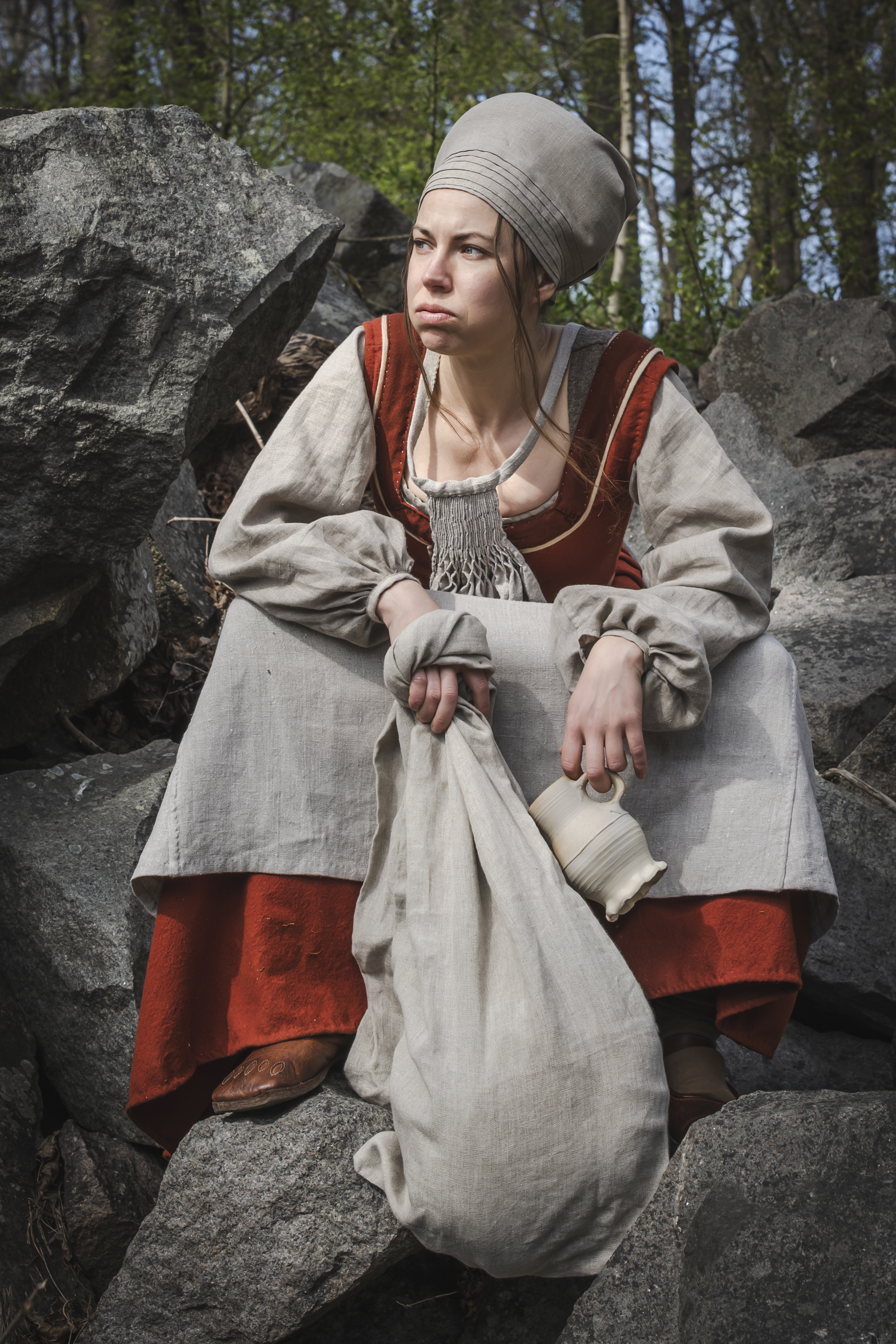
It’s a double apron; front and back look the same with the top section pleated narrowly and straps over the shoulders. There are a few examples showing decorative embroidery over the pleats, but most of them are plain. I couldn’t resist the urge to make a little bit of honeycomb smocking under the plates. In the sides there are big openings to the hips.
Textiles Hausrat notes that aprons in general were mainly made of linen and that seems like the best choice for an apron because it’s easy to clean. In the art most of them is white but I believe they were often made in unbleached linen and then they bleached with time and wear.
Mine is hand sewn with waxed linen tread in an unbleached, hand wowed linen fabric. It’s quite heavy but I believe it will work fine for protecting other garments from both heat and dirt when cooking in camp.
Dated 1546.
Date: 1527
Hans Weiditz. Date:1521
16th century women’s bag or purse
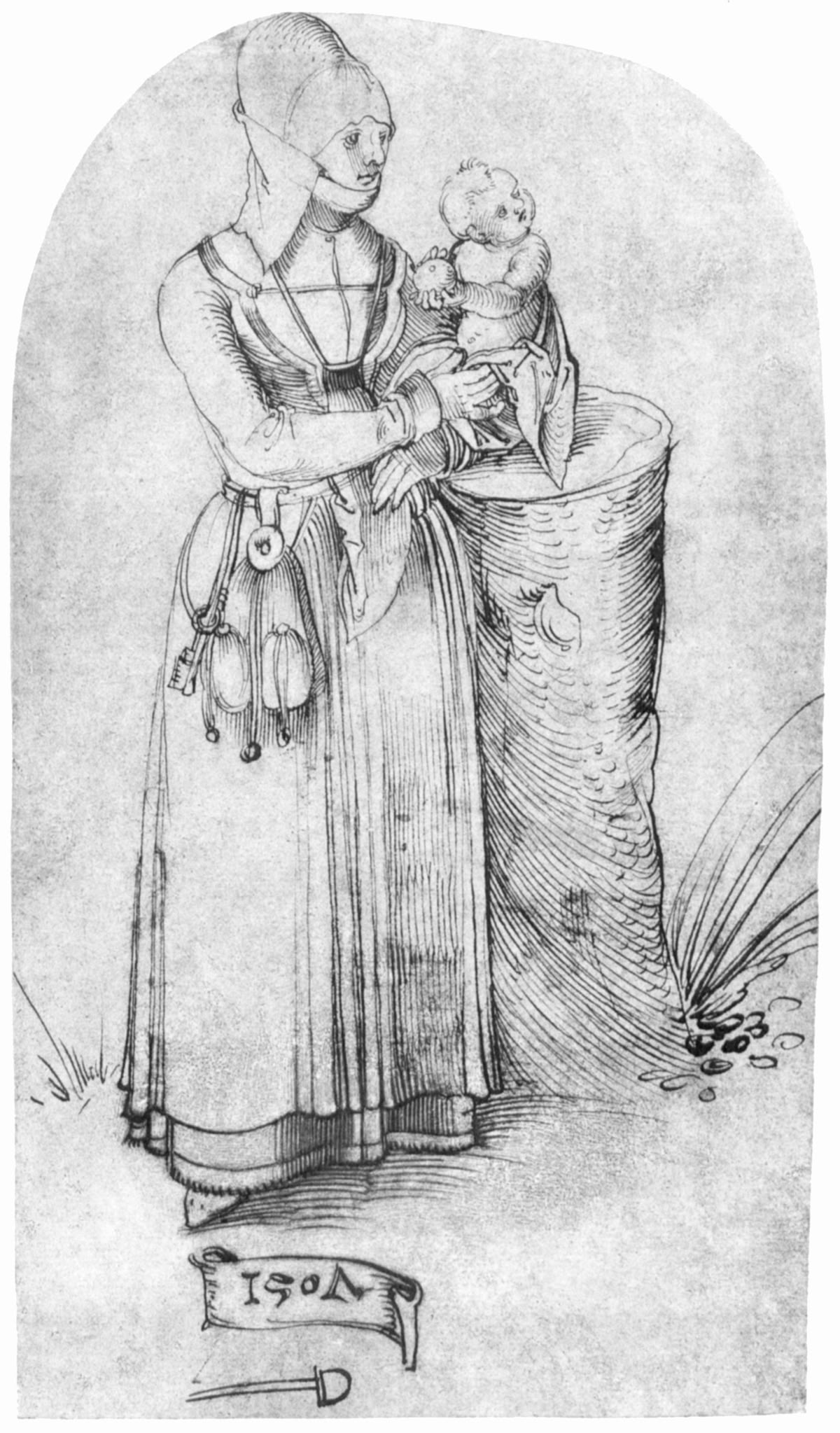
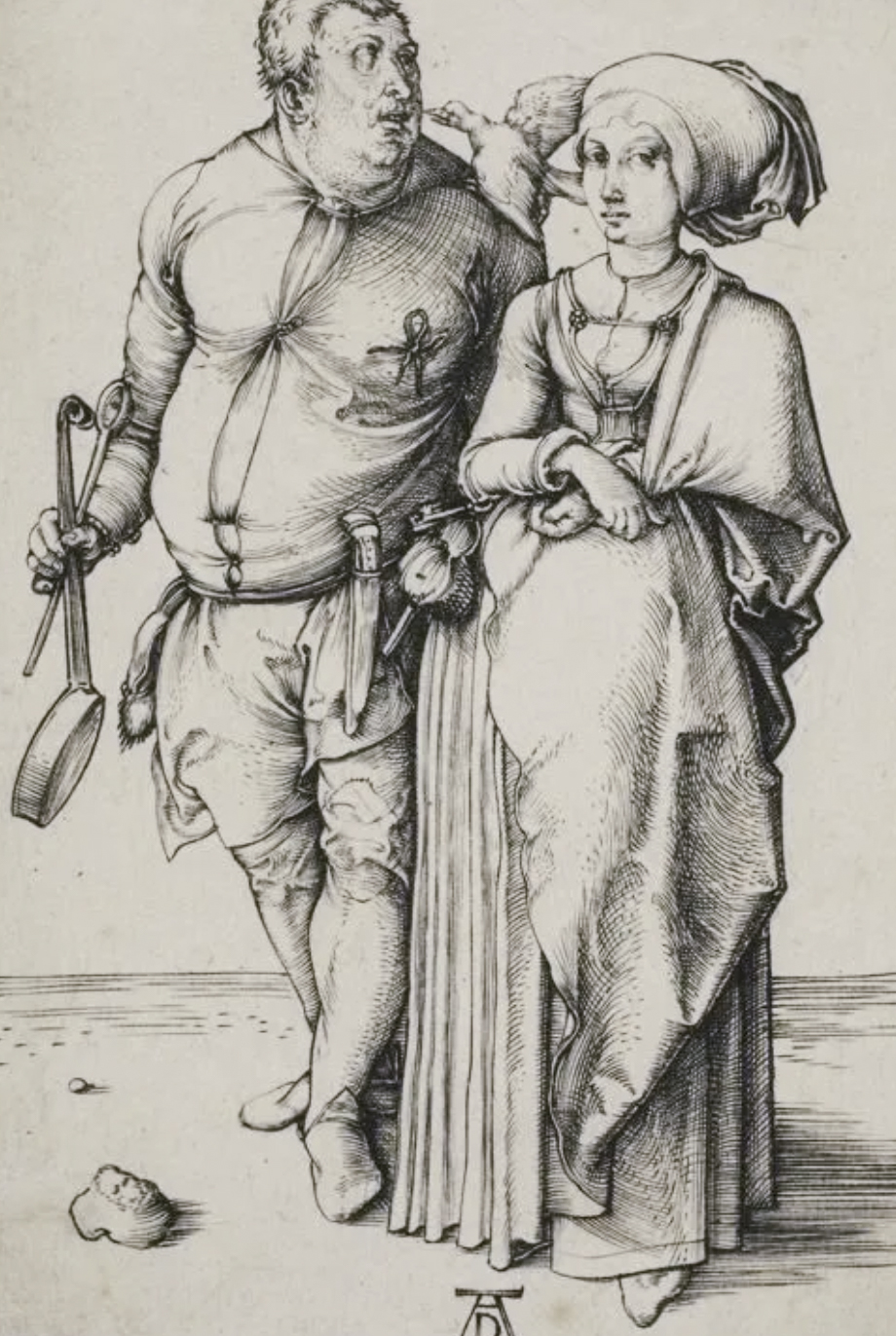
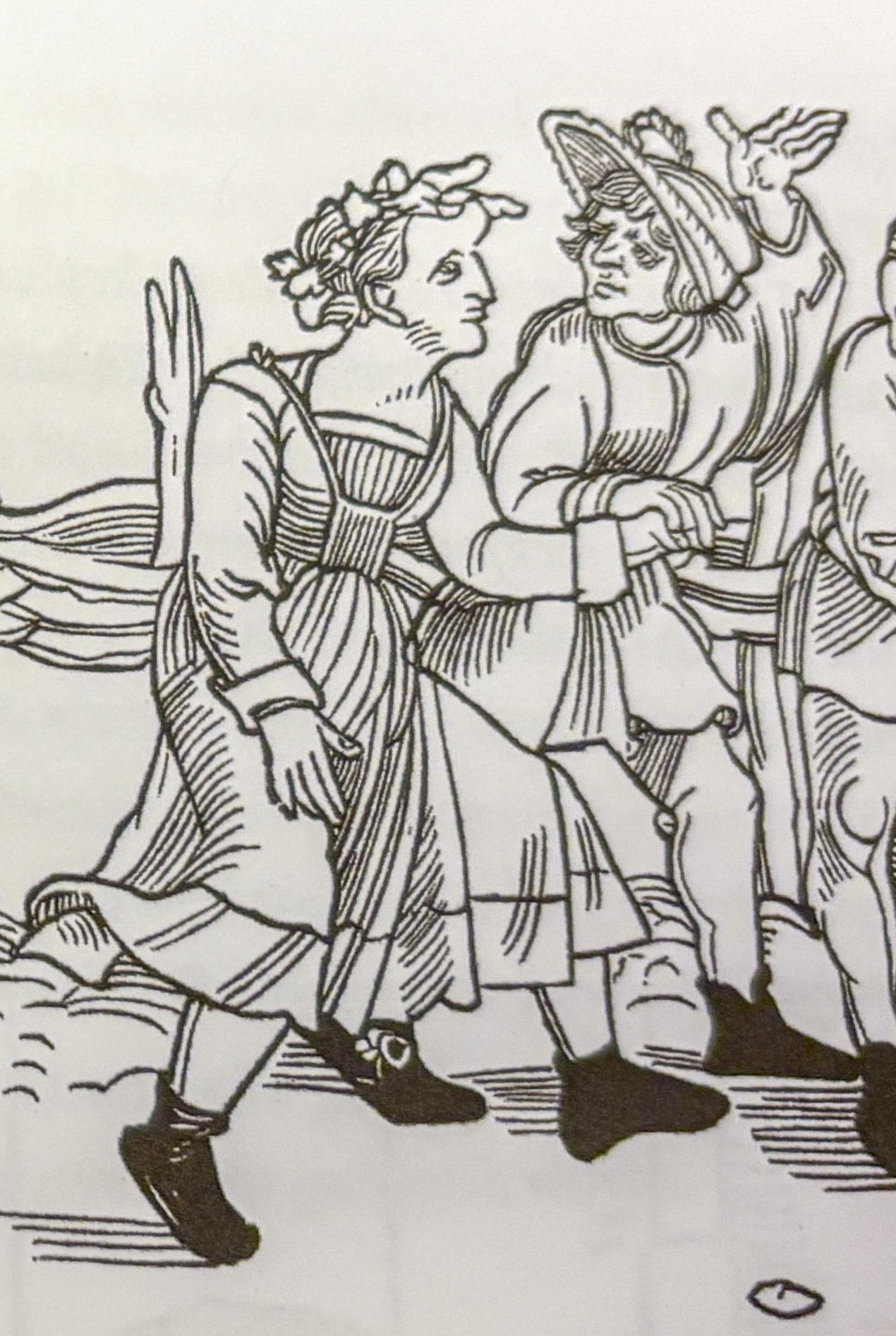
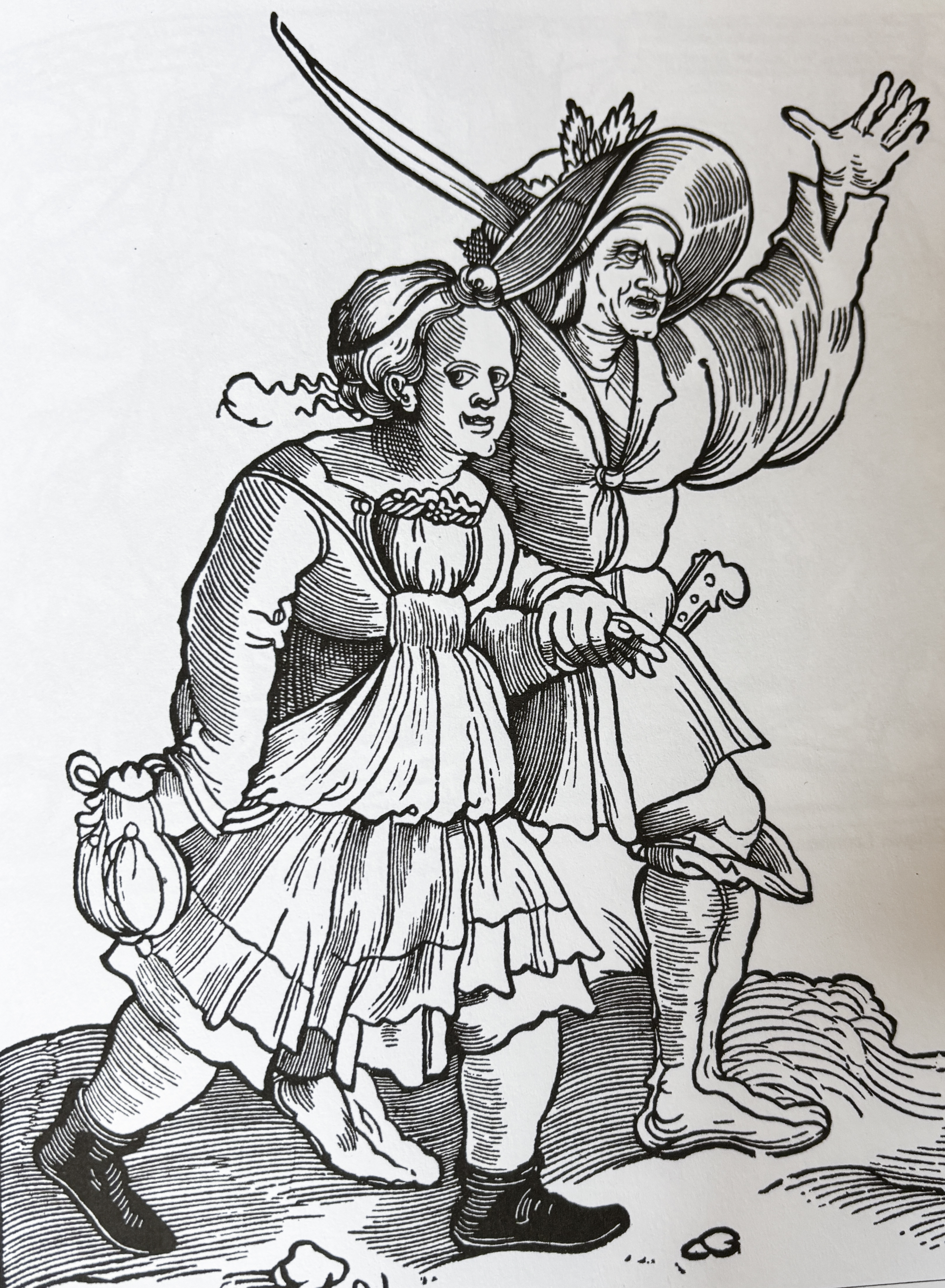
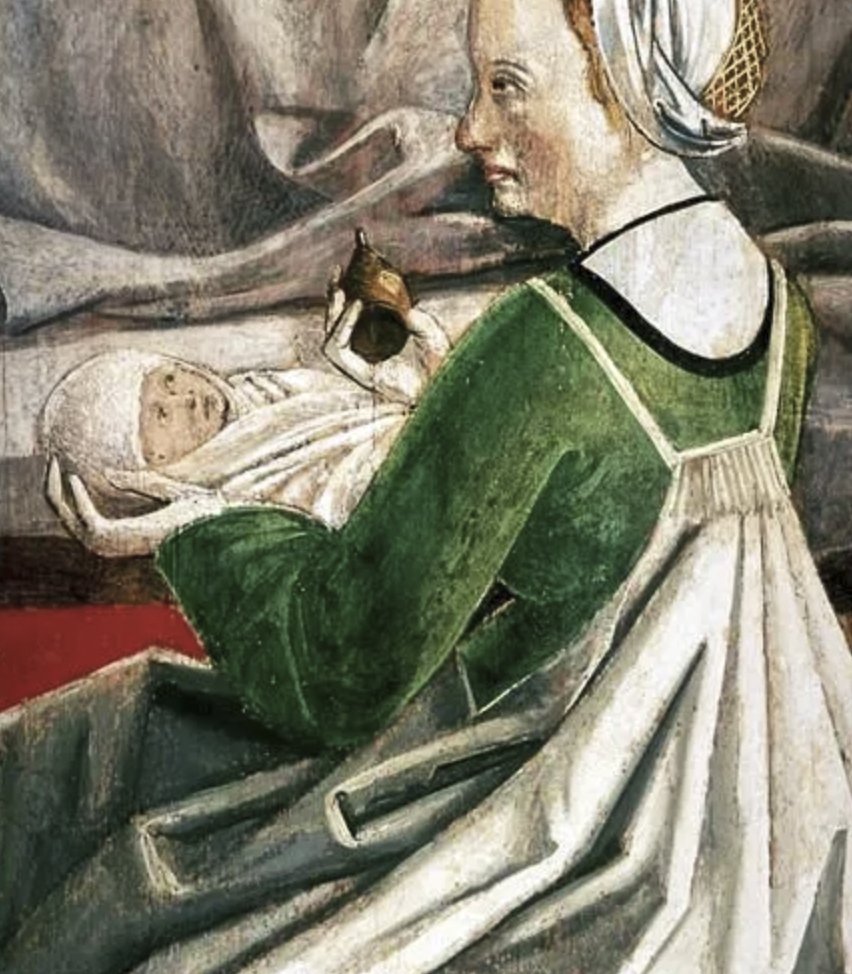
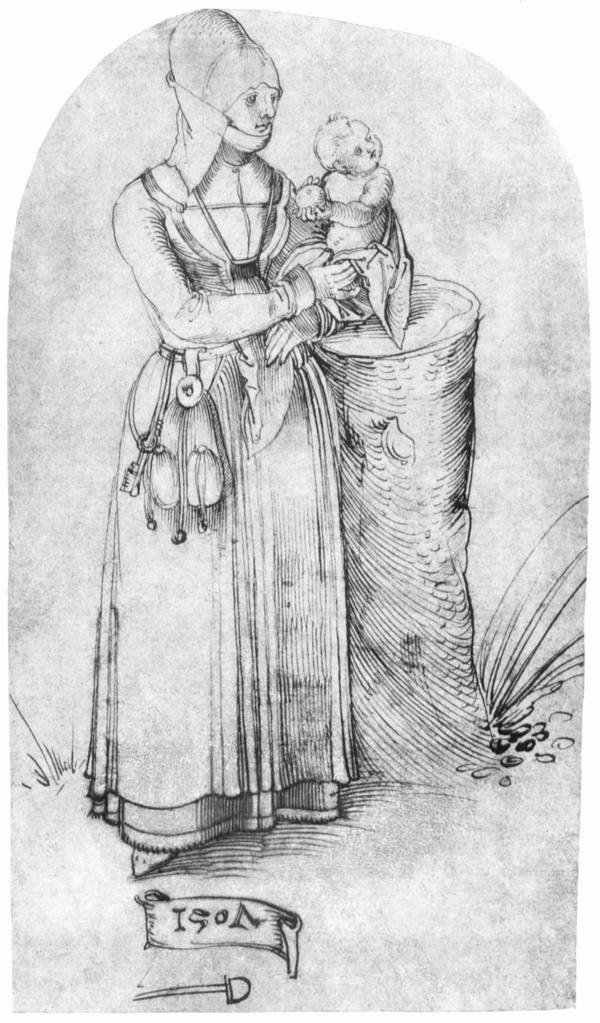
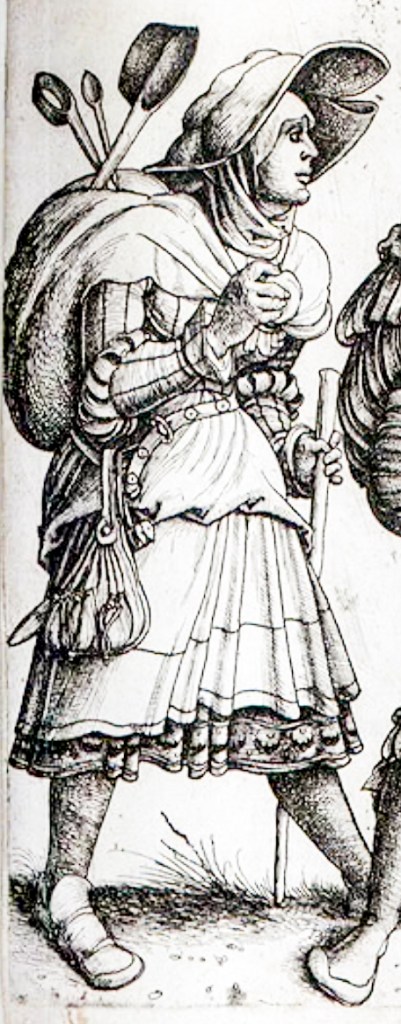
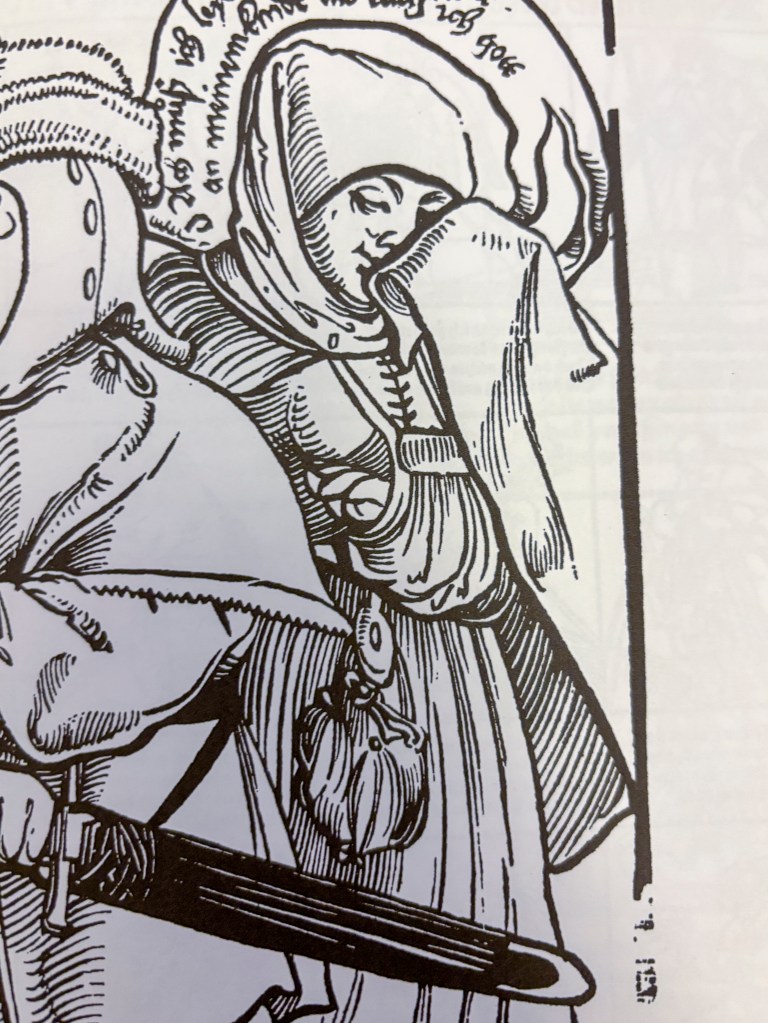
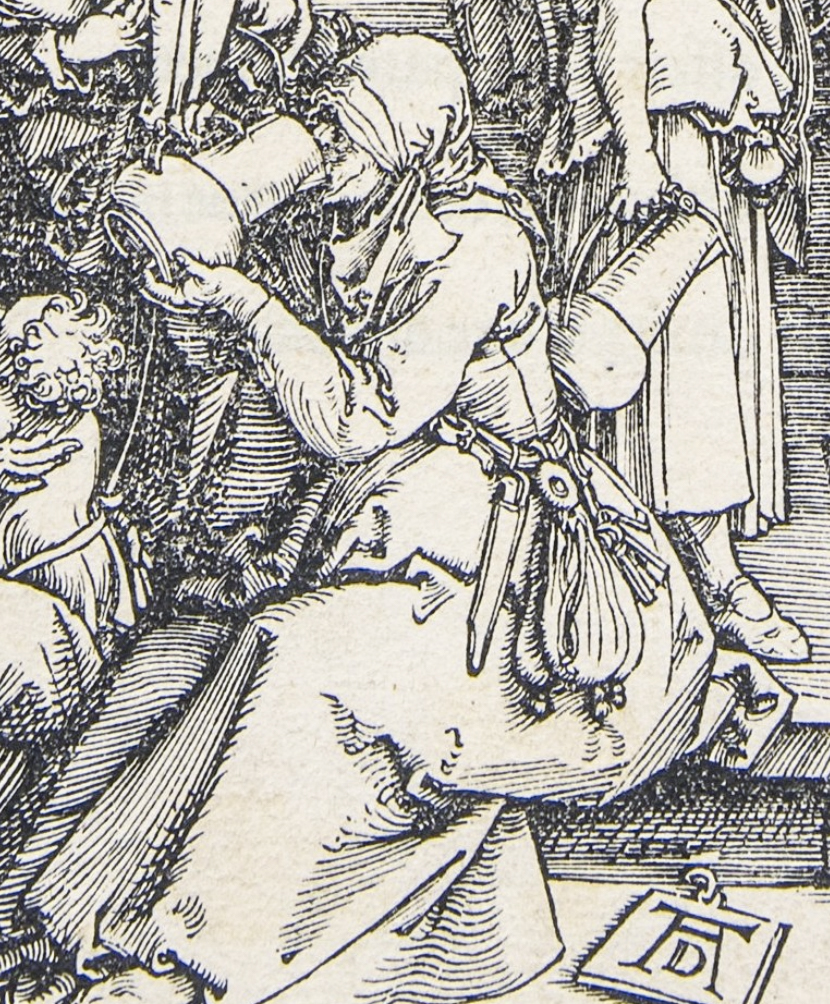
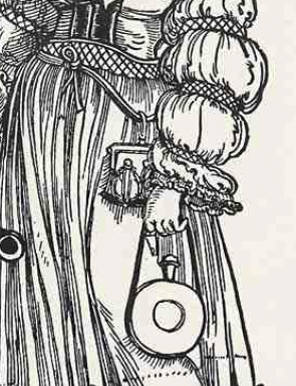
All the pictures below portrays women in the lower social classes from the first half of the 16th century (in a German context) with pouch purses in a similar design. They occur so often in art together with women who are depicted as farmers, servants and also women in the Landsknecht tross that it was most likely a common model in the lower social classes. Unfortunately, I have not found any well-preserved purses in this model in the archaeological material. But since it is usually the upper class’s objects that are preserved in museums , it is not so strange.
These pouch purses seem to occur with one or more external pockets with or without some kind of tassels underneath, but they have approximately the same basic design and size.
They hang from the belt, are pulled together with straps and closed with a button that is threaded through a round lid. Similar bags in painted art are usually depicted in a natural, light leather color and I therefore assume that they are sewn from undyed leather. The construction appears to be sewn in two different leather qualities with a sturdier leather in the back and a thinner leather for the “baggy parts.”
Daniel Hopfer. Date: 1470-1536
Leonhard Beck. Date:1523
Detail of The Birth of the Virgin,
Albrecht Dürer. Date: 1503
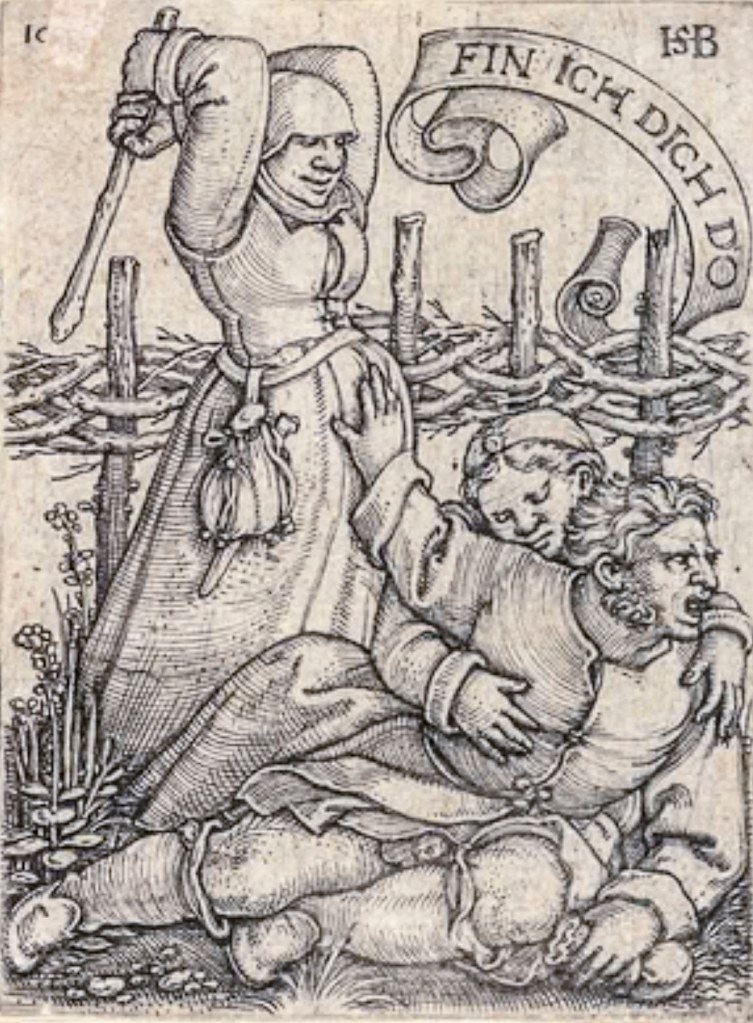
Sebald Beham. Date: 1537
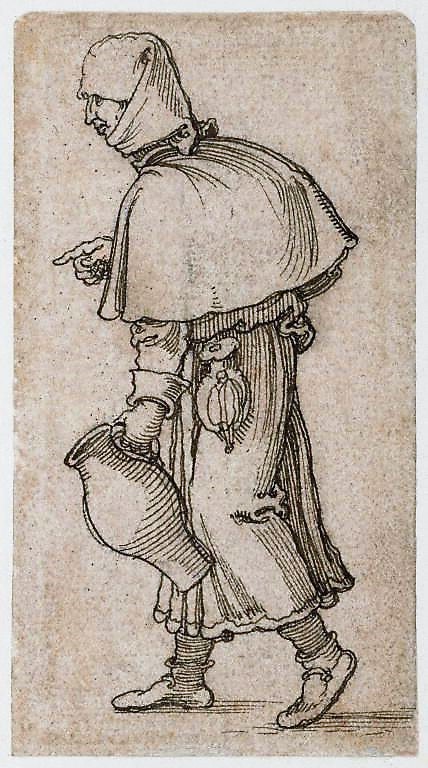
Sebald Beham. Date: 1520
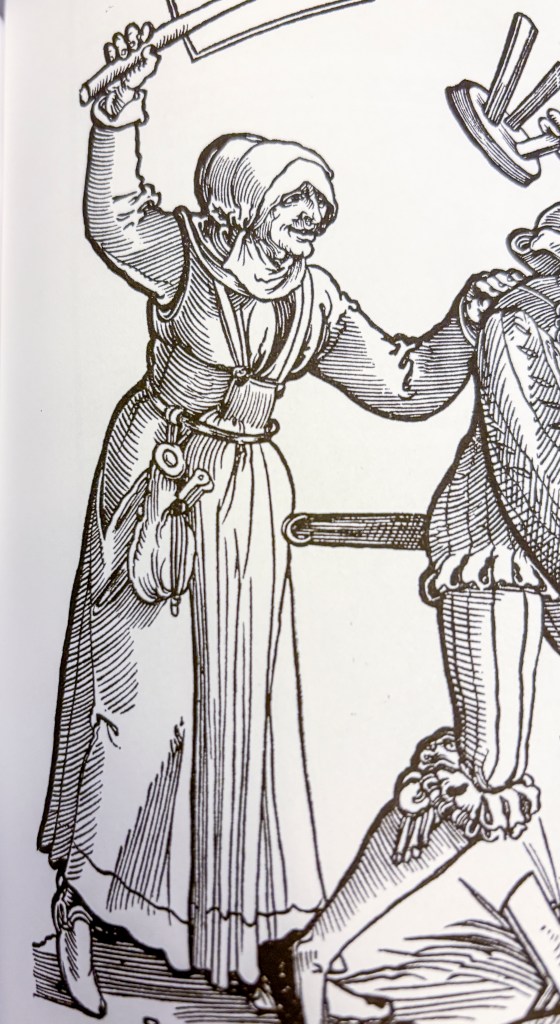
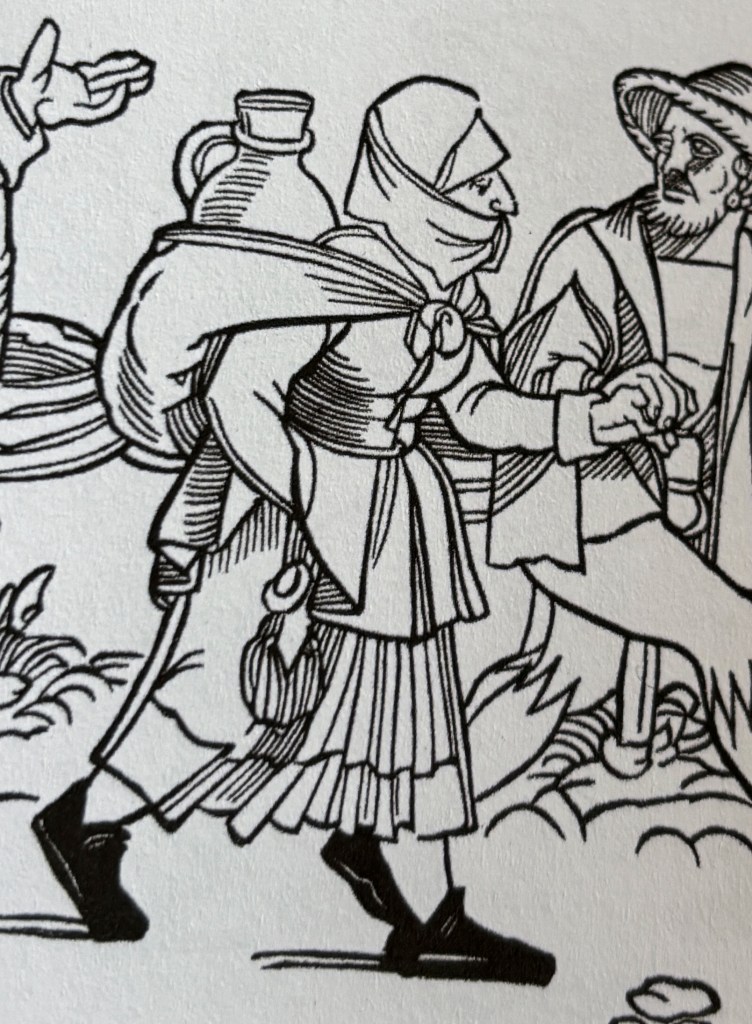
Barthel Beham. Date: 1527
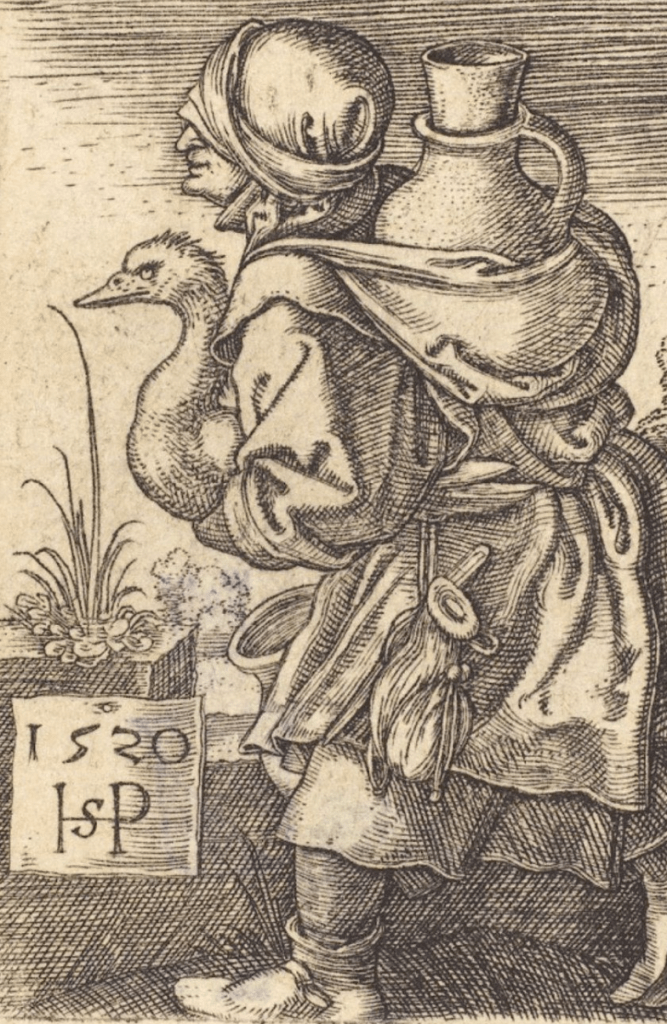
Sebald Beham. Date: 1520
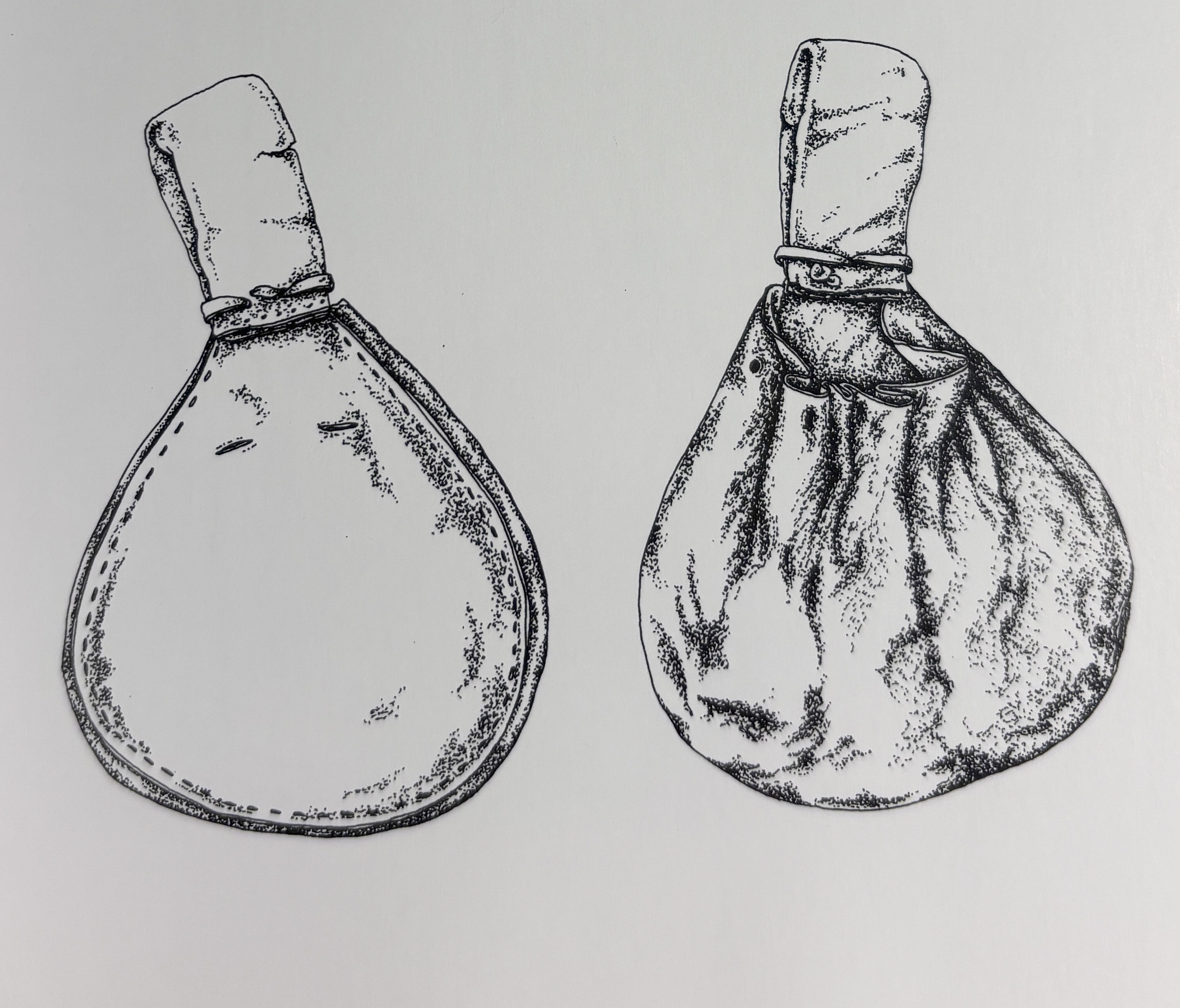
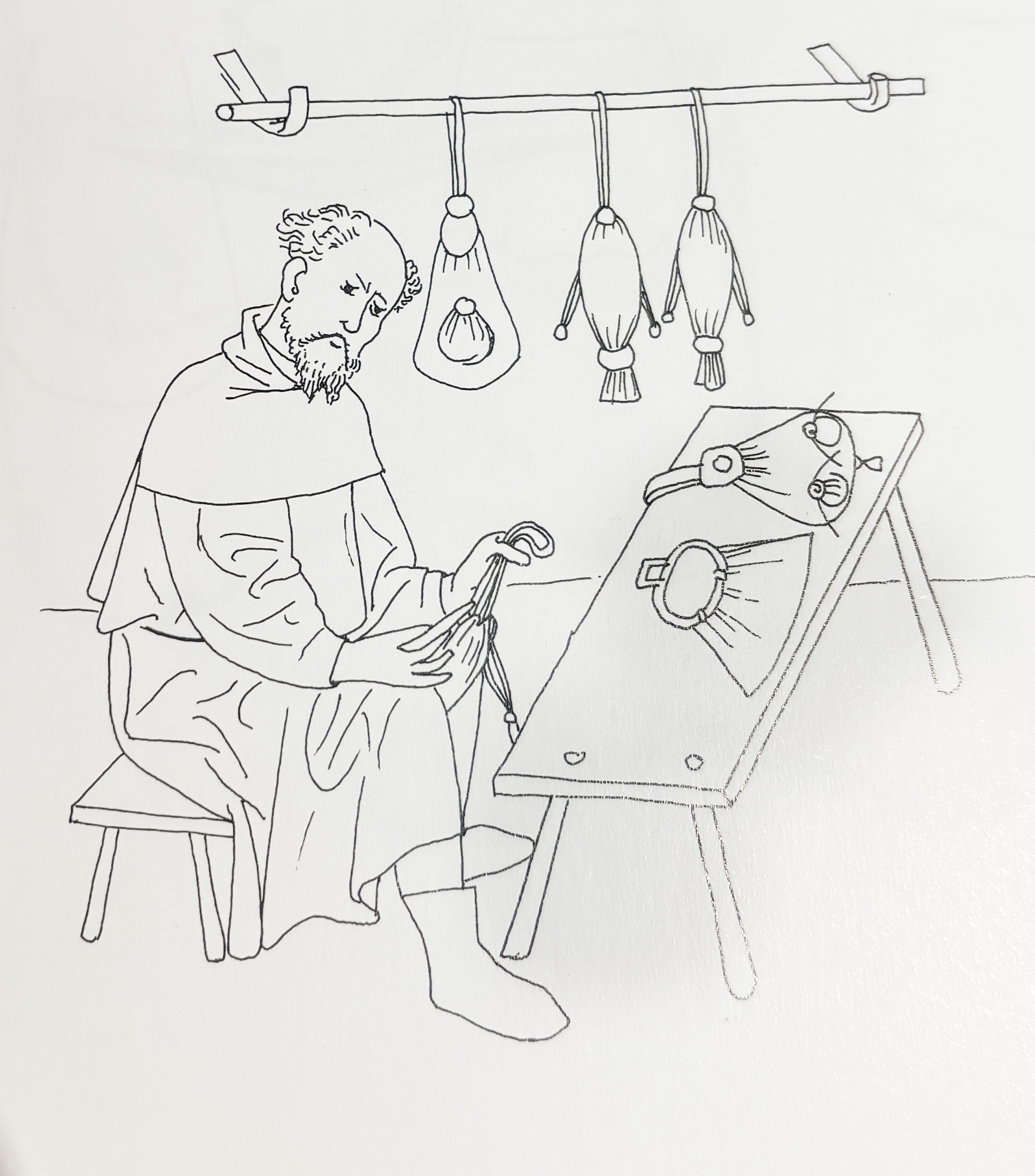
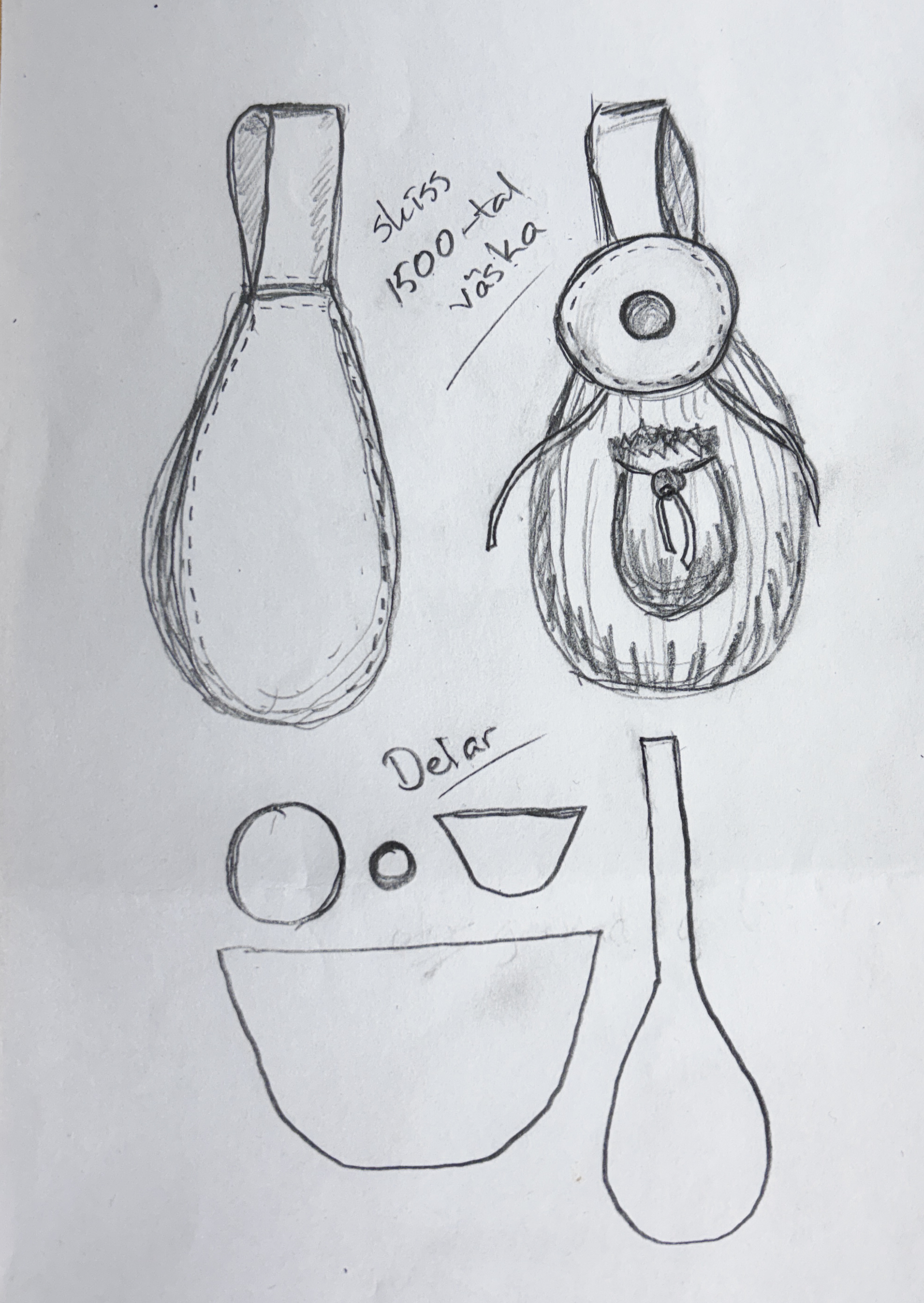
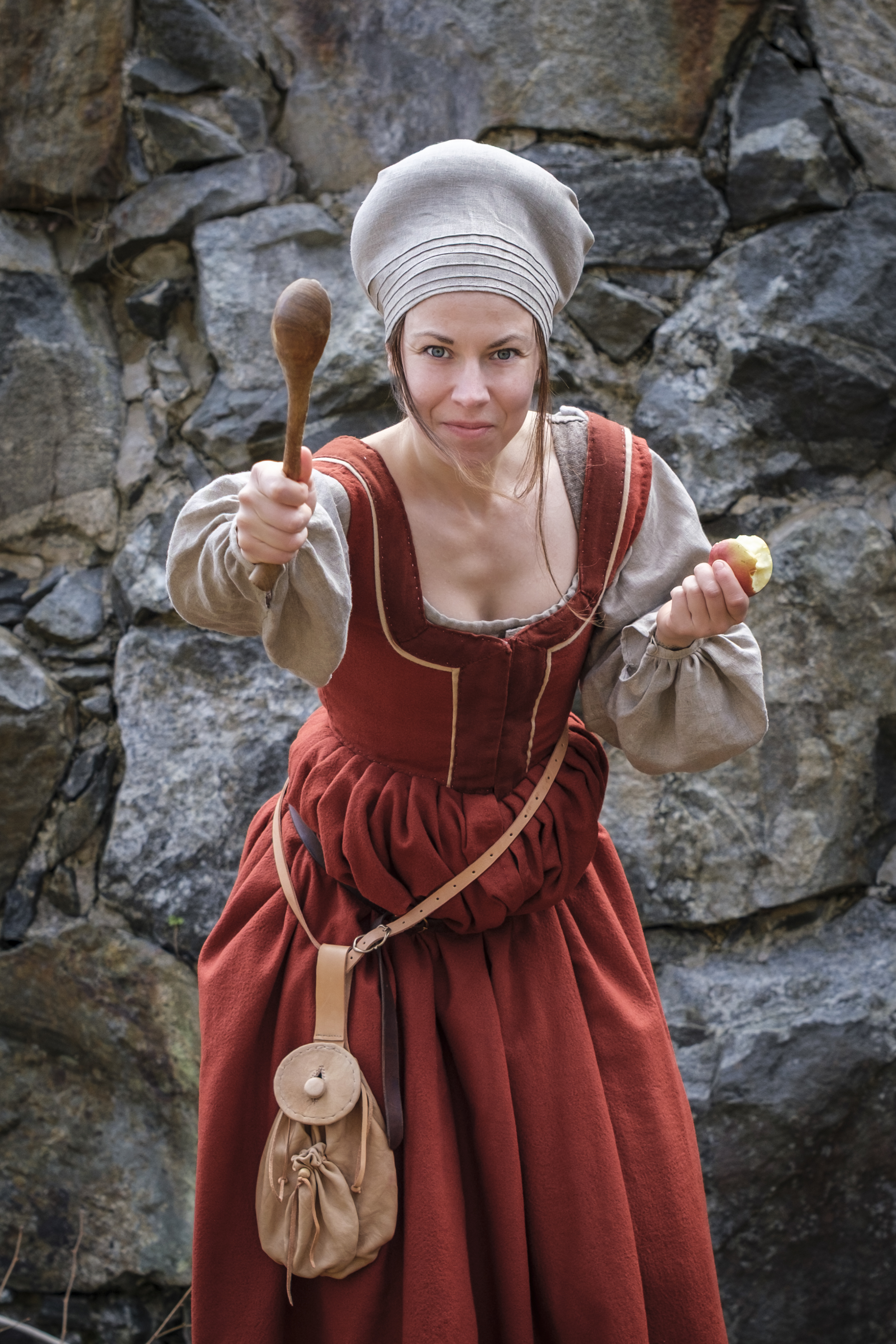
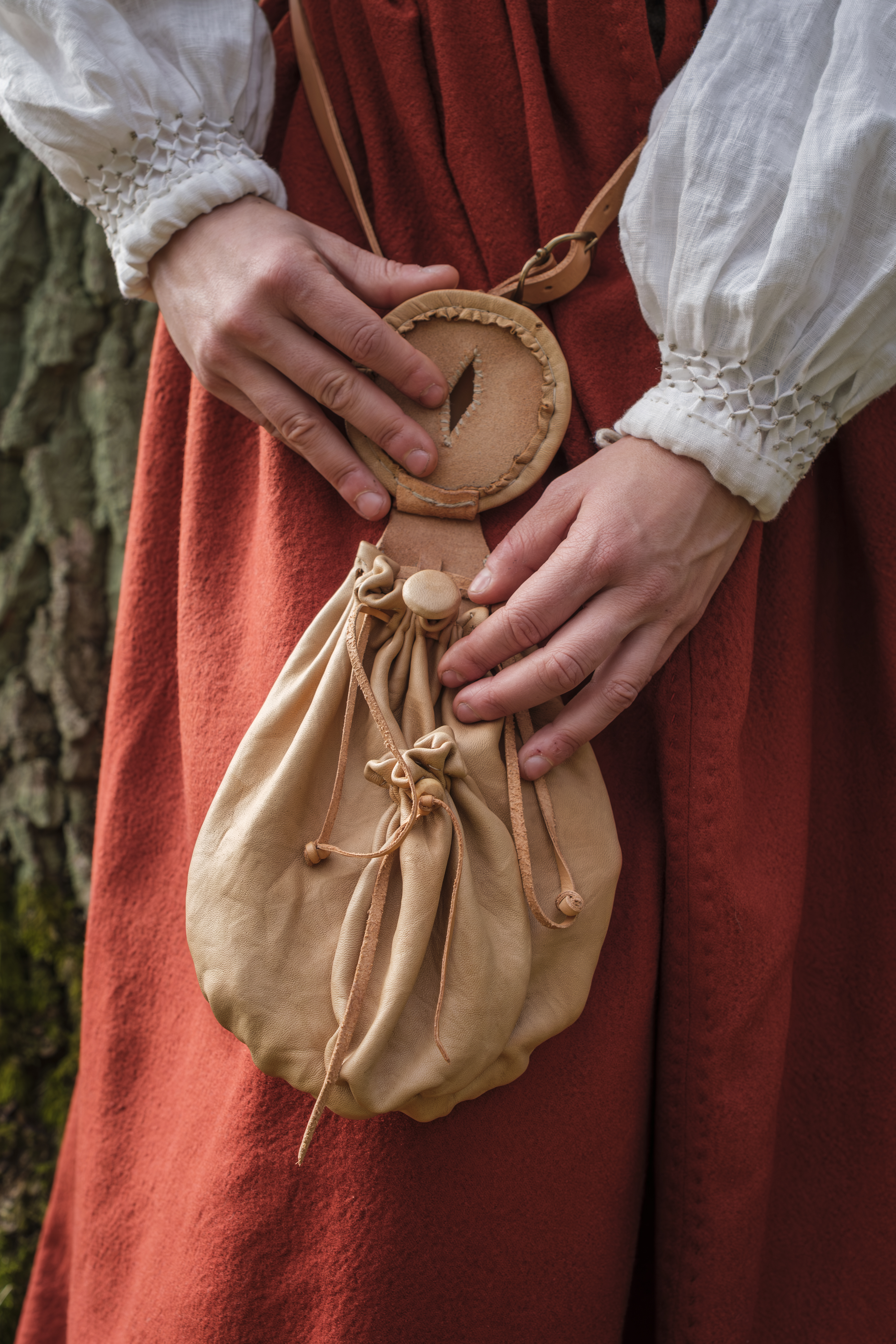
I choose to use a vegetable tanned, undyed cowhide, about 2 mm thick for the back and a goatskin about 0.7 mm thick for the bags. The button was made from a piece of wood covered with the thin goatskin. I sewed the bag by hand with waxed linen thread and an awl. I also made the choice to sew a model with only one outer small bag on it. The outer bag looks like it should be closed with a small round bead, so I found a suitable wooden bead and sanded it down.
Above is the result after greasing. The pouch is a little crooked but very practical and in my opinion quite similar to the wood- and copper cuts. I highly recommend everyone the tutorial from the amazing RowanTrees Workshop here.
I would also like to mention that there are other types of small bags on pictures of lower class women and trossfraus, for example “framed leather purses” represented in the wood cuts below.
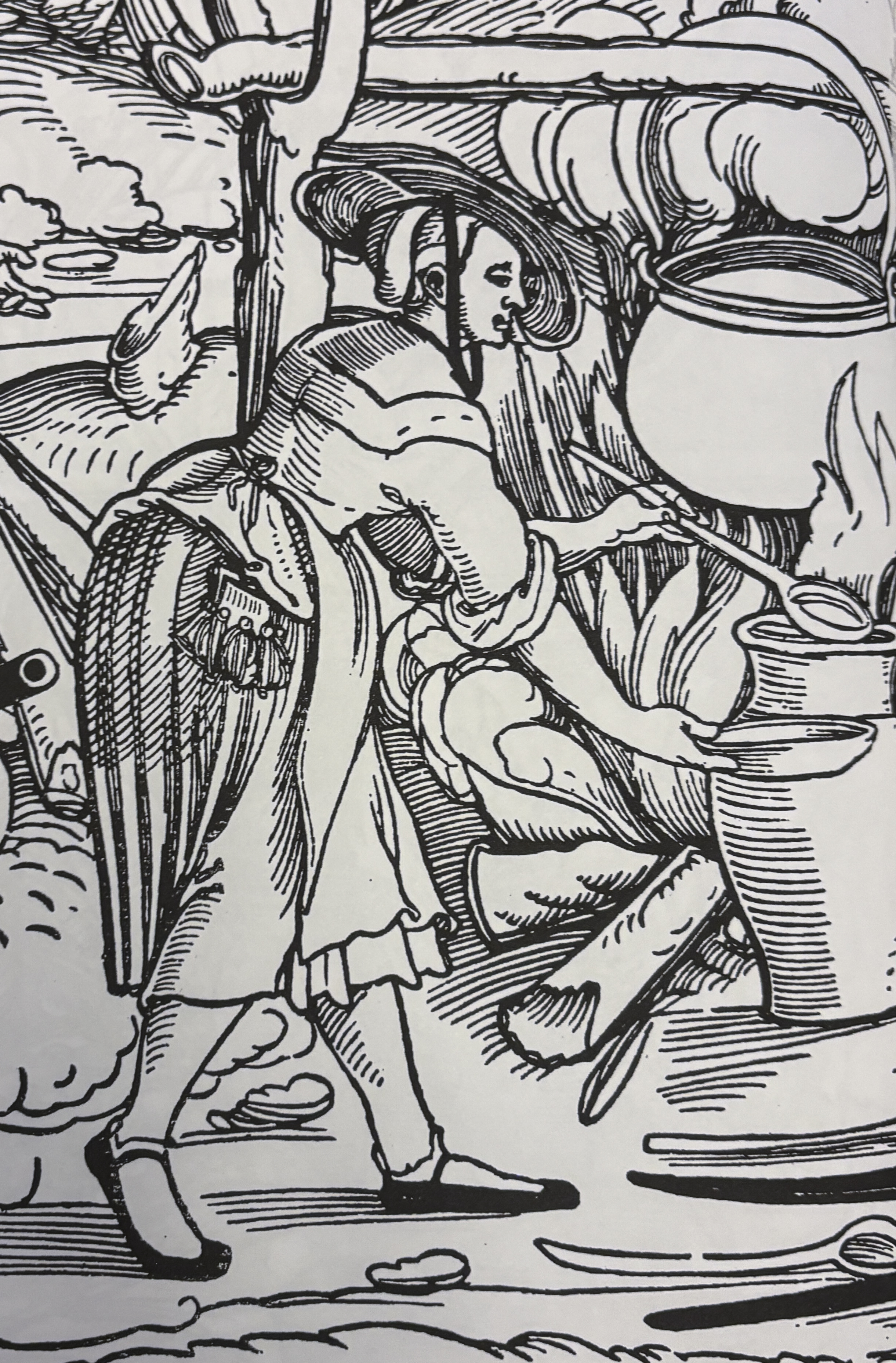
Sebald Beham, Date: ca 1530
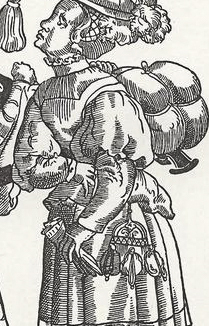
Wolfgang Strauch.Date: ca 1560
Erhard Schön. Date: 1535
Gollar or Partlet for cold evenings
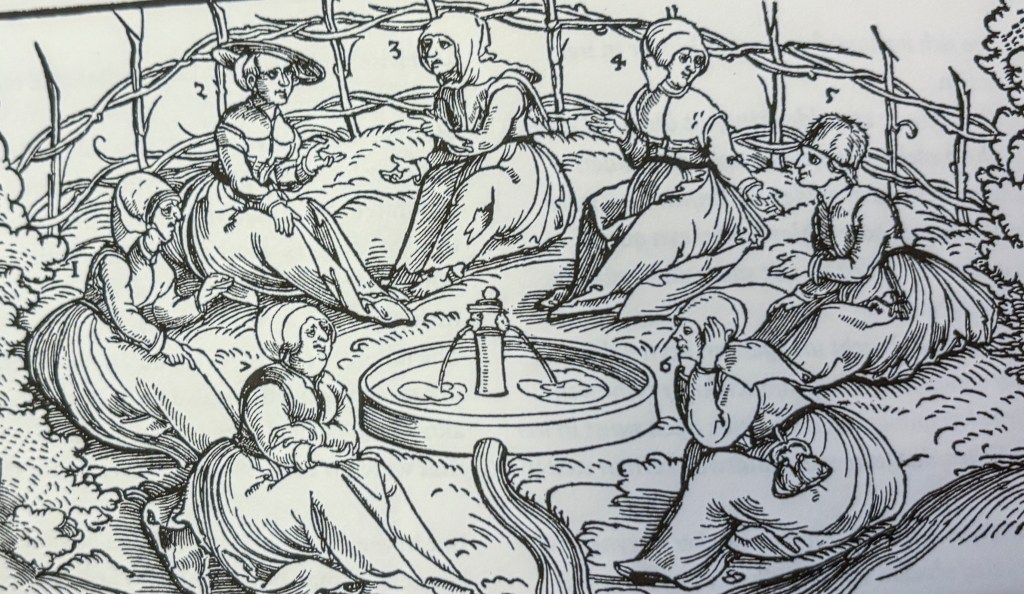
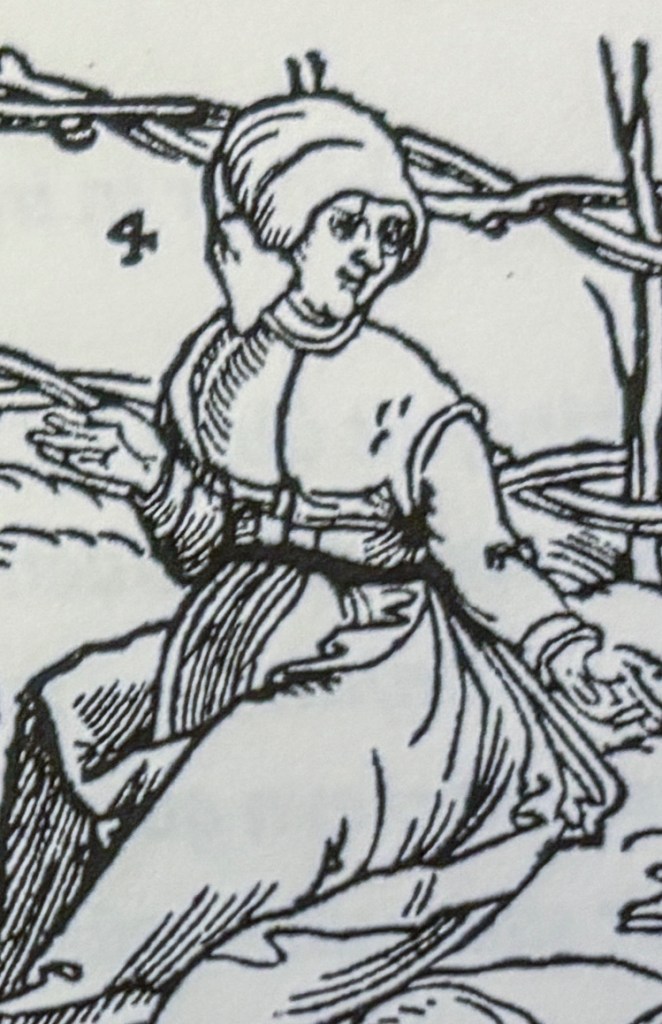
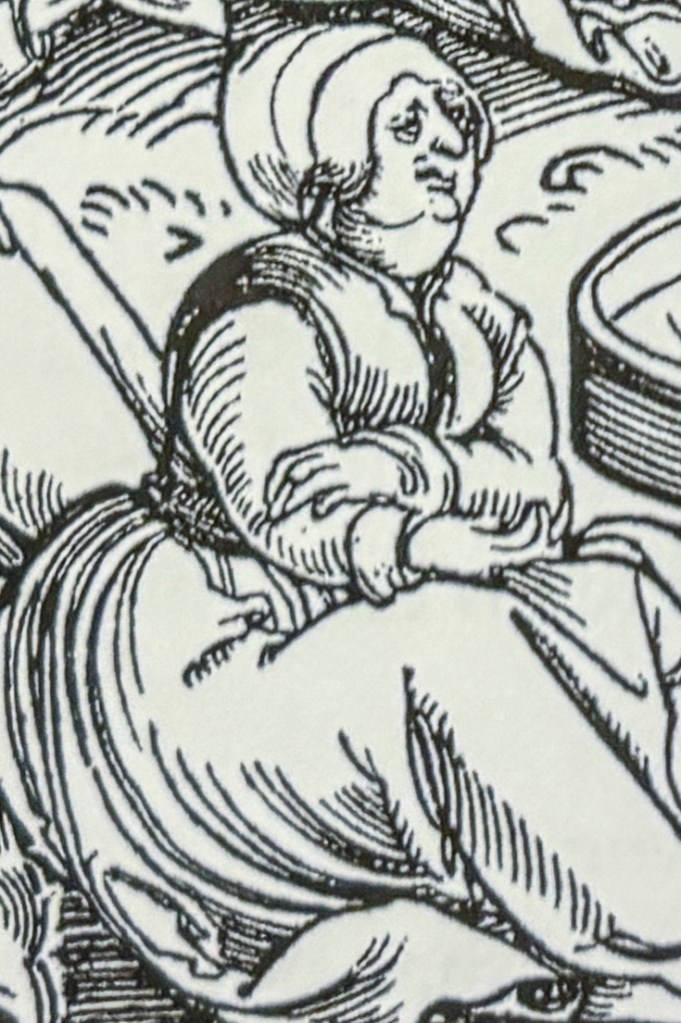
As low-cut dresses became popular, a smaller garment was needed that covered and warmed the shoulders and neckline. The most common extra layer warming garment seen in woodcuts and art are small capes, called gollars. They can either have a collar or no collar. Gollars are usually quite small, but there are examples of larger gollars that go all the way to the hip, more like a cloak. The funniest thing about gollars in the art is that they are often decorated with lines and borders even on women from the lower social classes. In many woodcuts they appear to be openable in the front, but with hidden closing, which probably means that they are either closed with hooks, or cords that are tied together.
On many woodcuts portraying women in the landsknecht tross or ordinary peasant women you also see a more square warming garment that looks like a short vest, called a partlet. They occur with and without an opening in the front, some have a small collar, some are lined with fur, some are decorated with borders and lines while some are plain. It also seems that some are sewn together at the sides and others closed at the sides by tied cords.
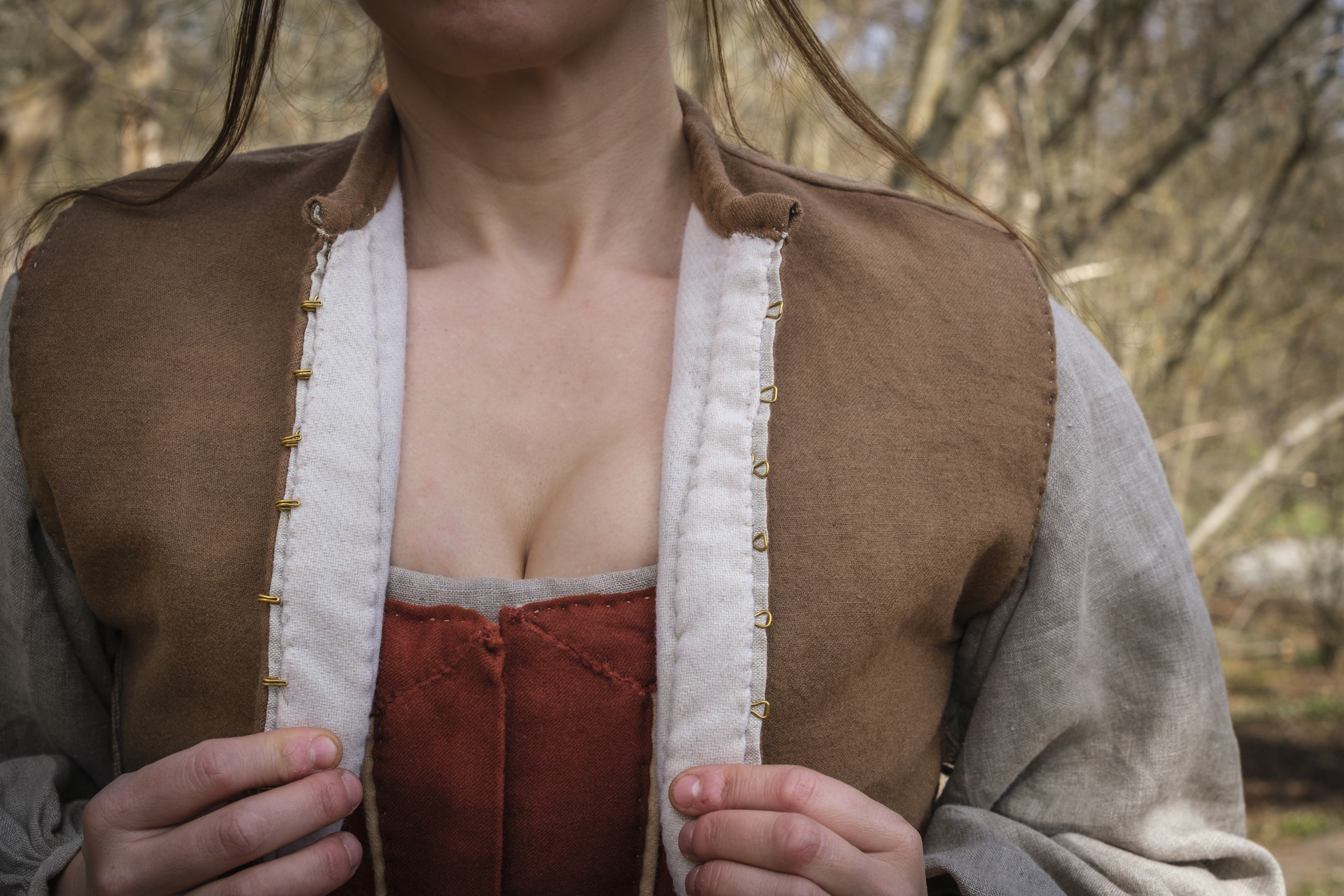
I chose to sew a partlet in a thin wool (plain weave) that I dyed with walnut bark and lined it with a undyed white wool that I had leftover pieces of. I decorated the partlet frugally with lines/borders in undyed white wool.
I started out by sewing the partlet as a variant with hook-and-loop closures at the front and sewn together sides, but made the mistake of sewing it a little too tight for several layers of clothing underneath, so I spat up the sides and sewed in looped cords that you can tie together at the sides instead. I think it is more practical when working and need to wear a warming layer over dresses and veils.
I also chose to sew it so it goes down just below the bust even though many images show that they often ended a little higher up. I made the hook-and-loop closures for the front from brass wire. Maybe it would have been more appropriate to have no decorations at all, but I couldn’t help myself.
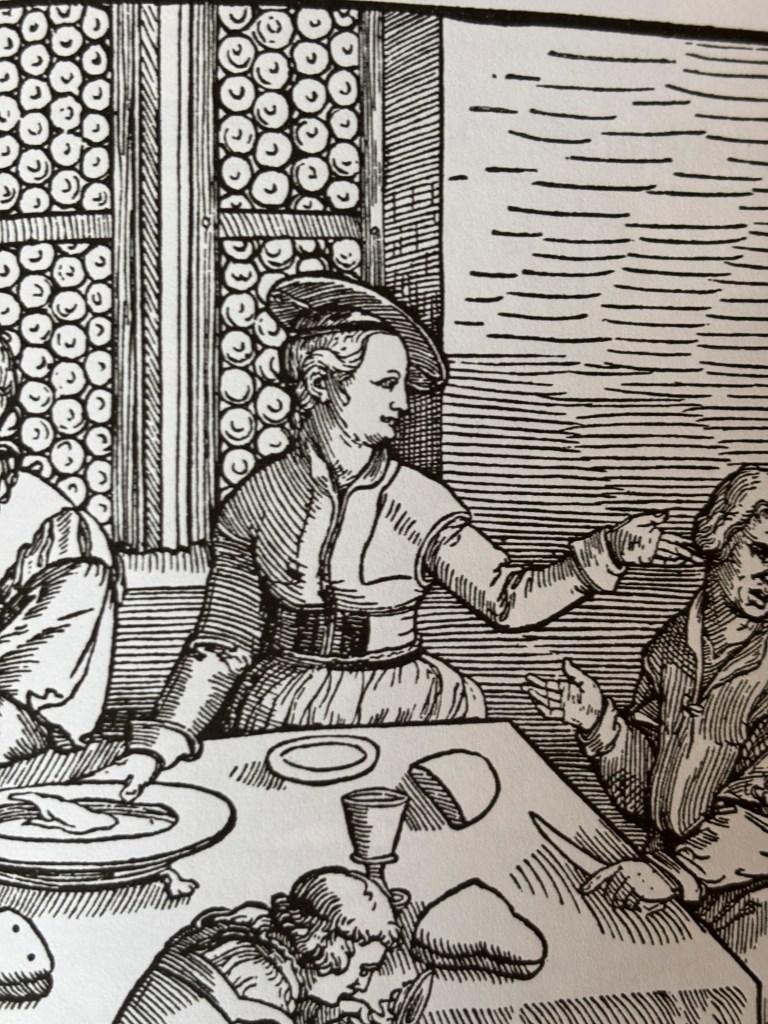
Detail of Family at the Table,
Georg Penc. Date: 1534
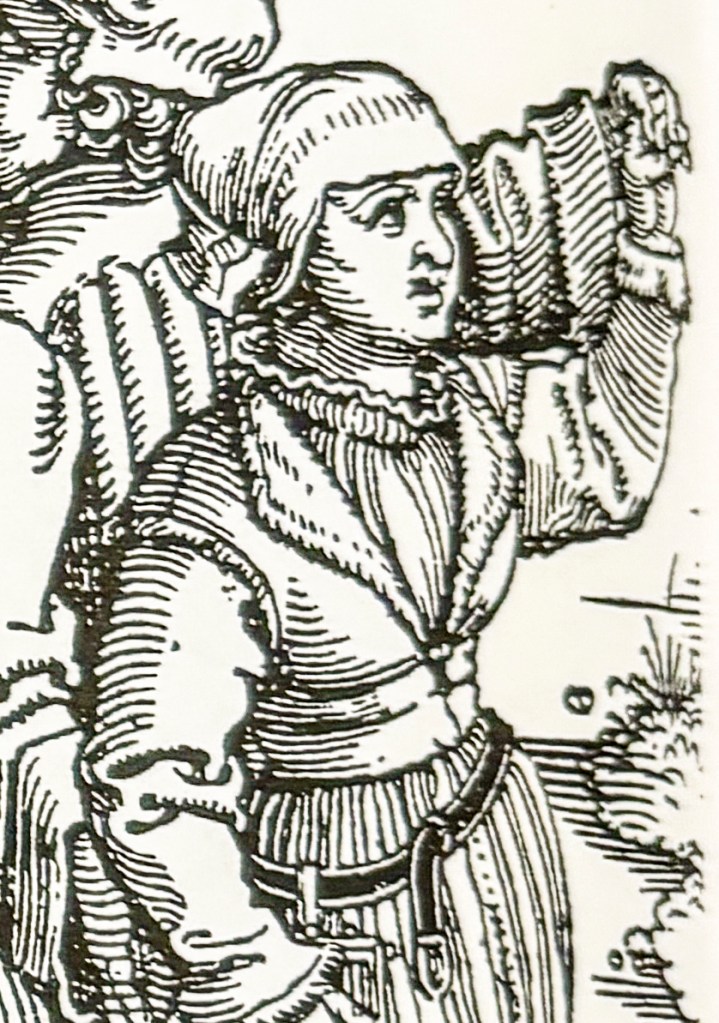
Sebald Beham. Date: I535
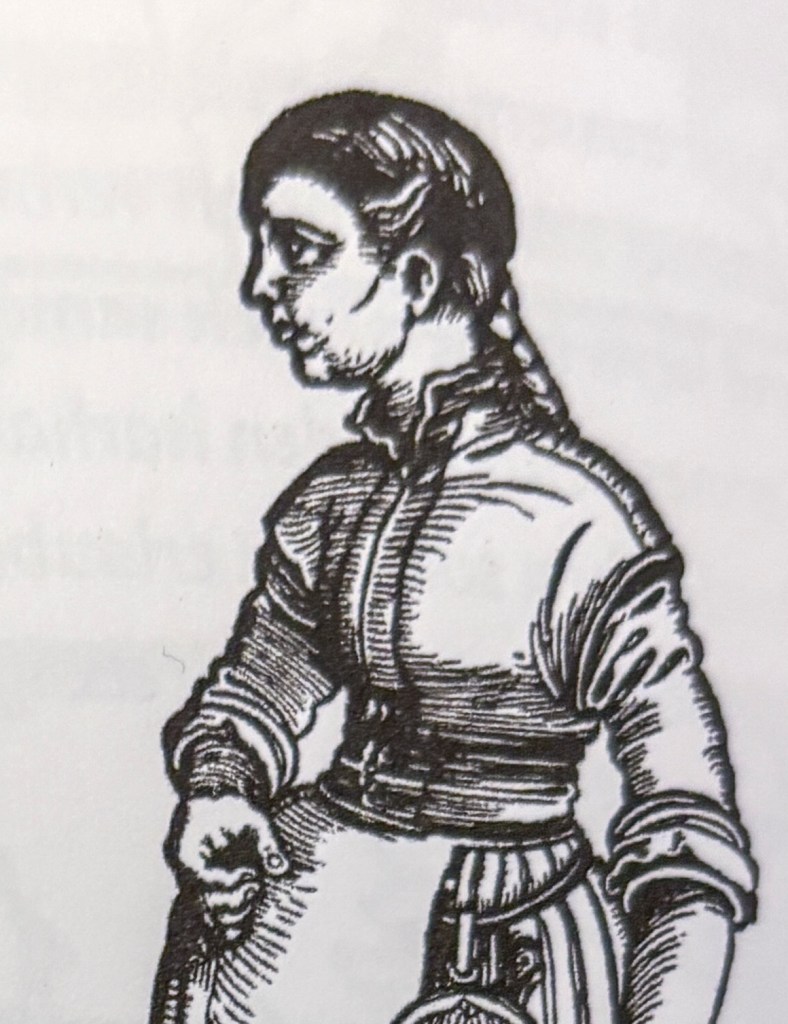
Sebald Beham. Date: I53I
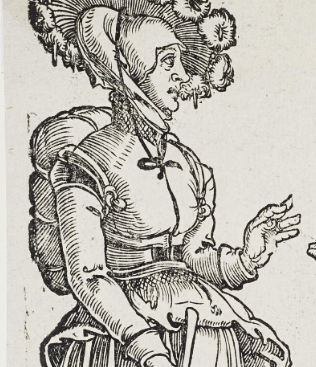
Barthel Beham. Date: 1521
Date: ca 1490
Erhard Schön Date: 1532
Womens belt
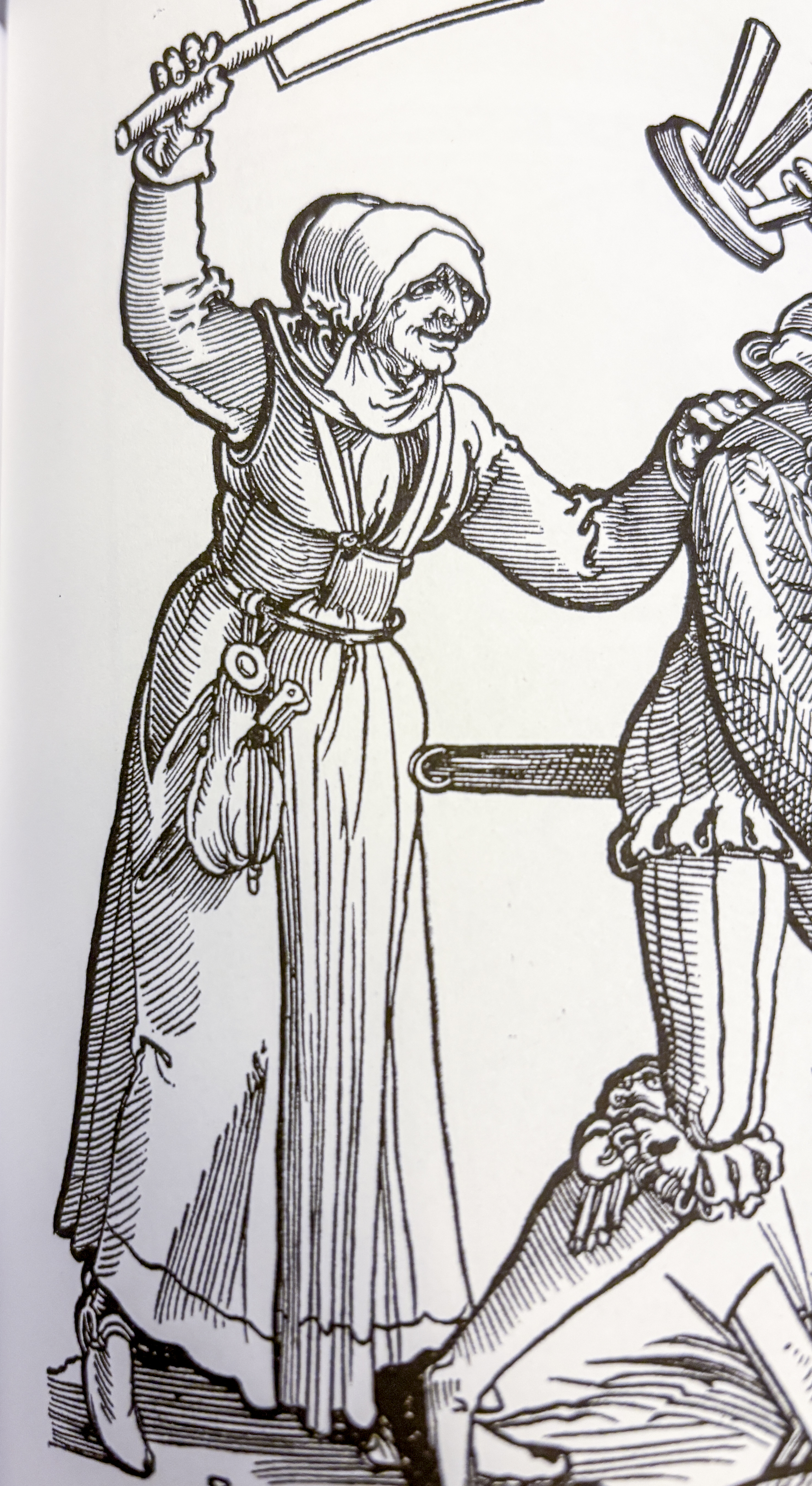
Unlike women in earlier periods, it seems to have been very common for low- mid class women in the 16th century to have a leather belt. In almost all pictures of women accompanying landsknechts, you can see that they used some form of belt to pull up their skirts and for hanging bags, knives and keys. The belts seen on the lower-mid class women are generally quite narrow, short and in a dark color.
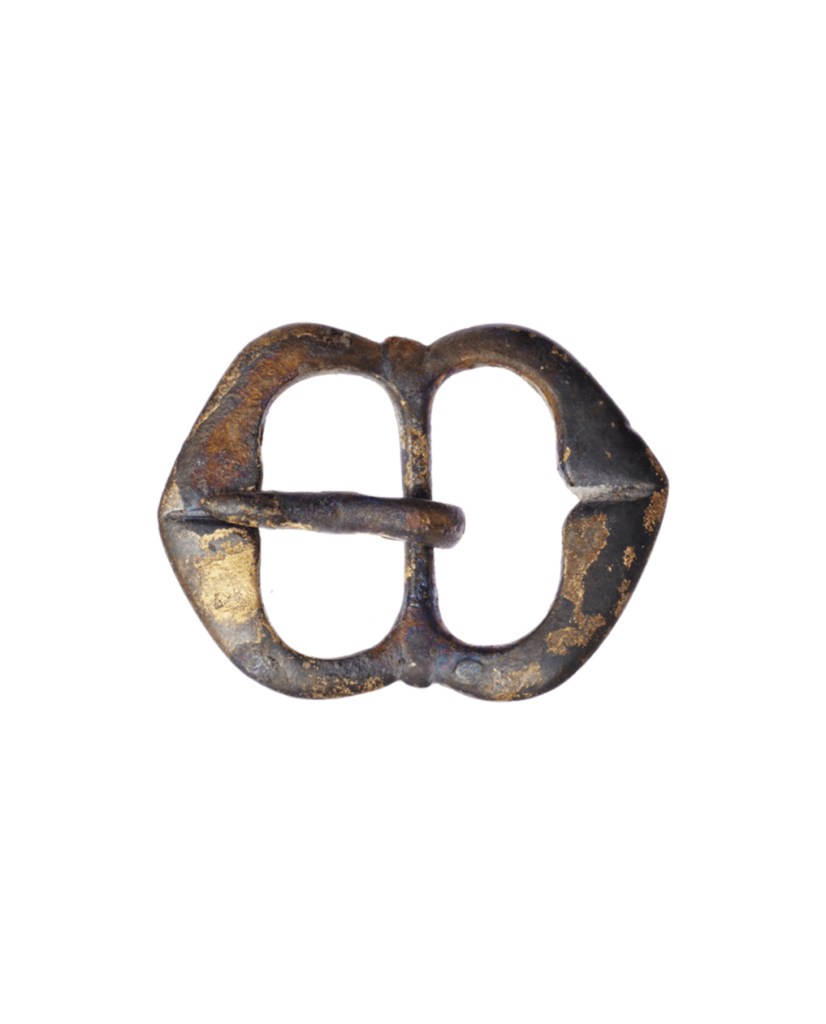
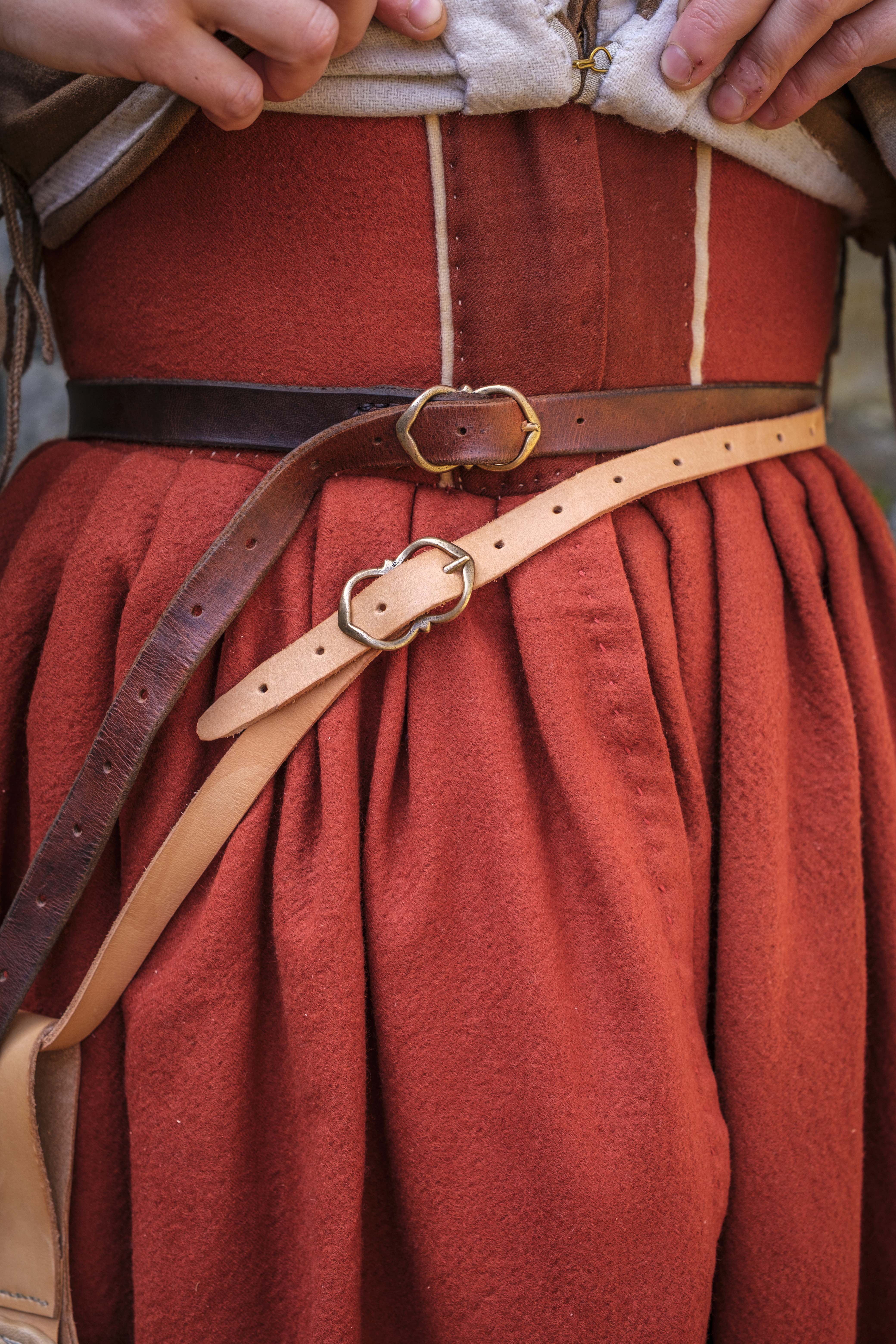
There are many archaeological finds of belt buckles from 16th century Germany and nearby areas. One of the most common models is the so called “spectacle buckles” in brass which became a very popular model of belt buckle in the 16th century. The leather used for belts seems to be strait cut and not folded or stitched.
Thus I bought two spectacle brass buckles, cut a ca 1,5 cm wide leather strip and sew it together with waxed linen thread. One belt is mainly for hanging the bag etc. and then I have one extra belt to make it easier to pull up my skirts during marches.
Date: 1500-1650
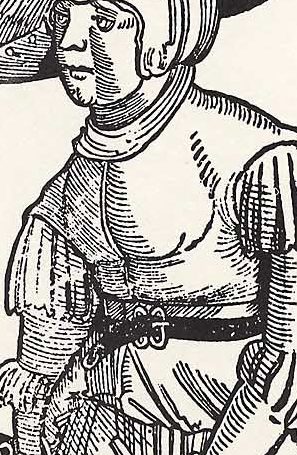
Niklas Stör. Date: 1538
Shoes and hose
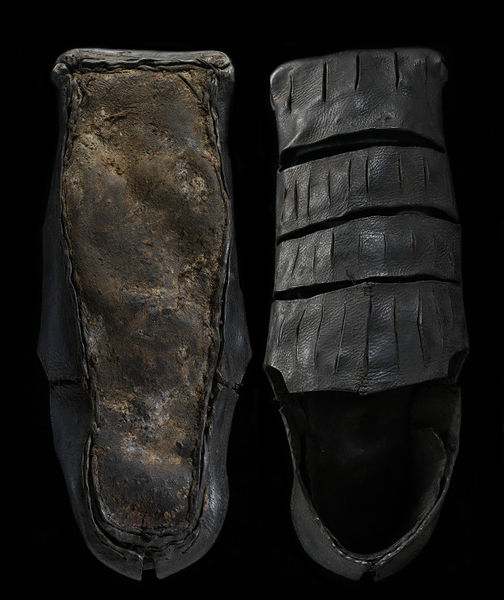
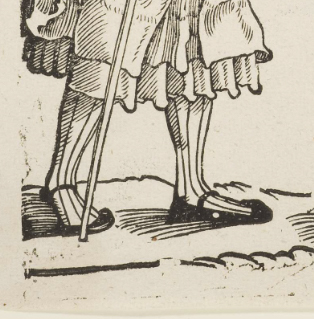
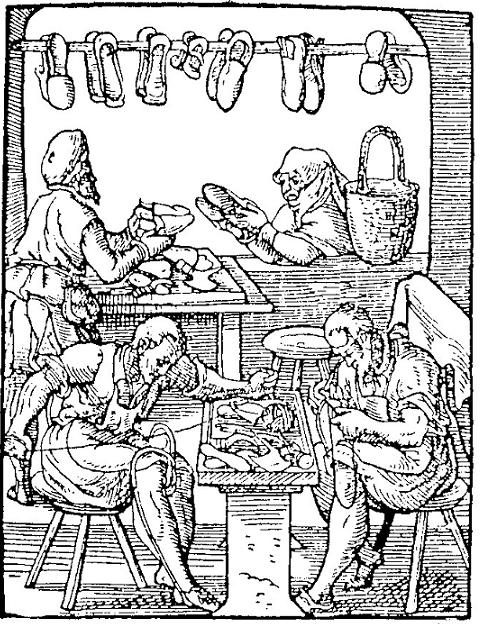
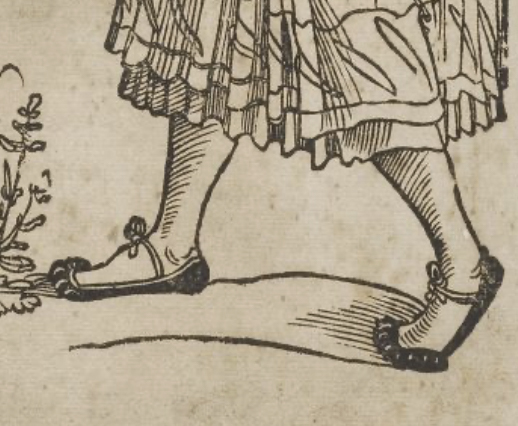
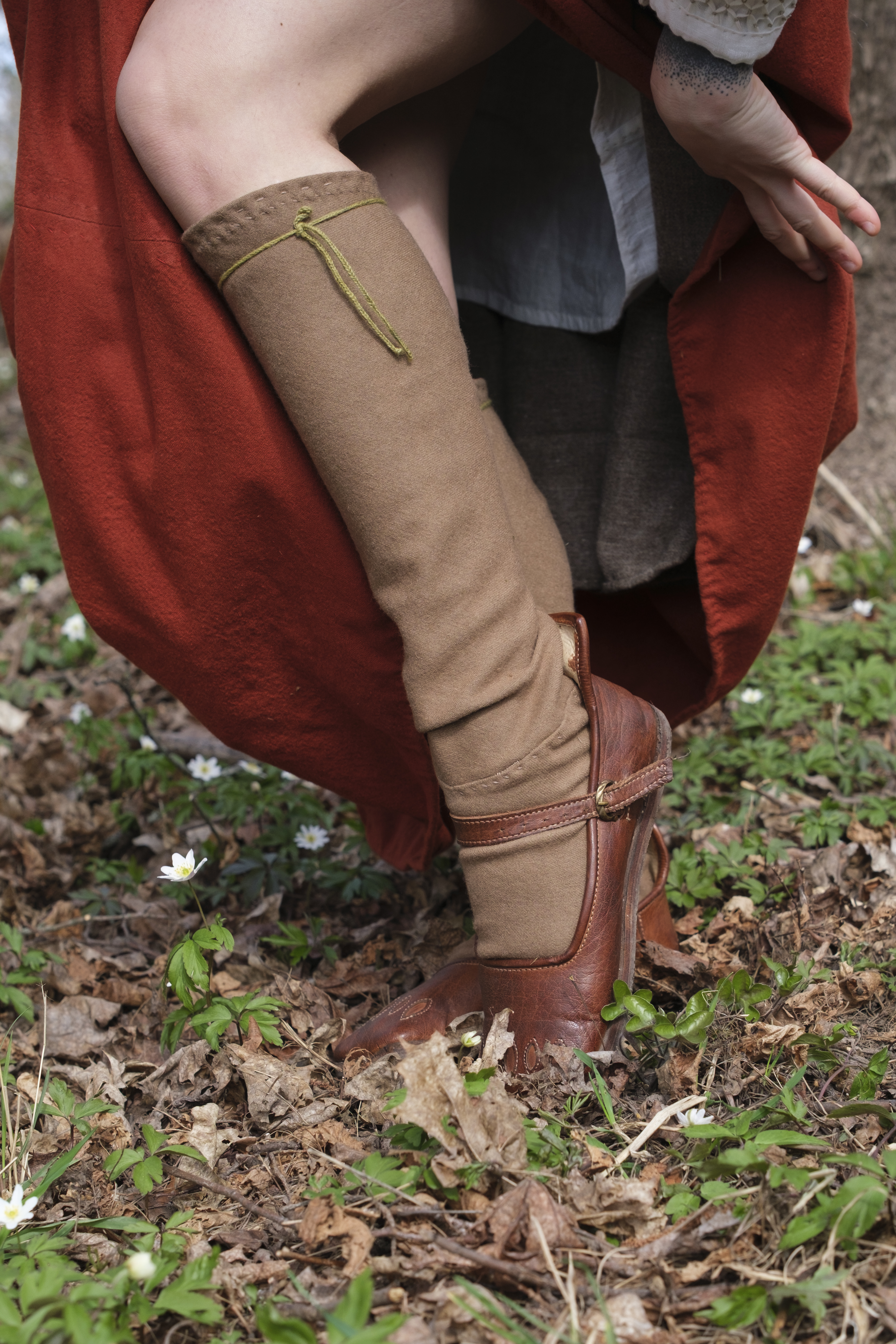
When it comes to shoes, there are actually quite a few archaeological finds preserved to look at from the German 16th century. The most common shoe model for the lower classes and for landsknecht soldiers and trossfraus seems to be “the cow mouth shoe”. It is a flat, square and low leather shoe. The shape varies from slightly rounded to really square at the front. And unlike most previous shoe models in history, they are not turned shoes but edge-sewn with a visible seam at the outer sole. Easy to produce but not particularly comfortable.
The cow mouth shoe I bought several years ago are probably a bit too decorated and extravagant for a trossfrau but I think she recently stole them from a nicer lady in one of the cities the arm passed through. One day I will sew myself a simpler, more fitting pair of shoes.
16th-century womens hose (or stockings) were essential undergarments primarily worn for warmth, typically reaching just above or below the knee and held up with a cord/ribbon. Sewn stockings in wool seem to have been the most common even though the technique of knitting appeared in the 16th century. To get a better fit, they can be cut on diagonal so the fabric becomes a little stretchy. The hose have a sewn sole that continues up to the heel and forms a wedge for flexibility. It also has a seam at the back that allows you to shape them to the leg.
When looking at woodcuts and in art, it seems that the hose can be both in one solid color or vertically striped, but most often it seems to be one solid color on women of lower class. I have sewn a pair of knee-high hose in a natural brown 2/2 twill, suitable for marching in mud.
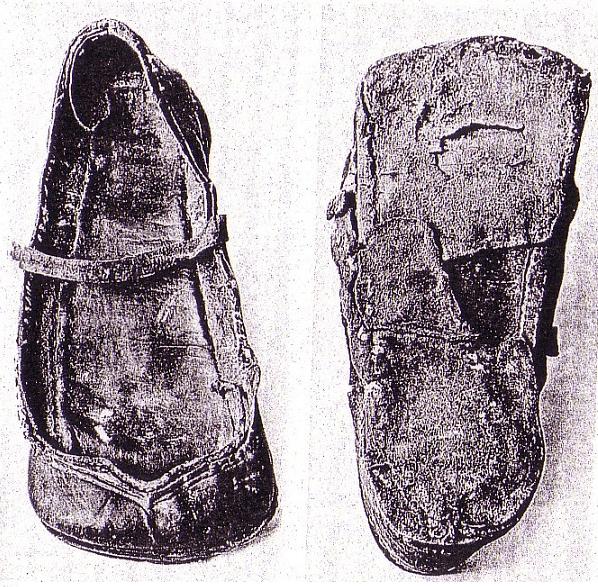
Dated to 1500-1520
(BAYERISCHES NATIONALMUSEUM, MUNICH)
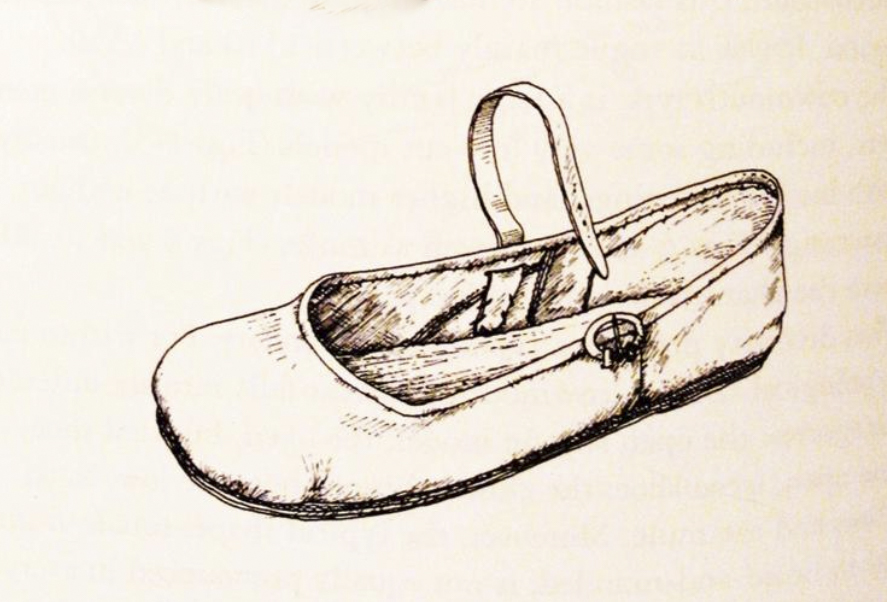
(Victoria and Albert Museum, 2020)
Date: 1526-1550
Date: 1535
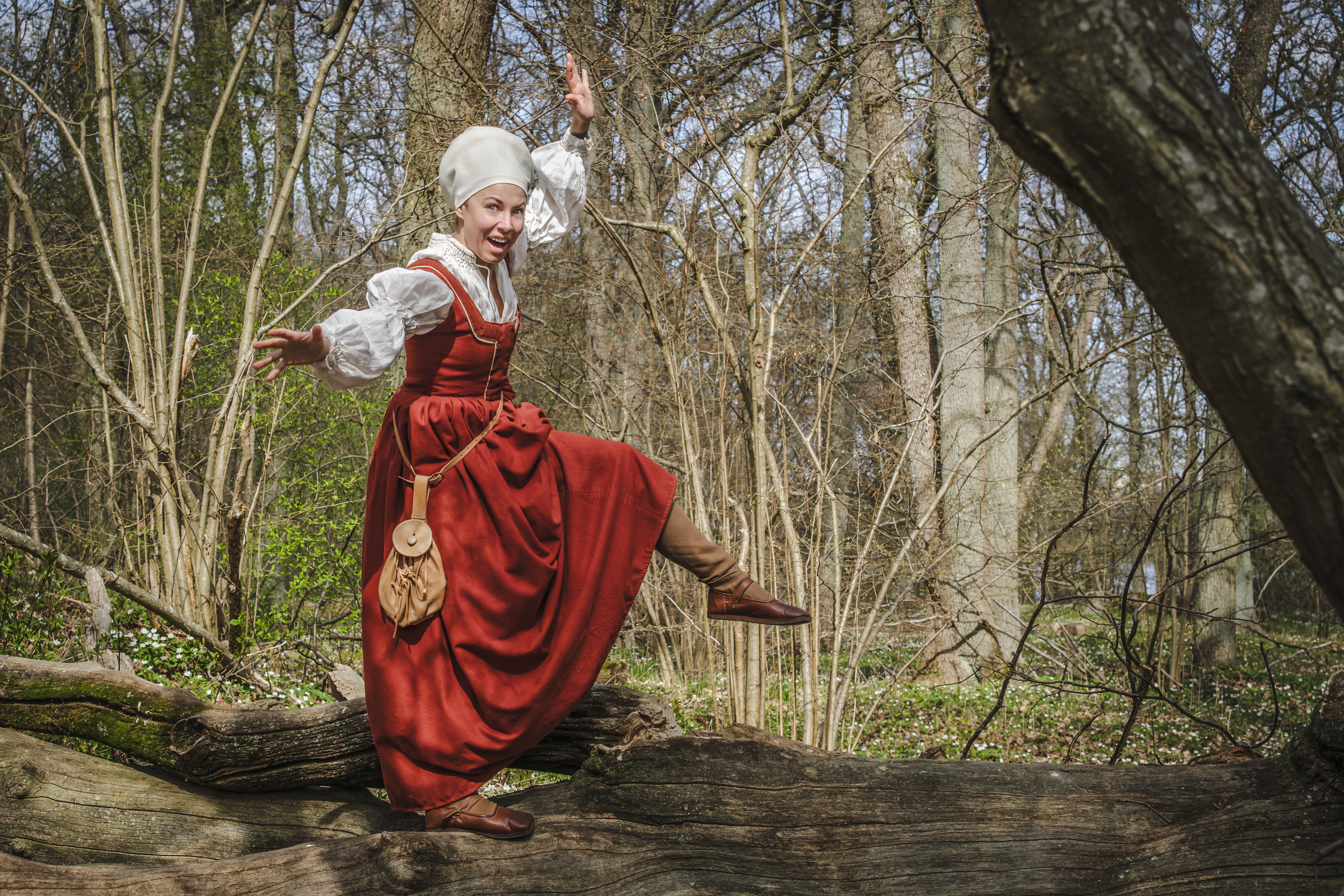
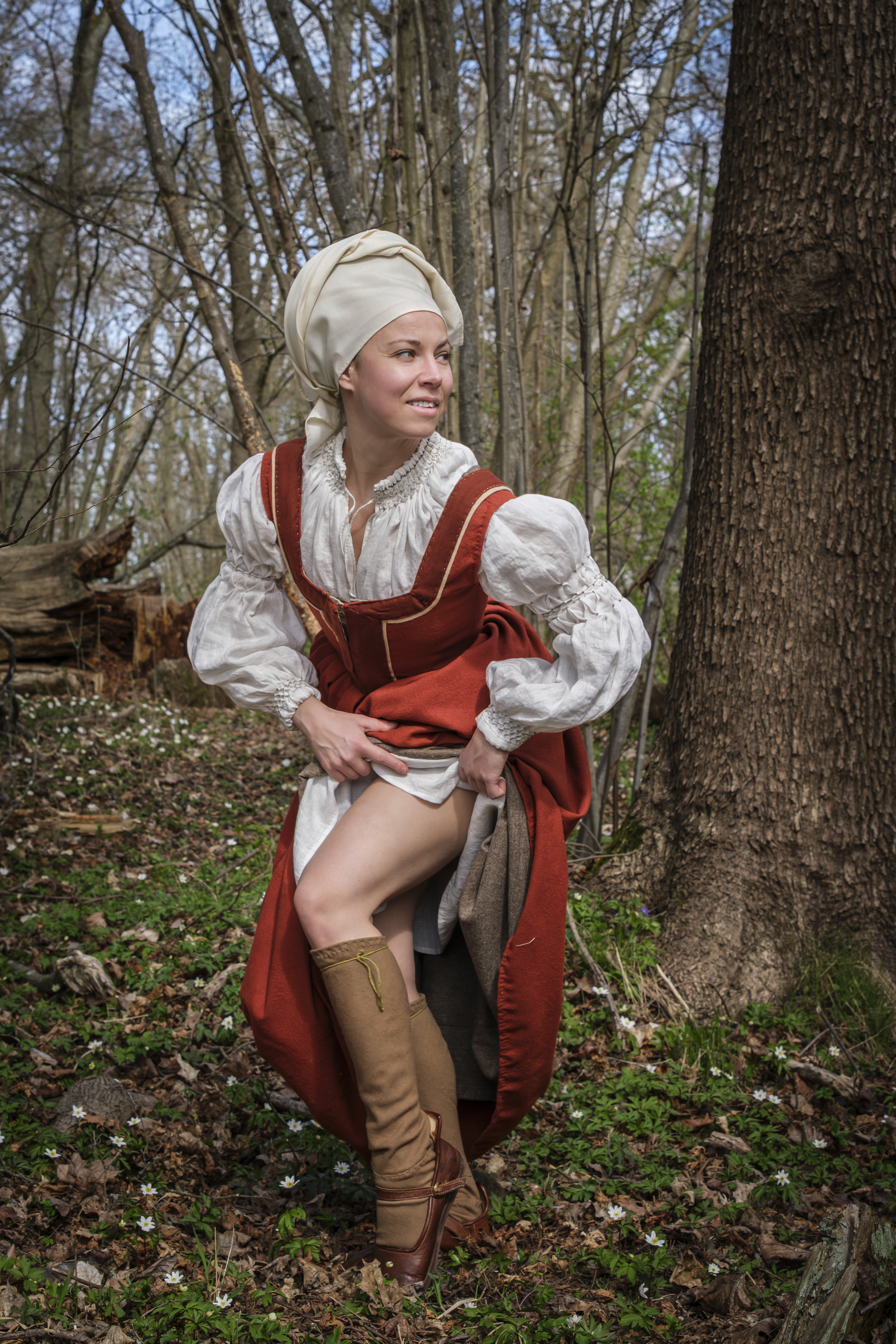
Many thanks to my patient partner and photographer Lars-Erik Åkerlund and all the wonderful friends in Proknekt!
Some tips about other sites that may be helpful:

